Daimler Truck Invests Hundreds of Millions in NextGenH2 Hydrogen Fuel-Cell Trucks
Daimler Truck Holding AG will invest several hundred million euros in hydrogen fuel-cell trucks, launching a 100-unit NextGenH2 series supported by €226 million of public funding and aligned with EU decarbonisation regulations.
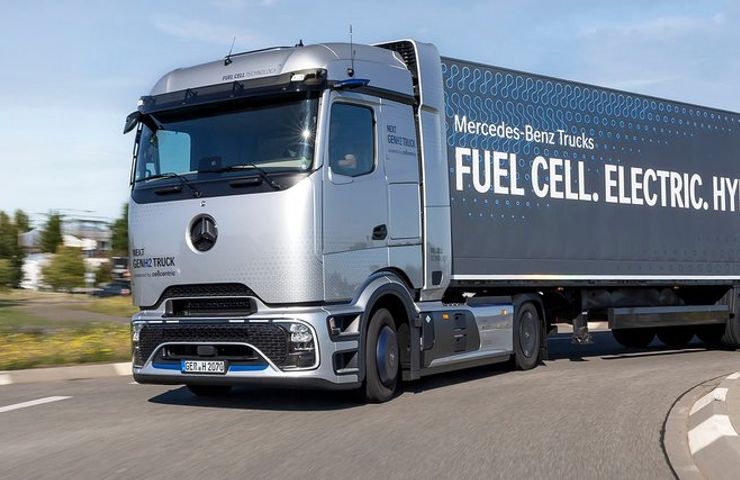
Daimler Truck Holding AG in Germany has just announced it's sinking several hundred million euros into the development of its Mercedes-Benz NextGenH2 Truck. They're gearing up to deploy a small fleet of 100 hydrogen fuel-cell vehicles in customer operations starting at the end of the decade. Exciting times ahead for the hydrogen energy news!
Dual-Track Decarbonisation
In a big move for zero-emission vehicles, Daimler Truck is sticking to a dual-track strategy that treats battery-electric and hydrogen fuel-cell drivetrains as two sides of the same coin. While they’ve already rolled out battery-electric trucks for urban and regional routes, they’re turning their sights to long-haul heavy transport with hydrogen as a key player. As Karin Rådström, Daimler Truck’s CEO, points out, batteries work best for shorter journeys, but fuel cells are a game changer, offering over 1,000 kilometers of range and quick refueling for those demanding routes. It’s a smart approach in the face of the hydrogen production landscape evolving rapidly.
NextGenH2: The Secret Sauce for Long Haul
The Mercedes-Benz NextGenH2 concept is where the real innovation lies. They're using liquefied hydrogen stored in insulated tanks right behind the cab, coupled with a cellcentric fuel-cell stack that works alongside a buffer battery. According to tests, this rig can tackle full loads over 1,000 kilometers on a single fill-up, with next-gen tanks capable of holding up to 85 kg of hydrogen. This isn’t just a lab prototype either; it’s meant for small-series production. They’re aiming to roll out 100 of these trucks from Wörth am Rhein and put them on real roads, showcasing practical solutions for the logistics sector.
Public Funding and Policy Boost
Of course, real progress often depends on some public support. Thanks to the EU’s IPCEI Hydrogen program, Germany’s Federal Ministry for Digital and Transport (BMDV) and the states of Baden-Württemberg and Rhineland-Palatinate have pledged €226 million to back the development and small-scale production of these NextGenH2 trucks. Additionally, there's a national scheme that could cover up to 50% of the costs for hydrogen refueling stations. This support helps clear the path for early investments in hydrogen infrastructure, making it a lot easier to take the plunge.
Aligning with EU Decarbonisation Rules
This initiative is also on point with the EU’s CO₂ performance standards, which aim for heavy-duty fleets to cut emissions by up to 90% by 2040 compared to 2019 levels. Under these regulations, hydrogen fuel-cell vehicles are defined as zero-emission (coming in at ≤3 g CO₂/tkm), and the AFIR mandates at least one hydrogen station with a daily capacity of one tonne every 200 kilometers along key TEN-T corridors. Germany is stepping up its game to ensure the NextGenH2 trucks won’t have issues finding refueling stations.
Three Decades of Fuel-Cell Work
Daimler Truck isn’t new to this hydrogen scene; they've been perfecting fuel-cell systems for over three decades, racking up millions of kilometers with early prototypes. From passenger-car tests to the GenH2 concept unveiled a few years back, each version has seen improvements in stack efficiency and tank integration. A past collaboration with Shell aimed to connect Rotterdam, Hamburg, and Cologne with 150 stations and 5,000 trucks by 2030. Although that progress slowed down, those trials provided crucial insights fueling today’s NextGenH2 small series.
Fuel-Cell Powerhouse: cellcentric and Partners
To ramp up the development of fuel-cell stacks for heavy applications, Daimler Truck co-founded cellcentric GmbH & Co. KG alongside Volvo Group, and now Toyota has jumped in as an equal partner. The goal is to set up one of Europe’s largest series production facilities. This joint venture will really push for the standardization and cost-effectiveness of fuel-cell components, laying the groundwork for a robust hydrogen infrastructure and supply chain. It's a smart strategic move, believing that strong partnerships can transition fuel-cell trucks from pilot projects to real-world fleets.
Real-World Data for Scale-Up
Five early logistics partners have already clocked over 225,000 kilometers with prototypes across mixed terrains, from tough alpine passes to long highway stretches. The data gathered from these operations has been key in refining thermal management, drive control software, and safety protocols. With the NextGenH2 fleet, Daimler anticipates gathering even richer insights about uptime, hydrogen boil-off rates, and maintenance schedules. This real-world data will play a critical role in shaping station placements, pricing strategies, and future truck designs, moving the conversation from theory into action.
Dachser: First Mover on the Road
Logistics provider Dachser SE has been chosen as the first operator of NextGenH2 trucks. This month, they're set to roll out a prototype from their Karlsruhe hub for long-haul service, with two more joining the fleet by the middle of 2027. Dachser’s trials are going to deliver invaluable insights on fuel consumption, maintenance needs, and economic viability. Their early adoption proves that integrating hydrogen vehicles into fleets isn’t just something for the future; it’s happening now under the IPCEI and AFIR schemes, showing that hydrogen logistics is very much a reality.
Challenges and the Real Kicker
However, it’s worth noting that hydrogen trucks aren’t exactly cost-competitive right now. High vehicle CAPEX, soaring hydrogen fuel prices, and a lack of widespread refueling stations are still hurdles to overcome. Industry analysts suggest that total cost of ownership for hydrogen trucks could only line up with diesel prices if hydrogen drops to around €8 per kilogram, which is still above current market levels. On-site production at loading hubs and dedicated corridor stations could help bring those costs down. Daimler and cellcentric are also looking into teaming up to integrate electrolysers at industrial sites and renewable power plants. Plus, harmonized EU regulations around hydrogen classification, permits, and safety standards are going to be vital in smoothing the rollout and avoiding costly delays.
Competing on the Global Stage
It’s not just Europe betting on hydrogen for heavy transport; companies in North America and Asia are racing to get their fuel-cell trucks off the ground. But with Daimler’s solid home-field advantage and cellcentric's European joint venture setup, they’ve got a strategic edge. If Europe’s corridor plans come through and the necessary infrastructure grows in time, the NextGenH2 could set the bar high for safety, interoperability, and performance. Being in a strong position might even protect European manufacturers from foreign competition and boost export potential.
Built for the Future
As hydrogen production shifts from grey to green, the lifecycle emissions from fuel-cell trucks could see a dramatic drop. Electrolysis-based hydrogen can pave the way for significant decarbonization, particularly if renewables power the process. With standard tanks, protocols, and station designs emerging from cellcentric and EU policies, uncertainty about infrastructure is likely to diminish. By the early 2030s, Daimler is setting its sights on being a leader in CO₂-neutral driving in its key markets. That ambition, coupled with solid funding and strategic industry partnerships, sets hydrogen trucks up as a viable solution for the future.
Bottom Line
So, to put it simply, Daimler Truck’s hefty investment in hydrogen fuel-cell trucks is a strong endorsement for long-haul decarbonization efforts. With €226 million in public funding backing a fleet of 100 NextGenH2 trucks and rigorous EU regulations in play, they’re aiming to prove that hydrogen can rise to the challenge against significant economic and technical barriers. If they pull it off, it could change the way Europe transports freight, sending a clear message that hydrogen infrastructure and vehicles are here to stay and are poised for the future.