Green Hydrogen Production at UCT: Tackling the Iridium Bottleneck in PEM Electrolysers
Associate Professor Rhiyaad Mohamed at UCT secured an EQT Foundation grant to develop ultra-low-iridium anodes for PEM electrolysers, aiming to reduce catalyst costs and support scalable green hydrogen production.

Imagine if the rarest metal on Earth became a roadblock for the hydrogen economy. Well, that’s a challenge scientists at the University of Cape Town (UCT) are diving into. This month, Associate Professor Rhiyaad Mohamed secured an impressive EQT Foundation Critical Minerals Science Grant aimed at developing ultra-low-iridium anode catalysts for proton exchange membrane water electrolysers. This initiative is set to revolutionize hydrogen production, making green hydrogen more affordable while boosting the hydrogen infrastructure we're hearing more and more about in African hydrogen news.
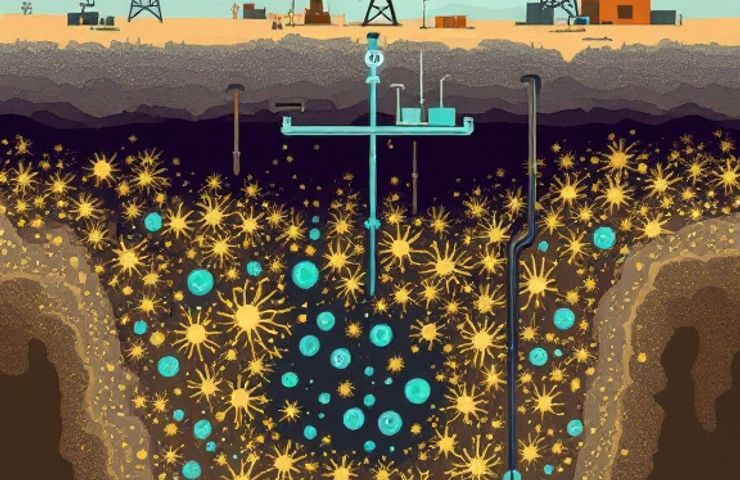
At the heart of modern fuel cell technology is proton exchange membrane (PEM) electrolysis, which is celebrated for its efficiency, compact design, and quick response times. So, how does it work? In a PEM electrolyser, water gets split at the anode, which typically uses iridium oxide as a catalyst to create oxygen, protons, and electrons. The protons then pass through a polymer membrane to combine at the cathode, ultimately forming hydrogen. But there's a catch: iridium is exceptionally rare, and current systems usually require a hefty load of about 1-2 mg Ir/cm2 to maintain durability in super acidic conditions. And with global iridium production limited to just a few tonnes yearly, this demand could really hinder mass green hydrogen production and stall new hydrogen infrastructure projects.
Taking on the Iridium Challenge
Thanks to this new grant, Mohamed and his team will work on crafting ultra-low-iridium anodes that significantly reduce the amount of metal needed without compromising performance. Based at UCT's Catalysis Institute and the HySA Catalysis Centre of Competence, they plan to disperse iridium nanostructures—think tiny particles, rods, or even tunnel-like structures—on high-surface-area supports, like doped tin oxide or titanium oxide. These supports not only improve conductivity but also stabilize the catalyst and reveal more active sites per iridium atom. By fine-tuning factors like ionomer distribution, porosity, and thickness in membrane-electrode assemblies (MEAs), they’re aiming to bring iridium loadings down to around 0.5–0.1 mg/cm2, as suggested by some technical studies.
Connecting Lab Work to Real-World Impact
But it's not just about materials; Mohamed's group is also implementing cutting-edge electrochemical methods to test these catalysts in real-life scenarios, like under high current densities, fluctuating temperatures, and start-stop conditions. They’ll be scaling from single-cell tests to multi-cell prototypes, assessing long-term stability and rapid-response capabilities—both critical for methods tied to green hydrogen production that depend on variable sources like wind and solar power. This holistic approach links innovative nanostructured catalyst design with broader system considerations, paving the way for commercially viable PEM electrolysers.
Leveraging Local Talent for Global Solutions
For over a decade, South Africa’s Department of Science, Technology and Innovation has supported initiatives like the Hydrogen Society Roadmap and the HySA program, nurturing expertise in fields like electrocatalysis and advanced materials. With the new EQT Foundation grant, UCT stands as the only African institution in this global cohort, proving how local research can tackle crucial mineral issues and steer industrial decarbonization.
Building on this solid foundation, the project will also train postgraduates in areas like catalyst synthesis, electrode fabrication, and MEA integration—developing the talent that will drive a local green hydrogen value chain. From the lab to pilot production lines, UCT aims to go beyond just supplying rare platinum-group metals to actually manufacturing high-value components for hydrogen production.
Why This Matters for Hydrogen Infrastructure
Affordability and scalability are the two major challenges when it comes to clean hydrogen adoption. Reducing iridium usage directly cuts down the precious metal's share of electrolyser capital costs, making green hydrogen production methods far more competitive against other fuel sources. For developers eyeing clean hydrogen offtake agreements and refueling networks, lower catalyst costs can significantly improve project economics.
Electrolysers that demand less iridium can play a huge role in new energy storage and grid-balancing solutions. As renewables become more prominent, flexible PEM systems can convert excess electricity into storable hydrogen, helping to balance supply and demand. Plus, less need for iridium eases the strain on mining and processing, encouraging recycling initiatives for used electrodes.
While alternative systems like alkaline electrolysers and solid oxide technologies are also vying for a piece of the green hydrogen pie, PEM still takes the lead for high-purity output and flexibility. By cracking the iridium challenge, Mohamed and his crew are making sure that PEM stays central to future hydrogen economies, which depend on reliable, zero-emission tech for everything from fuel cell vehicles to data centers.
As UCT's work unfolds in the coming months, its findings will ripple through academic journals, investment pitches, and policy discussions. If these ultra-low-iridium anodes work as anticipated, they could open exciting new avenues in hydrogen production, storage, and infrastructure. This project is a testament to Africa’s growing leadership in the realm of zero-emission technology innovation.