Green Hydrogen Production from Waste Wood Demonstrated in Black Forest Pilot
H2Wood–BlackForest demonstrates a pilot converting waste wood to hydrogen and coproducts at GROHE Technology, guiding Germany’s biohydrogen roadmap.
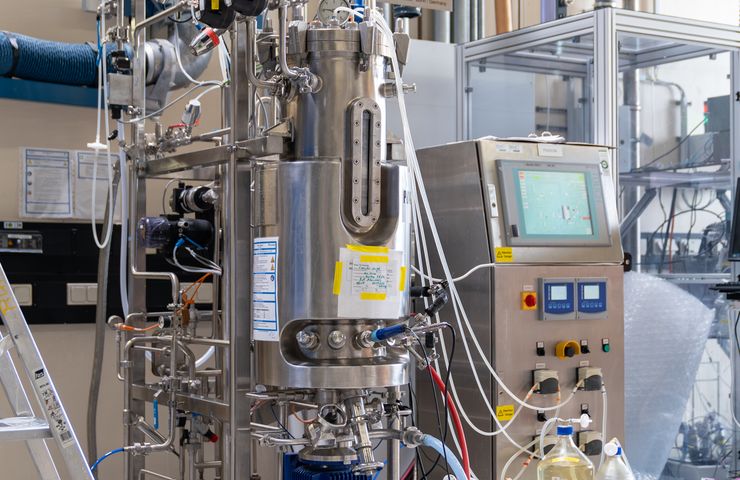
The H2Wood–BlackForest consortium recently unveiled a pilot installation at GROHE Technology in Loßburg-Betzweiler that converts residual and waste wood into hydrogen and biobased coproducts, according to Fraunhofer IGB. The demonstration follows a multi-institute research effort funded by the German Federal Ministry of Education and Research under reference 03SF0669A. Project materials put public support for the work at approximately 12 million euros.
The installation links physicochemical pretreatment, lignocellulose fractionation, anaerobic bacterial fermentation and a microalgae photobiological stage into a single pilot biorefinery. Fraunhofer IPA and the University of Stuttgart’s Institute of Industrial Manufacturing and Management assessed local forest-industry waste streams, projected hydrogen demand across industrial, mobility and building sectors, and outlined infrastructure needs for regional deployment, project briefs indicate. Campus Schwarzwald and municipal authorities have positioned the plant as a testbed for circular-economy concepts in the Black Forest.
Pretreatment and Fractionation
According to Fraunhofer IGB, the process begins with physicochemical pretreatment of chipped or shredded waste wood in an ethanol-water mixture at pressures corresponding to temperatures of up to 200 °C. That fractionation serves two purposes: dissolving lignin, adhesives, paints and preservatives into the solvent phase for potential coproduct recovery, and producing a cellulose-rich fibre slurry suited to enzymatic hydrolysis. Project documentation describes solvent recovery loops to recycle ethanol, although energy balances remain under evaluation.
Anaerobic Fermentation of Wood Sugars
Following fractionation, enzymes hydrolyse the cellulose and hemicellulose fractions to release fermentable sugars such as glucose and xylose. Fraunhofer IGB reports an experimental yield of roughly 0.2 kg of glucose per kilogram of dry wood input. In a series of anaerobic reactors, specialized bacteria metabolise these sugars to produce a biogas mixture rich in hydrogen and carbon dioxide. Partners estimate the process could generate about 50 litres of hydrogen from one kilogram of converted glucose, though they emphasise this as a lab-scale projection rather than a verified pilot output.
Photobiological Stage with Microalgae
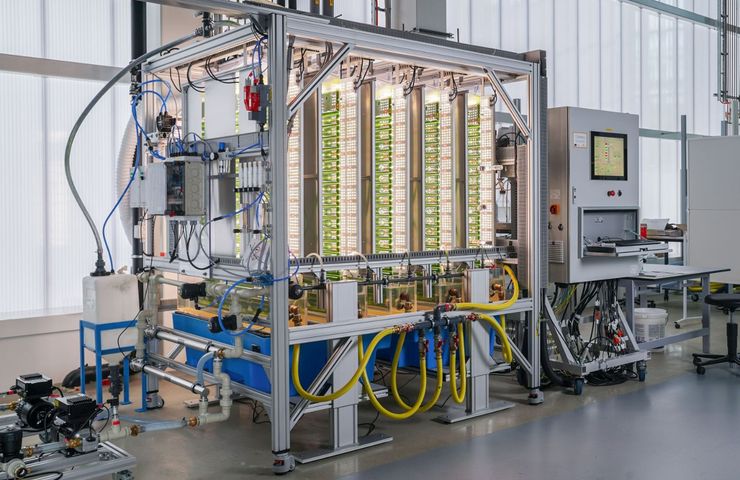
Separated carbon dioxide from the bacterial stage is directed to a photobioreactor housing hydrogen-producing microalgae, according to Fraunhofer IGB. Under controlled illumination, the algae fix CO₂ to build biomass while storage molecules such as starch or carotenoids accumulate. In an oxygen-depleted photolysis sub-stage, selected algal strains release additional hydrogen gas. The sequence requires precise control of light intensity, gas exchange and culture conditions to limit oxygen inhibition and sustain productivity.
Modular Pilot Integration
The pilot at GROHE Technology links all modules—pretreatment, enzymatic hydrolysis, dark fermentation, gas separation and photobioreaction—in a semi-automated layout, local reports say. Data collection points track temperature, pressure, conversion efficiency and gas purity. According to the municipality, regional stakeholders toured the installation this month, evaluating its potential to produce biohydrogen at decentralised sites and integrate with existing gas storage and transportation infrastructure.
Value-Added Coproduct Streams
Beyond hydrogen, the consortium is examining multiple coproduct streams to improve process economics. The lignin-rich solvent phase may yield feedstock for phenolic resins or bioplastics, project summaries suggest. Algal biomass containing carotenoids and starch could serve in food, feed or specialty-chemical markets. Fraunhofer IGB notes that cascading valorisation aligns with the EU’s Renewable Energy Directive, which prioritises biomass uses that maximise material value before energy recovery.
Policy and Certification Framework
The project’s feedstock classification and emissions savings will be assessed under emerging voluntary schemes aligned with the EU Renewable Energy Directive, according to EU policy documents. Certification may require traceability of wood provenance, adherence to biodiversity safeguards and demonstration of net greenhouse-gas reductions. Fraunhofer IGB and partners plan to benchmark process emissions, account for heat and solvent inputs, and engage with certification bodies to explore pathways for recognised biohydrogen labels.
Regional Circular Economy and Policy Alignment
Campus Schwarzwald and local authorities envisage the pilot as a blueprint for forest-industry integration, turning disposal costs into local energy and material sources. Fraunhofer IPA and the University of Stuttgart IFF mapped regional wood-waste availability and regional hydrogen demand to inform a hydrogen roadmap. Their findings highlight the need for distributed pretreatment centres, small-scale biohydrogen hubs and adaptable storage solutions to support rural industrial decarbonisation.
Comparative Outlook: Electrolysis vs. Biological Routes
Conventional hydrogen production via water electrolysis relies on low-carbon electricity. By contrast, biomass gasification and steam-methane reforming operate at higher temperatures and require complex gas cleanup. Biological routes such as H2Wood–BlackForest work at milder conditions but contend with slower rates, sensitivity to feedstock variability and the need for multistage integration. Despite these challenges, the biological chain can co-produce materials and support circular-economy goals, offering a complementary pathway within a diversified hydrogen infrastructure.
Potential Industrial Applications
Local forest-products manufacturers could integrate biohydrogen into existing operations for process heating or on-site fuel cells, reports from Fraunhofer IPA indicate. Smaller refineries, data centres or off-grid facilities in rural regions may benefit from decentralised hydrogen supply via tube trailers or blending with natural gas. Pilot demonstrations will explore coupling with mobility refuelling stations and micro-cogeneration units, broadening the project’s relevance to multiple segments of the emerging hydrogen infrastructure.
Scaling, Economics and Next Steps
Consortium documents emphasise that scaling beyond pilot scale will require demonstration of continuous operation over months, robust management of solvent and enzyme recycling, and advanced gas purification to meet fuel-grade hydrogen standards. No commercially binding supply agreements or lifecycle-emissions certifications have yet been announced. Planned follow-up studies aim to gather operating hours, energy inputs and coproduct valuations to inform techno-economic models and potential industrial partnerships.
Expert Perspectives on Integration
According to local press, Dr. Ursula Schließmann, the project’s technology-development lead, highlighted the modular design as key to adapting to variable wood-waste inputs and evolving market needs. She emphasised that data from continuous operation would underpin optimisation of reactor design, solvent loops and biocatalyst performance. Consortium partners suggest that real-world trials will help refine predictive models and de-risk scale-up for commercial biohydrogen ventures.
Community and Workforce Impacts
Stakeholders from the Landkreis Freudenstadt and regional economic agencies see the pilot as a catalyst for local job creation and skills development in bioprocess engineering. Vocational training programs may emerge to support operations of pretreatment plants and bioreactor facilities. By valorising residual wood streams, the project could generate new revenue for sawmills and waste collectors, strengthening rural economies while supporting decarbonisation goals.
According to project materials, as Germany refines its National Hydrogen Strategy and EU voluntary certification schemes take shape, pilot projects like H2Wood–BlackForest will provide critical data on process integration, carbon savings and regional deployment strategies. Whether waste-wood biohydrogen can compete with green hydrogen from electrolysis in terms of cost and sustainability remains an open question, but the Black Forest demonstration has laid groundwork for testing integrated bio-refinery concepts at real-world sites.