Green Hydrogen Production Powers FertigHy’s FertHySomme Low-Carbon Fertilizer Plant in Hauts-de-France
FertigHySomme secured long-term support for 95.3 MW of decarbonised hydrogen under France’s new CfD scheme, enabling a 200 MW electrolyser to produce 500,000 tonnes/year of low-carbon CAN27 and slash CO₂ emissions by up to 90%.
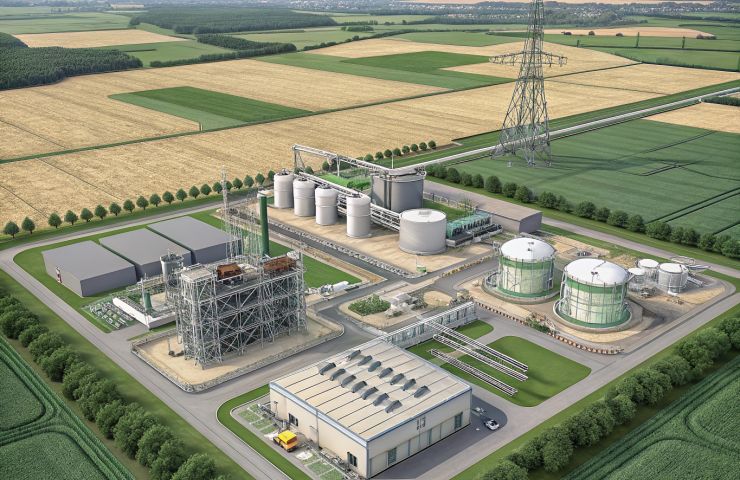
FertigHy is making waves in the green hydrogen world with its ambitious FertHySomme project. This initiative just got a major boost, as it’s one of the first to benefit from France’s new support scheme for decarbonized hydrogen. The project has locked in long-term backing for a substantial 95.3 MW of its targeted 200 MW electrolyser. Located in Languevoisin-Quiquery, Hauts-de-France, the plant is aiming to crank out around 500,000 tonnes of low-carbon calcium ammonium nitrate (CAN27) each year by 2030. This move is expected to slash CO₂ emissions—think 80 to 90% lower compared to traditional European fertilizers—which is a big deal for environmental sustainability.
Hydrogen Support Mechanism Catalyzes Fertilizer Decarbonization
The French Ministry of the Economy rolled out a competitive scheme that functions like a contract-for-difference. The goal? To ramp up green hydrogen production on an industrial scale. With a national target of hitting 6.5 GW of electrolyser capacity by 2030, the first round of funding, which totals up to €778 million over 15 years, was split among three projects, including FertigHySomme, Hydrozere, and eM-Rhône, amounting to 161.4 MW in electrolysis capacity. This mechanism guarantees a fixed price for low-carbon hydrogen, easing the investment risks associated with electrolysers and hydrogen infrastructure. This way, clean hydrogen can really compete with traditional methods like steam methane reforming.
How Electrolytic Hydrogen and Green Ammonia Work
At the core of FertHySomme is a powerful 200 MW water electrolyser that’s connected to France’s primarily nuclear-and-renewables energy grid. Using alkaline or proton exchange membrane technologies, it splits water into hydrogen and oxygen, generating an impressive estimated 30,000 tonnes of green hydrogen every year. This hydrogen feeds right into a Haber-Bosch loop, which synthesizes ammonia from electrolytic hydrogen and nitrogen pulled from the air. The beauty of this method lies in its minimal lifecycle emissions. On the downstream side, ammonia is converted into nitric acid and combined with ground limestone to produce CAN27 granules—these fertilizers are chemically identical to conventional options but come with a significantly reduced carbon footprint.
A Pan-European Consortium Behind FertHySomme
FertigHy launched in mid-2023, backed by a powerhouse partnership of six major European players: EIT InnoEnergy, RIC Energy, MAIRE (Maire Tecnimont Group), Siemens Financial Services (with Siemens France as a tech partner), InVivo, and Heineken. Each partner brings something valuable to the table—EIT InnoEnergy fosters cross-value-chain collaboration and aligns projects with EU policy objectives, while RIC Energy focuses on securing long-term power purchase strategies. MAIRE contributes EPC engineering and process know-how through Stamicarbon’s NX Stami Green, Siemens adds their digitalization and automation magic, InVivo manages offtake and distribution through European cooperatives, and Heineken connects demand back to agriculture, all while trying to cut down on those pesky scope 3 emissions.
Strategic, Economic and Environmental Impacts
With an eye-watering investment of around €1.3 billion, FertHySomme is positioned to serve as a catalyst for regional reindustrialization. It promises to create about 250 direct jobs along with a few hundred more in construction, logistics, and services. It also aligns with EU goals aimed at reducing reliance on imported fossil-based fertilizers and shielding farmers from volatile gas prices. Thanks to its grid-connected electrolyser, the plant can efficiently tap into stable nuclear generation, eliminating the need for dedicated on-site renewable energy sources while still receiving the low-carbon badge of approval under Renewable Fuels of Non-Biological Origin quotas.
But it’s not all smooth sailing. Environmental NGOs, like Les Amis de la Terre France, have raised eyebrows about the notion of “green” fertilizer production. They argue that it barely scratches the surface of agricultural emissions, pointing out that the majority of greenhouse gases released stem from nitrous oxide emissions in the fields—definitely something to consider. Concerns have also been raised around daily freshwater withdrawals—reportedly about 7,000 m³—as well as safety risks associated with large storage of ammonia and nitrates, not to mention the ongoing debate about the potential entrenchment of intensive monoculture systems.
Forging a Template for Low-Carbon Fertilizers
FertHySomme isn’t just another gigafactory; it’s a pioneering example of how hydrogen infrastructure can dovetail with efforts for industrial decarbonization. If everything goes according to plan, and the facility kicks off operations by 2030, it could provide solid proof of the technical and economic viability of combining high-capacity electrolysis with ammonia synthesis in industrial settings. This could open doors for more FertigHy plants in Spain and other parts of Europe, scaling up to millions of tonnes of annual low-carbon fertilizer production.
However, success hinges on the strength of clean hydrogen offtake agreements and the reliability of certification schemes for low-carbon ammonia and fertilizers. With the EU tightening quotas for renewable hydrogen and implementing stricter carbon pricing, FertHySomme is poised at the crossroads of policy, markets, and technology. For everyone from farmers to investors, it sheds light on the challenges and opportunities that come with decarbonizing one of agriculture’s most climate-intensive segments.
Looking ahead, the launch of FertHySomme will serve as a real test for navigating permitting processes under rigorous Seveso regulations, understanding local acceptance dynamics, and ensuring supply chain readiness for scaling up electrolyser production. If it lives up to its promises, it might just become a blueprint for a more resilient, low-carbon European food value chain, all driven by green hydrogen production and fueled by groundbreaking industrial innovation.