Guangzhou Proposes Toll Waivers and Subsidies for Fuel Cell Vehicles
Guangzhou’s draft plan would waive expressway tolls and offer subsidies for trailers and stations to accelerate hydrogen fuel cell vehicles.
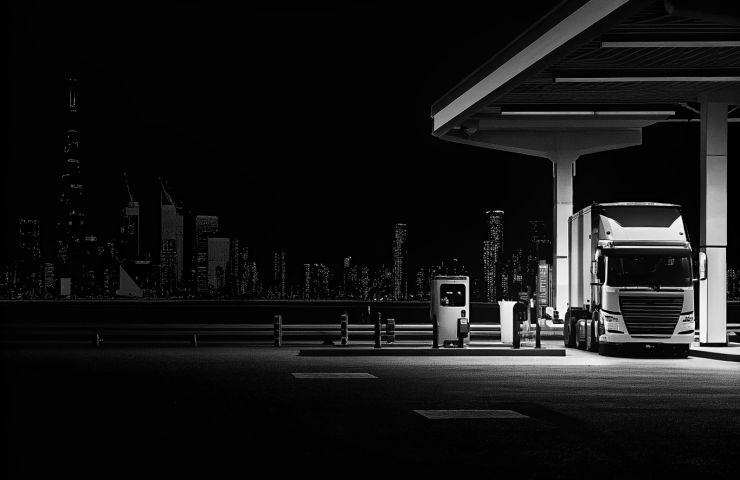
The Guangzhou Municipal Government has proposed a draft package of incentives this month to accelerate hydrogen fuel cell vehicles in the city. According to a draft released by the Guangzhou Municipal Development and Reform Commission, the measures under public consultation would exempt eligible vehicles and hydrogen tube trailers from expressway tolls, subsidize high-pressure trailers, support hydrogen refueling stations and seek to have fuel-cell trucks make up 30 percent of the city’s commercial fleet by 2030. Guangzhou is a historic manufacturing hub and major port city in China’s Pearl River Delta, where heavy trucking and marine logistics play a crucial role in regional commerce. The draft’s comprehensive scope goes beyond vehicle subsidies to coordinate the entire hydrogen value chain, from production to refueling infrastructure.
Can Toll Waivers and Subsidies Bridge the Cost Gap?
The draft measures target the two largest expense categories for heavy-duty hydrogen fleets: road access and fuel logistics. Industry analysts note that expressway tolls can account for a significant share of a heavy truck’s operating expenses on high-mileage routes. Specialist reporting indicates:
- Toll waivers for hydrogen vehicles and tube trailers first registered in Guangzhou, removing a key operating expenditure.
- A subsidy of 400,000 yuan for companies purchasing tube trailers rated at 30 MPa or above, and 600,000 yuan for units rated at 50 MPa or above, according to the draft.
- Price-linked support for stations, with hydrogen ceilings of 26 yuan per kilogram by the end of next year and 22 yuan per kilogram by 2030, plus station subsidies of 3 to 5 yuan per kilogram subject to an annual cap of 1.5 million yuan.
- A target under which fuel-cell trucks would represent 30 percent of Guangzhou’s commercial and heavy-vehicle fleet by 2030, as reported in specialist industry coverage.
Breaking Down the Costs
Operating economics for a 49-tonne fuel-cell truck were estimated to be about 20 percent higher than for a comparable diesel model before toll exemptions, according to analysis cited by China’s government news service and the China Automotive Strategy and Policy Research Center. That penalty is a hurdle on long-haul routes where mileage and tolls drive costs. Transport logistics, especially without dedicated hydrogen pipelines, can represent a major portion of fuel cost, as noted in lifecycle studies by the International Council on Clean Transportation. The proposed subsidies aim to bring total cost of ownership closer to parity with conventional vehicles.
Policy in Context
China’s hydrogen strategy has relied on demonstration clusters since the early 2020s, coordinating production, distribution, fueling and vehicle deployment. Policy research by the Center for Strategic and International Studies outlines a “3+2” city-cluster model in regions such as Beijing, Shanghai and Guangdong. During China’s 14th Five-Year Plan, hydrogen was highlighted as a frontier industrial sector, and municipalities were directed to develop integrated local ecosystems. Guangzhou’s draft echoes these instructions by tying vessel subsidies to the city’s river and coastal shipping corridors. The local approach mirrors national guidance while attempting to reflect Guangzhou’s logistics footprint.
Who's Behind the Plan?
The programme is spearheaded by the Guangzhou Municipal Development and Reform Commission, which drafted the measures and opened them for public consultation. National bodies such as the Ministry of Finance and the China Automotive Strategy and Policy Research Center have shaped the wider fuel-cell demonstration framework. Liu Jianguo, head of hydrogen-energy science at North China Electric Power University, told China’s government news service that highway toll relief can materially reduce operating costs and support wider fleet deployment. The public consultation period allows freight operators, equipment manufacturers and station developers to submit feedback before final rules are adopted.
What Are the Potential Benefits?
Proponents argue that the draft could:
- Lower total cost of ownership for high-mileage fleets by cutting toll and logistics expenses.
- Create initial demand signals for hydrogen infrastructure, including stations and high-pressure trailers.
- Encourage local manufacturing of fuel cell systems, trailers and station equipment.
- Support a shift to zero-tailpipe-emission trucks on key freight corridors.
By signaling sustained municipal backing, the plan may unlock private capital, reduce investor risk and accelerate learning in fuel-cell durability, high-pressure storage design and station operations. Cleaner heavy transport could cut urban emissions of particulate matter and nitrogen oxides, though lifecycle climate benefits depend on hydrogen production pathways.
Challenges and Uncertainties Ahead
Several factors remain unresolved as the draft moves through consultation:
- Final eligibility rules, budget execution and implementation timelines are not yet confirmed.
- Actual station utilization rates will determine if price-linked subsidies suffice to keep hydrogen affordable.
- Coordination between municipal authorities and central regulators will shape safety standards for high-pressure equipment and vessel operations.
- Experts caution that unsubsidized competitiveness hinges on further cost cuts in vehicle manufacturing and hydrogen production from low-carbon sources.
- Without transparent data on hydrogen origin and station throughput, environmental claims may be hard to verify.
Each of those points could change how effective the package proves to be. The draft sets policy direction, but execution details will decide whether the measures translate into sustained market shifts or short-term adoption spikes.
Impact on Manufacturers and Fleets
If adopted, Guangzhou’s plan would send clear signals to local suppliers and logistics firms. Manufacturers of 30 MPa and 50 MPa tube trailers could adapt designs to meet subsidy thresholds, while station developers might optimize modular layouts to align with proposed daily output limits. Vehicle OEMs would gain a demonstrable market for assembling or importing fuel-cell trucks. For operators, predictable toll relief and capped fuel prices could make long-distance hydrogen routes more economically viable.
The Road to Commercial Viability
Ultimately, success depends on building a dense network of refueling stations, achieving high utilization and sourcing hydrogen from low-carbon processes. Research from the Union of Concerned Scientists and the International Council on Clean Transportation shows that lifecycle emissions vary widely depending on whether hydrogen comes from fossil-based reforming, coal gasification or renewable-powered electrolysis. The draft does not stipulate a minimum share of green hydrogen, leaving room for mixed sources during the programme’s initial phase. Municipal leaders will need to clarify how much renewable hydrogen enters the supply chain to ensure environmental gains match economic and industrial objectives.
Looking Ahead
If finalized, Guangzhou’s draft would join a growing list of local hydrogen support programmes across China. The key test will be whether a combination of toll waivers, trailer grants and station subsidies can build a sustainable hydrogen transport ecosystem that can stand on its own once initial budgets are spent. For logistics operators and equipment manufacturers, predictable policy signals can justify fleet investments and scale up production. However, keeping hydrogen prices and vehicle costs on a downward trajectory will be critical to achieve the draft’s 2030 fleet target without perpetual public support. Guangzhou’s example could then serve as a model for other major cities eyeing clean hydrogen strategies.