NYK Line Unveils AMANE Hydrogen Fuel-Cell Dining Cruise for Tokyo Bay
NYK Line’s upcoming hydrogen fuel-cell dining cruise ship AMANE is set for Tokyo Bay service around May 2027, featuring Yanmar-designed fuel cells, Toyota storage modules and ENEOS-supported bunkering under MLIT safety guidelines.
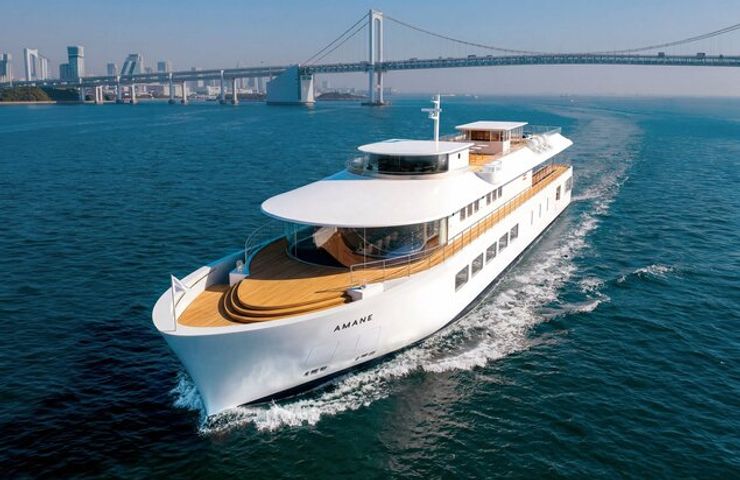
NYK Line has launched its first hydrogen fuel-cell dining cruise ship, AMANE, from the Maehata Shipbuilding yard in Sasebo, Nagasaki Prefecture this month. Delivery is slated for March, with service expected around May in Tokyo Bay. The vessel is intended to replace the restaurant ship Lady Crystal, which Cruise Club Tokyo operates at Tennozu Isle.
According to NYK Line specifications, AMANE measures roughly 48 meters long, with a 9.5-meter beam, a draft of about 2.1 meters and a gross tonnage near 480. The dining layout accommodates approximately 90 seated passengers. Designers say that layout reflects a balance between fuel-storage requirements and guest comfort.
The propulsion system at the heart of AMANE comes from Yanmar Power Solutions, drawing on lessons from the hybrid passenger vessel HANARIA, which combined hydrogen fuel cells, batteries and biodiesel when it entered service in 2024, Yanmar says. For AMANE, that next-generation fuel-cell stack has been scaled and packaged to suit the constraints of a compact coastal cruise ship.
Quiet, Clean Power—Onboard
The fuel-cell stack converts compressed hydrogen and ambient air into direct-current electricity, emitting only water vapor and trace heat, NYK Line says. Power converters then route that electricity to electric propulsion motors and to hotel loads—lighting, HVAC and galley equipment. By eliminating internal combustion, the system produces no nitrogen-oxide or sulfur-oxide exhaust and significantly reduces noise and vibration, qualities that are intended to enhance the dining experience.
Engineering the Hydrogen Supply
Toyota Motor Corporation provides high-pressure hydrogen storage modules rated at several hundred bar, each equipped with automated pressure-relief valves, leak detectors, emergency shut-off systems and dedicated ventilation, NYK Line indicates. Those modules comply with safety guidelines issued by the Japan Ministry of Land, Infrastructure, Transport and Tourism for hydrogen fuel-cell ships.
Bunkering at Tokyo Hydrogen Stations
ENEOS Corporation will oversee hydrogen production or procurement and refueling at stations around Tokyo, ENEOS says. The company does not disclose precise production pathways or lifecycle carbon intensity, though it applies marine-grade purity controls and pressure conditioning at its expanding hydrogen infrastructure.
Balancing Power with Energy Management
Aiming for smooth acceleration and efficient hotel-load handling, Yanmar Power Solutions outlines an energy-management system that may integrate batteries for transient loads. Dynamic load balancing and safety interlocks coordinate fuel-cell output, battery reserves and propulsion motors, Yanmar says, and the architecture is designed to ensure reliable operation under varying demand.
Tennozu Isle will serve as AMANE’s home port. The area is a redeveloped waterfront district with offices, dining venues, cultural attractions and ferry piers, and it offers predictable short routes with daily returns for bunkering, inspection and maintenance.
NYK Line reports it conducted safety verifications under MLIT’s hydrogen fuel-cell ship guidelines. Although guideline-based checks aim to mitigate hydrogen-leak and pressure-failure risks, NYK cautions that compliance should not be viewed as an absolute guarantee against all operational hazards.
From Demo to Commercial Operation
For Yanmar, AMANE provides a full-scale commercial reference for marine fuel-cell propulsion. Toyota extends its high-pressure storage expertise beyond road vehicles, and ENEOS links its land-based hydrogen stations to a marine application. Together, they help build vital hydrogen infrastructure for industrial decarbonization, according to project partners.
Japan’s Basic Hydrogen Strategy identifies high installation costs and limited refueling networks as key barriers, while IMO’s 2023 GHG strategy emphasizes well-to-wake lifecycle assessments. Coastal demonstrations such as AMANE can supply operational data—fuel consumption, refueling protocols and passenger feedback—that inform policy, safety standards and future vessel designs.
Reality Check on Lifecycle Emissions
Zero tailpipe emissions are straightforward: water vapor is the only onboard exhaust. The broader climate impact, however, depends on how ENEOS sources hydrogen—green hydrogen via electrolysis, fossil-derived routes or other methods—as well as compression and transport energy, none of which have been fully disclosed.
Hydrogen’s low volumetric energy density requires substantial storage modules, creating a trade-off between fuel range and deck space for dining. Designers balanced capacity needs against ambiance, a consideration that is absent on conventional diesel-powered restaurant ships.
Pathway to Wider Adoption
AMANE is not intended for deep-sea cargo service. Instead, the vessel demonstrates hydrogen fuel-cell viability for ferries, harbor craft and short coastal cruises that return to port daily. Standardizing bunkering procedures, crew training and safety protocols in this setting may pave the way for broader hydrogen infrastructure in maritime contexts.
As AMANE moves from sea trials into revenue service next spring, NYK Line, Yanmar, Toyota and ENEOS will monitor fuel consumption, refueling times, maintenance cycles and passenger satisfaction. Those metrics will guide decisions on scaling hydrogen fuel-cell technology to larger vessels and more demanding routes.
For diners aboard AMANE in Tokyo Bay, the experience may feel futuristic: a near-silent cruise powered by hydrogen, gliding past Tokyo’s illuminated skyline. Behind the scenes, an orchestrated network of fuel cells, high-pressure storage and shore-based hydrogen supply will showcase zero-emission technology in action.