Hydrogen Fuel Cell News: Beyond Aero’s Blériot Completes France’s First Manned Hydrogen-Electric Flight
Beyond Aero’s Blériot demonstrator completed France’s first manned hydrogen-electric flights at Gap-Tallard, validating an 85 kW fuel cell/battery hybrid and paving the way for zero-emission business jets.
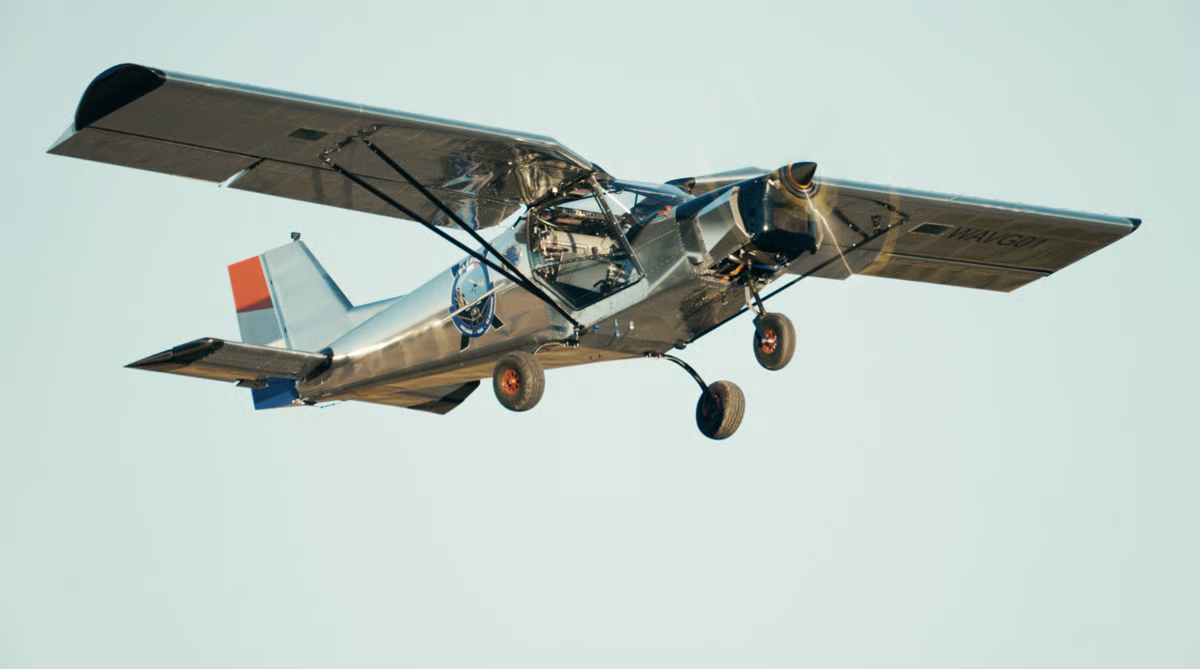
So, picture this: soaring quietly above the breathtaking French Alps is more than just a tiny ultralight aircraft. Tucked inside that sleek fuselage is a combo of a proton exchange membrane fuel cell and a battery pack, spinning an electric motor and powering a propeller—all while leaving behind absolutely zero CO₂ emissions. This innovative aircraft, known as Blériot, was recently flown by Beyond Aero and made history by completing France's first-ever manned, fully hydrogen-electric flight over Gap-Tallard. Their goal? To test an 85 kW fuel cell/battery hybrid powertrain under real flying conditions—and, boy, did they deliver!
Flight Campaign Highlights
The team over at Beyond Aero didn’t mess around. They nailed down a focused test plan that included 10 takeoffs and two full flights from the Gap-Tallard airfield, set in the stunning Hautes-Alpes region. This area is like a pilot's dream, with high mountains providing reliable thermals and plenty of open sky. During the flights, Blériot easily climbed to 2,300 feet and maintained cruising speeds of around 110 km/h. What’s really cool is how smoothly it switched between the hydrogen fuel cell and auxiliary batteries during the flights, all without emitting a trace of CO₂—just water vapor and a hint of NOx. They even upgraded the refueling infrastructure at Gap-Tallard to handle 340 bar hydrogen transfers, gathering essential data on refueling cycles, leak detection, and pressure management tailored for manned flights.
Technical Insight
Now let’s dive into the tech. Blériot’s propulsion system is a clever mix of a proton exchange membrane fuel cell stack that provides around 57 kW of continuous power and a lithium battery pack that can kick in an extra 28 kW. The hydrogen is stored in three composite tanks, each pressurized at 340 bar, containing about 1.2 kg of the gas. This hydrogen fuels the stack through precision regulators while electronics convert the DC output to power a single electric motor and propeller. To top it off, a multi-loop thermal control system manages waste heat from both the energy sources, ensuring everything runs smoothly in different temperatures and flight conditions. Designers really thought this through, incorporating hydrogen-compatible materials and leak-proof fittings to tackle risks associated with embrittlement and flammability. This hybrid setup not only guarantees consistent endurance but also provides a safety net, balancing the steady power from the fuel cell with quick boosts from the batteries.
Strategic Implications
The flights undertaken by Beyond Aero may signal a game-changer for hydrogen-electric propulsion in aircraft where battery-only platforms struggle to keep up. Compressed hydrogen boasts impressive energy density, paving the way for future business jets that could potentially cover ranges of 800–1,000 nautical miles—distances lithium-ion batteries can't realistically match without becoming surprisingly heavy. Plus, studies suggest that these fuel cell systems could slash in-flight climate impact by up to 90% when they're powered by green hydrogen generated through renewable electrolysis. For charters and executive planes, that means no tailpipe CO₂ emissions on regional flights, helping operators comply with increasingly tough sustainability rules in the EU—and possibly even commanding a premium for carbon-neutral services.
Company Context
Founded in 2020 and based in Toulouse, Beyond Aero is quickly making waves in the hydrogen aviation world. They’ve attracted a whopping €44 million in funding by late 2024, thanks to venture capitalists, Bpifrance, and the France 2030 program. Their plans include getting CS-23 certification for their six-to-eight seat One (BYA-1) jet, with a design lock-in aimed for the end of the decade and a hopeful entry into service in the early 2030s. Beyond their demonstrator flights, the startup is also gearing up for manufacturing at a future hangar facility near Toulouse, where they'll ramp up production of fuel cell modules, high-pressure tanks, and electric motors—everything under one roof!
Policy and Infrastructure
France’s revamped hydrogen strategy highlights aviation—and maritime transportation—as key areas for decarbonization, aligning nicely with EU Clean Aviation and Clean Hydrogen initiatives that plan to launch demonstrators by 2030 and short-range operations by 2035. Regional airports like Gap-Tallard are being eyed as potential early locations for hydrogen supply hubs, featuring compression stations, safety zones, and dedicated loading areas. The insights gleaned from the Blériot flights will directly influence evolving EASA guidelines related to hydrogen leak management, fire standards, and ground handling, ensuring next-gen hydrogen-powered aircraft can smoothly operate under existing regulations.
Historical Momentum
Did you know that hydrogen-powered flight experiments go way back to the 1950s? While many early attempts—like the NACA-modified bomber engine tests and the Soviet liquid hydrogen Tu-155—turned out to be short-lived, fuel cell technology has really taken off in the last couple of decades with projects such as Antares DLR-H2 and the German HY4, which pulled off its own liquid hydrogen-powered flight in 2023. But it wasn’t until Blériot’s series of flights that France saw a successful manned flight combining pure fuel cell and battery hybrid technology. This milestone not only reconnects us to previous efforts but also integrates leading-edge hydrogen storage and electronics into a lightweight platform—setting the stage for more widespread adoption.
Environmental and Market Outlook
While Blériot may only carry a limited load of hydrogen, its successful demonstration could lead to fleets capable of cutting tens of millions of tonnes of CO₂ emissions by mid-century, assuming we're sourcing that hydrogen through low-carbon electrolysis. Market experts predict a hydrogen aviation sector worth billions by the mid-2030s, driven primarily by business jets and regional aircraft. Beyond Aero’s letters of intent already suggest customer interest valued in the hundreds of millions. As electrolyzer capacity ramps up and hydrogen production costs drop, operators will be able to secure green hydrogen supply contracts—binding clean hydrogen offtake agreements that lock in project financing and reduce infrastructure investment risks at airports globally.
Looking Ahead
The Blériot flights are just the beginning of a much longer journey toward hydrogen-electric aviation. Scaling that 85 kW prototype into multi-megawatt systems for the One jet will test everything from fuel cell module integration to high-pressure tank certifications and service logistics at dedicated refueling stations. Collaborating with energy providers, airport managers, and regulators will be crucial to intertwining hydrogen infrastructure with emerging standards. But if the Gap-Tallard campaign taught us anything, it's that hydrogen-electric flight has transitioned from mere speculation to a tangible reality. The next big step? Snagging regulatory approval for those first business-class flights—and once we overcome that hurdle, we could be looking at a whole new era of zero-emission executive travel right on the horizon.