Honeywell Advances Ground Integration of Aircraft Power System
Honeywell International SRO integrates hydrogen fuel-cell subsystems at ÚJV Řež, setting up a TRL 4 ground demo before moving to Italy for full integration with batteries and a megawatt-class electric motor.
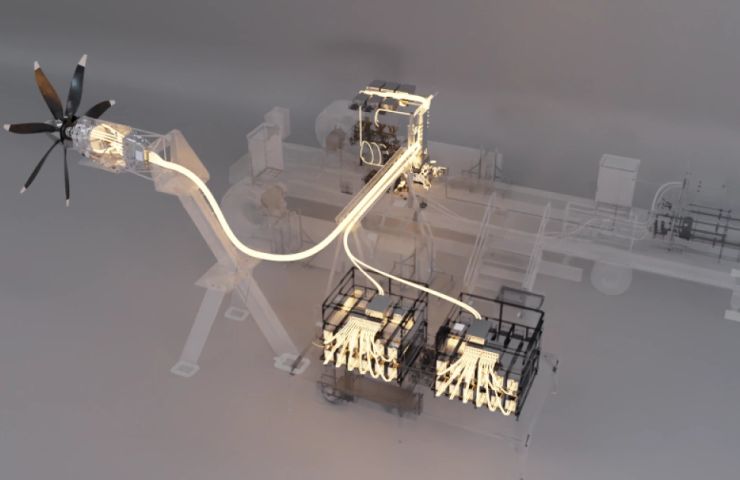
Honeywell International SRO and Honeywell Aerospace have made some exciting strides this month by integrating the main subsystems of a hydrogen fuel-cell power source at a dedicated ground test platform in ÚJV Řež, just outside Prague. This is a significant milestone in the EU-funded NEWBORN project, part of the Clean Aviation Joint Undertaking. Next up, the system will head to Gorizia, Italy, to team up with battery modules from Pipistrel Vertical Solutions and a megawatt-class electric propulsion system crafted in collaboration with the University of Nottingham.
What It Means
This integration marks a real turning point in hydrogen fuel cell news for aviation. We’re moving away from isolated tests of individual components and stepping into a more coordinated approach that’s relevant for aircraft. By linking fuel-cell stacks, cryogenic hydrogen handling, thermal control, high-voltage distribution, batteries, and motor controls, engineers can now observe how these subsystems interact with each other under controlled conditions. This is essential for reaching technology-readiness-level 4 in ground demonstrations, although we’re still quite a way from an aircraft-ready propulsion unit.
The new PowerCell Sweden AB hydrogen stacks are now working together with air-supply and recirculation systems, cooling loops, safety interlocks, and power conversion hardware. This level of integration helps to uncover challenges like thermal hotspots, pressure variances, and electrical transients—issues that simply don’t show up when testing components in isolation.
It's important to note that the environmental benefits hinge on using green hydrogen. Without renewable-powered liquefaction or on-site electrolysis, any operational CO₂ reductions would just be theoretical. So, the message is clear: integration alone doesn’t guarantee a truly zero-emission aircraft.
How the Platform Works
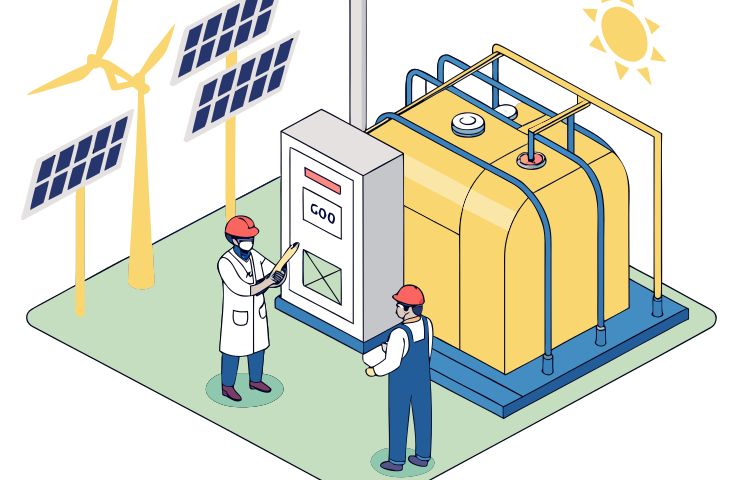
The specialized rig set up by Honeywell’s Brno engineering team mimics key functions of an aircraft, including liquid-hydrogen storage and transfer, air bleed for the fuel-cell cathodes, coolant loops for heat rejection, and routing high-voltage power to a simulated propulsion load. They’re really going all out, with valves, pumps, DC-DC converters, and inverters controlled through software designed to replicate transient flight demands.
Electricity generated by proton-exchange-membrane fuel cells flows through converters to a placeholder motor load, while data acquisition systems monitor voltage stability, temperature changes, and hydrogen flow rates. That modular setup allows engineers to easily swap in battery packs and power electronics from Pipistrel and the University of Nottingham without having to rewrite entire test sequences.
Industry Context
The idea of using hydrogen in aviation has been around for ages, with roots tracing back to NASA and Lockheed’s liquid-hydrogen studies in the 1970s, Boeing’s 2008 flight with a fuel-cell demonstrator, and Germany's DLR-H2 project back in 2009. While these early initiatives showed promise in electrochemical propulsion, they hit roadblocks around power density, cryogenic integration, and heat rejection. With NEWBORN, we’re tackling these challenges head-on by marrying scalable 1 MW polymer-electrolyte modules with practical hydrogen handling, thermal management, and high-voltage systems. Ground tests at technology-readiness-level 4 allow engineers to balance mass and insulation, heat rejection against environmental conditions, and safety margins against weight long before any flight trials or aircraft modifications.
Strategic Angle
This project has around €33 million in support from the EU under Horizon Europe’s Clean Aviation program, with a total budget nearing €44 million. By bringing together aerospace original equipment manufacturers (OEMs), research institutes, and specialized suppliers from various countries, the consortium aims to kickstart a European supply chain for hydrogen-electric propulsion. These parallel 1 MW modules are crafted to scale beyond 3 MW, eyeing an early use on CS-23 commuter aircraft that typically require around 2 MW for take-off.
Next, we’ll see what happens in Gorizia, where the integrated power source will connect with Pipistrel battery systems and a megawatt-class electric motor for a full ground demo. But until we can prove durability, thermal-control efficiency, and fault resilience, any flight-test schedules and certification plans remain on shaky ground.
Regulatory Hurdles
Even if the technical aspects go smoothly, it doesn’t mean approvals will follow quickly. Regulators need to sign off on safety measures for cryogenic tanks, emergency venting, electrical arc protection, redundancy protocols, and ground handling procedures. Airports will have to have certified hydrogen fuel supply chains, storage areas, and refueling stations set up according to evolving EASA and ICAO standards. Every operation—from pressurization cycles to system shutdowns—demands detailed data on leak detection, sensor reliability, and worst-case failure scenarios. Clearing all these hurdles could take as long as the development itself.
Perspective
For now, this is still very much lab work—not a hydrogen-electric commuter jet ready for takeoff. The real challenges lie in proving durability over thousands of cycles, performance at altitude, and ensuring safe, lightweight cryogenic storage. Reaching TRL 4 is definitely a big deal, but there’s still a significant gap between having ground integration and attaining certified airworthiness.
That said, the EU funding and industry collaboration show that hydrogen-electric propulsion isn’t just a niche concept. If engineers can smooth out the technical issues on the ground, they could stand a chance against turboprops and battery-electric competitors on short routes. However, time is of the essence when it comes to getting the grid and hydrogen refueling investments in place. By the time the industry can confirm power density and durability, airports might still be lagging behind in their ability to handle liquid hydrogen safely at scale.
While integration tests are essential for generating the safety data that regulators require, they won’t singlehandedly secure customer orders. Without that critical data, hydrogen planes might remain grounded—even if someone builds the lightest fuel-cell stack on the market. The million-dollar question is: will this milestone open the door to zero-emission regional flights, or will it just be another impressive lab demonstration? The upcoming phase in Italy should give us some answers.