Hydrogen Fuel Cell News: Monash Engineers 250 °C Proton-Shuttling Nanosheet Membrane
Monash University researchers have developed an ultra-thin graphene/boron nitride nanosheet membrane with nanoconfined phosphoric acid enabling water-free hydrogen and methanol fuel cell operation at 250 °C, promising high power density and simplified system design.
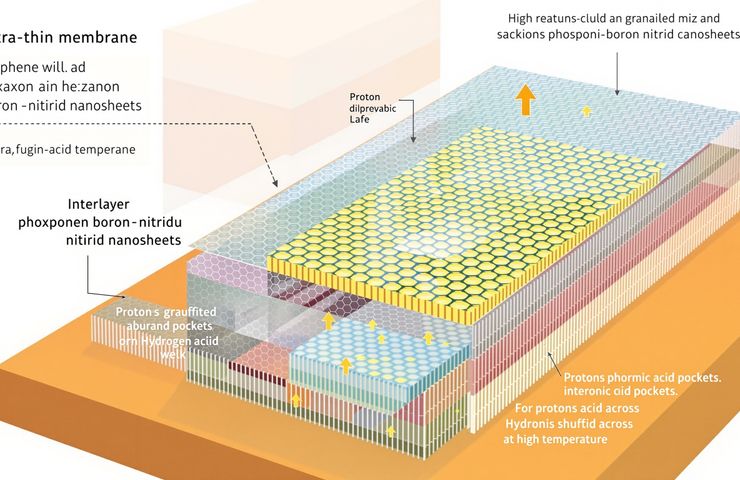
In the latest hydrogen fuel cell news, researchers at Monash University have come up with a truly innovative ultra-thin membrane. This gem is crafted from graphene and hexagonal boron nitride nanosheets infused with nanoconfined phosphoric acid. What's exciting about this development is its ability to keep high proton conductivity at temperatures around 250 °C—all without needing any liquid water. This means hydrogen and methanol fuel cells can deliver impressive power density even in dry conditions, paving a new path for high-temperature proton exchange membrane fuel cells. It really gives us a fresh perspective on how hydrogen fuel cells work in hot environments, and it could lead to some big changes in future hydrogen infrastructure.
Breaking Through Traditional PEM Barriers
Typically, low-temperature proton exchange membrane (PEM) fuel cells use hydrated perfluorosulfonic acid polymers like Nafion. The catch is that they lose conductivity when the temperature goes above 80–100 °C because the water starts to evaporate. To keep the membrane hydrated, you usually need:
- External humidification systems
- Precise thermal controls
- Bigger stacks and more complicated systems
All of these extra requirements can jack up costs, escalate maintenance needs, and limit operational range. On the flip side, high-temperature PEM fuel cells, which operate at 150–200 °C, generally use phosphoric acid-doped polymers. They do a better job of handling impurities, and water management is less of a hassle, but they’re still grappling with issues like acid leaching and the stability of the polymer. By pushing the stable operation temperature to about 250 °C without any water, Monash’s new membrane is addressing a bottleneck that’s been hanging around in PEMFC design for far too long.
Nanosheet Design and Proton Movement
The magic here lies in this atomically thin composite membrane. It uses stacked graphene and hexagonal boron nitride (h-BN) nanosheets, creating a tight, gas-impermeable barrier. Here are some key points:
- Organized 2D channels: The way these nanosheets stack up creates a continuous pathway for protons to travel.
- Nanoconfined phosphoric acid: Acid molecules are tucked away in tiny pockets, which allows for rapid proton hopping, even without bulk water.
- Gas-tight: Even though it's thin, the membrane prevents hydrogen or methanol crossover, boosting fuel efficiency and long-term performance.
- Sturdy structure: The combination of graphene and h-BN gives this membrane both high tensile strength and chemical stability, even at elevated temperatures.
This “proton-shuttling” effect merges surface conduction along 2D crystal faces with acid-mediated proton hops, which separates conductivity from water content and allows for operations around 250 °C. So, while electrons churn through an external circuit at the anode, protons journey through the nanosheet-acid network to the cathode, where they produce water.
Testing and Results
- Dry hydrogen fuel tests show high power density, with media reports calling it “exceptionally high.”
- Feeding concentrated methanol yields stable operations, hinting at potential use in direct methanol fuel cells and reformate setups.
- Thermal cycling up to 250 °C over long periods reveals minimal phosphoric acid loss, suggesting this membrane has promising longevity.
While the detailed numbers for conductivity, power density, and lifespan are still under wraps until full publication, peer-reviewed articles in Science Advances and technical documents from Monash back up this breakthrough.
Market Impact and Strategic Importance
With water management off the table, hydrogen production and the fuel cell balance-of-plant become simpler and cheaper, cutting down on:
- Costs for humidifiers and heat exchangers
- Operational complexity and maintenance needs
Here's where it gets really interesting! Several sectors could stand to benefit, including:
- Heavy-duty transport: Think fuel cell trucks and buses utilizing those 250 °C stacks for greater efficiency and impurity tolerance—perfect for the growing number of hydrogen refueling stations.
- Industrial cogeneration: Onsite energy and heat generation in places like chemical plants, data centers, or manufacturing sites.
- Backup power and remote off-grid setups: Compact and tough fuel cells can work hand-in-hand with renewable energy for resilient microgrids, backed by nifty hydrogen storage solutions.
Analysts expect the market for high-temperature PEM fuel cells to blossom as businesses look for more flexible and resilient systems. When paired with green hydrogen production from electrolysis, this membrane could strengthen low-carbon energy networks, fast-tracking the shift to zero-emission technology.
A Collaborative Effort in Research
The project, spearheaded by Professor Huanting Wang and first author Dr. Kaiqiang He from Monash’s Department of Chemical and Biological Engineering, builds on over ten years of research into how graphene and h-BN can conduct protons at high temperatures. They've also worked on embedding phosphoric acid within polymers. The findings, published in a high-impact, open-access journal from AAAS, show independent validation. There aren't any commercial partnerships yet, but Monash has filed for patents on related graphene-based proton membranes—so they’re clearly laying the groundwork.
With Australia’s national hydrogen strategy funneling money into advanced materials and electrochemical research, Monash is perfectly situated in Melbourne, where a rich innovation ecosystem thrives along with access to national research grants focused on clean energy and hydrogen infrastructure development.
Challenges and What’s Next
Despite these impressive strides, there are still some hurdles to jump before we see industrial adoption:
- Production scale-up: Making high-purity graphene and h-BN nanosheets cost-effectively is crucial.
- Durability checks: We need extensive fuel cell cycling tests to confirm how long they'll last in real-world scenarios.
- Integration with stacks: Adapting current membrane electrode assemblies and catalysts to fit the nanosheet format.
- Supply chain considerations: Securing raw materials and setting up specialized production lines.
The key to tackling these challenges will be collaboration between universities, equipment manufacturers, and tech developers. Future efforts might dive into hybrid membranes that mix nanosheets with conductive polymers or new catalysts to boost performance even further.
Positioning Against Solid Oxide Fuel Cells
Solid oxide fuel cells (SOFCs) operate at much higher temperatures of 600–1,000 °C. While they bring high efficiency and fuel flexibility, they also have drawbacks like long start-up times, material wear, and pricey systems. Monash's new membrane aims to find its place in the intermediate-temperature range, marrying the quick start-up of PEMFCs with enhanced tolerance to impurities. In this temperature bracket:
- Startup and cycling times are quicker than SOFCs due to lower operating temperatures.
- Stack components face reduced thermal stress, making them more durable.
- Integration with renewable hydrogen or reformate needs fewer auxiliary systems.
This middle-temperature domain could open the door to new applications in distributed generation and transportation, meeting the industry's demand for hydrogen vehicles and emission-free heavy machinery.
Driving Forces in Policy and Economics
Across the globe, hydrogen strategies are increasingly spotlighting advanced materials research to cut costs and broaden applications. In Australia, government grants and industry programs are backing initiatives that enhance hydrogen production methods and fuel cells. From an economic perspective, ditching humidifiers and reducing the balance-of-plant can significantly lower capital costs while boosting overall system efficiency by 10–20% compared to traditional low-temperature PEMFCs, according to market experts. These cost savings can have a real impact on:
- Large-scale power plants that need high-capacity output.
- Transport fleets weighing the total cost of ownership against diesel options.
- Industrial complexes searching to integrate hydrogen into multi-fuel blends.
As financial incentives and carbon pricing take hold, technologies that provide both performance and cost benefits in the 150–300 °C range are bound to draw interest from investors and developers alike.
What Lies Ahead
Monash’s proton-shuttling nanosheet membrane is an exciting example of how 2D materials science and clean hydrogen innovation can come together. As governments and industries ramp up investments in hydrogen infrastructure and green hydrogen production, understanding these fundamental breakthroughs will be crucial to tapping into new applications. Keep an eye out for pilot demonstrations that incorporate these membranes into full-size stacks, and watch for market analyses that measure their impact on total cost of ownership. If this lab success makes it to the commercial world, we might just see water-free, 250 °C proton exchange membranes transform the fuel cell landscape, bridging the gap between PEM and solid oxide systems and pushing sustainable energy further along.