Hydrogen Production Breakthrough: Biomass-Derived Carbon Dots Nearly Double Yields
Shenyang Agricultural University researchers used cellulose-derived carbon quantum dots to decorate CdS, nearly doubling visible-light hydrogen production in lab tests.
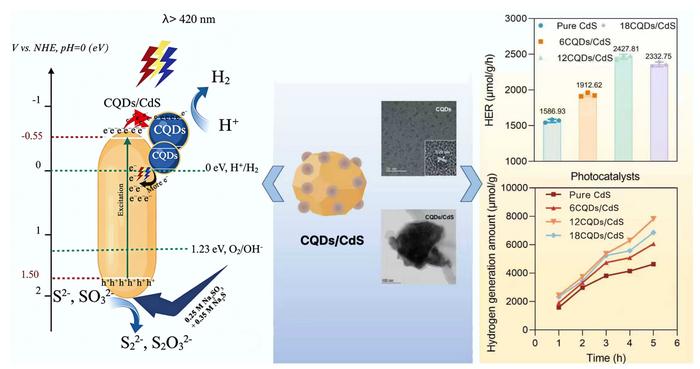
Shenyang Agricultural University has come up with a groundbreaking photocatalyst that turns plant biomass into a powerhouse for hydrogen production. They’ve developed a process that converts cellulose into tiny carbon quantum dots (CQDs) and then attaches them to cadmium sulfide (CdS) nanoparticles. The results? Almost double the hydrogen output when using visible light compared to the unmodified stuff. That’s pretty impressive!
How Can Cellulose-Derived Carbon Dots Supercharge Clean Hydrogen Production?
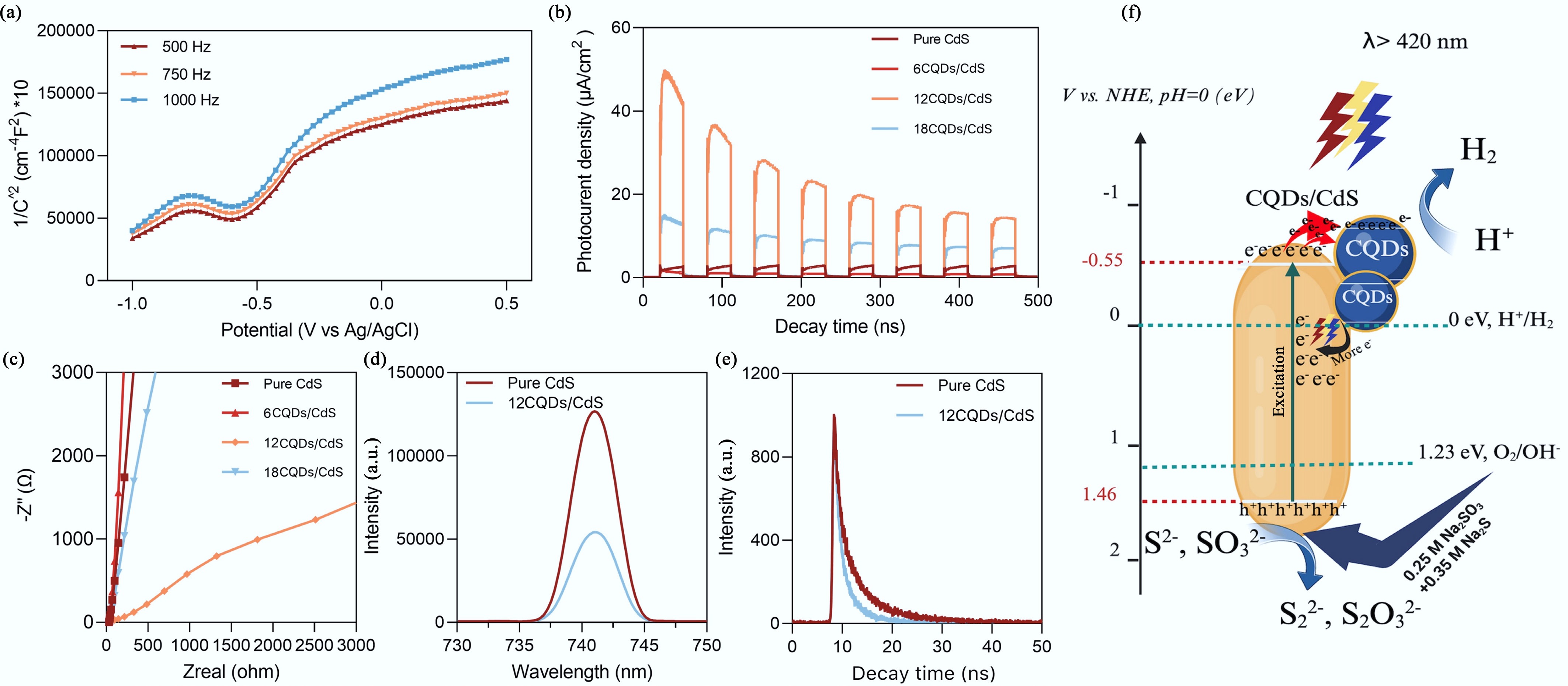
So, here’s the scoop: traditional CdS photocatalysts are great at soaking up visible light, but they tend to deal with a lot of drawbacks like rapid electron-hole recombination and photocorrosion, which really puts a damper on their efficiency. To tackle this problem, the researchers leveraged agricultural waste—pure cellulose powder, no less—as a renewable resource. They used a neat hydrothermal process at a moderate temperature that produced water-dispersible CQDs about 3.5 nm in size, packed with sp2-carbon cores and oxygenated surface groups. Then, they went a step further and anchored these CQDs onto the CdS, creating a dynamic interface without changing the crystal structure of the CdS. The result? Better light absorption, a slight drop in bandgap from 2.05 eV to around 2.01 eV, and much more efficient charge separation.
Meet the Teams Behind the Tech
The first author, Zijing Wang, took the lead on synthesizing and characterizing this innovative approach, demonstrating that the sweet spot—known as 12CQDs/CdS—churned out a whopping 7,812.5 µmol H2/g in just five hours under visible light with a sacrificial agent. That’s nearly double the 4,633.5 µmol/g from the standard CdS. Quan Sophia He, the corresponding author, clarified how CQDs function as both photosensitizers and electron sinks, which helps extend light harvesting while reducing recombination. Their findings were published in Sustainable Carbon Materials, putting biomass-derived CQDs in the spotlight as a sustainable co-catalyst for various hydrogen production methods.
Why Renewable Carbon Matters
This innovation really hits on two major trends: producing green hydrogen and getting the most out of biomass. Turning cellulose—think of it as Earth’s most abundant biopolymer—into useful nanomaterials perfectly fits the goals of a circular bioeconomy. Here are some key benefits:
These advancements indicate a meaningful step forward in the hydrogen production arena, paving the way away from rare metals and towards renewable carbon solutions.
What’s Next for Photocatalytic Hydrogen?
While the results from the lab are really promising, there are still some hurdles to clear before we see this technology in action commercially. We need to tackle issues like stability over longer cycles, find ways to mitigate photocorrosion, and refine reactor design. The research points to some exciting future directions:
Ultimately, these materials could slot right into the current hydrogen infrastructure, enhancing everything from hydrogen storage to refueling networks. As the world looks for green hydrogen news that combines sustainability with performance, biomass-derived CQDs on CdS are lighting the way to a low-carbon hydrogen economy.