Hydrogen fuel cell news: PNT Co. launches roll-to-roll equipment project to boost clean-energy manufacturing
PNT Co., Ltd. is showcasing roll-to-roll fuel cell manufacturing equipment at Japan’s H2 & FC Expo, leveraging its battery expertise to support hydrogen infrastructure and clean-energy goals across Asia.
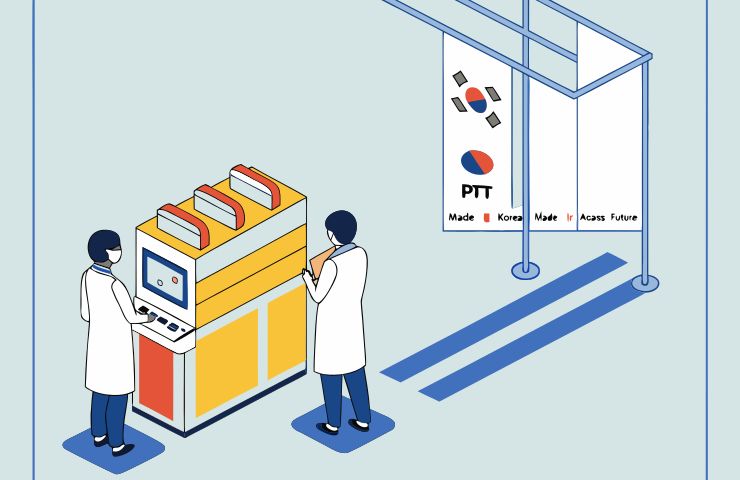
PNT Co., Ltd. is all set to bring its cutting-edge high-speed fuel cell manufacturing equipment to the global stage, and they’re kicking things off at Japan’s top H2 & FC Expo. This new venture aligns perfectly with Korea’s national hydrogen roadmap as well as Japan’s efforts to expand its hydrogen infrastructure. The goal? To adapt the company’s tried-and-true roll-to-roll coating technology—initially designed for secondary batteries—into efficient production methods for fuel cell electrodes and membrane assemblies. They’re leveraging Gumi’s precision engineering know-how to ramp up clean-energy manufacturing.
Powering the hydrogen economy with precision manufacturing
Let’s face it: fuel cells present a fantastic zero-emission power source for both transportation and stationary applications, but scaling up the production of membrane electrode assemblies (MEAs) has been a bit of a challenge. The concept is straightforward yet impactful: utilize continuous, roll-to-roll coating technology to lay down catalyst layers on a polymer or carbon substrate before drying and processing it into a top-notch electrode. With features like optimized tension control, slot-die coating, and real-time monitoring, PNT’s equipment boosts production speed while keeping film thickness and porosity right where they need to be. This means fewer headaches over issues like inconsistent catalyst loading and batch-to-batch variation, which ultimately leads to lower manufacturing costs and better fuel cell durability.
At the expo, engineers will give attendees a behind-the-scenes look at the process. Picture this: a substrate roll being unwound through a series of automated tension-controlled rollers, entering a coating station where precision is key as platinum-based catalyst ink is applied. You’ll see it pass through drying ovens and calendering modules before being rewound or prepared for lamination into complete fuel cell stacks. And here's the kicker—the only byproduct throughout this whole operation is water! It’s a clean, closed-loop process that aligns with ambitious goals for hydrogen production and storage.
Made in Korea, made for Asia’s future
What sets this project apart is its local-first strategy. All the key components and assembly lines will be produced at PNT’s facilities in Gumi High-Tech Valley, tapping into local talent and suppliers every step of the way. With over 600 specialists on board and impressive sales reaching 744 billion KRW last year, the company is clearly on an upward trajectory with its secondary battery equipment business. By branching out into fuel cells, PNT is looking to create new roles in engineering and manufacturing, giving a boost to regional economic development while simplifying lead times and supply-chain logistics. This makes it a lot easier for Asian fuel cell stack manufacturers to get in on the action at a competitive price point.
In addition to demonstrating their tech at the H2 & FC Expo, PNT is on the lookout for partnerships with regional hydrogen producers and equipment integrators to make sure their systems fit well with local feedstocks and conditions. There’s a lot of potential for co-locating electrolyzers and fuel cell generators, especially in off-grid data centers and remote microgrids—areas where hydrogen fuel cell systems are already showing their worth.
Solving real-world challenges in semiconductor packaging
But that’s not all—PNT has another exciting project in the pipeline! At Korea’s KPCAshow, they’ll be showcasing an independently developed Through Glass Via (TGV) plating system for advanced packaging. Glass substrates with TGV interconnects are becoming a hot topic for high-density chips, providing better flatness and electrical performance compared to traditional organic laminates. So how does it work? Micro-vias are drilled into glass, seeded with a barrier layer, and then filled or coated with copper through electrolytic plating.
The concept here, again, is both simple and powerful: PNT integrates high-speed plating techniques, precise agitation control, and close monitoring from their existing printed circuit board and copper foil lines to achieve plating speeds that are over three times faster than what you’d find with conventional methods. This not only addresses slow deposition rates and the pesky issue of void formation but also responds to the rising demand for AI accelerators and 5G RF modules. It’s a clear demonstration of how PNT’s roll-to-roll and panel-based expertise can be applied to innovations in both clean energy and semiconductors.
Synergy with clean hydrogen production and storage
Meanwhile, PNT is also on the hunt for collaborations with green hydrogen producers to ensure the fuel used in their stacks meets some pretty high purity and sustainability standards. They’re considering the alignment of their manufacturing lines with regional hydrogen storage options—like compressed gas and metal hydride carriers—to tackle various challenges in the hydrogen supply chain. This holistic thinking around hydrogen energy news is key to supporting scalable transport options, whether that's hydrogen cars or data centers in need of backup power. As the global market for hydrogen storage and distribution continues to grow, having equipment that can reliably produce fuel cell components at scale is crucial.
With a vision of partnering with local utilities and industrial hubs, PNT is aiming to create demonstration sites where hydrogen is generated via water electrolysis powered by renewables, stored on-site, and then converted back to electricity through fuel cells. These microgrid projects could provide zero-emission power for large campuses, logistics centers, and even remote communities, while also serving as a valuable testing ground for next-gen hydrogen infrastructure. Plus, each site offers engineers the chance to gather real-world data to refine their processes and enhance product reliability.
Environmental and economic impact
By embracing clean hydrogen production techniques, PNT’s fuel cell manufacturing technology is keeping pace with the latest green hydrogen news and helping to expand hydrogen infrastructure across Asia. The fuel cell stacks made using this gear play a significant role in slashing greenhouse gas emissions, especially in cases where hydrogen comes from renewable sources. At the same time, the TGV plating endeavor is cutting waste in PCB processes and pushing forward innovation in high-performance computing packaging, allowing the semiconductor industry to make devices more compact and energy-efficient.
Ultimately, both of these projects highlight how local manufacturing and a keen focus on process control can contribute to both environmental gains and economic growth. By building on their existing roll-to-roll platforms, PNT avoids expensive new tooling setups and speeds up deployment. For the communities in Gumi, Incheon, and Chiba, this means exciting new partnerships, workforce enhancements, and a bolstered high-tech supply chain. This really shows that homegrown tech can tackle global challenges head-on.
Looking ahead, PNT's dual showcase isn’t just a marketing ploy: it's a roadmap for innovative cross-sector solutions that are in tune with industry priorities in both semiconductors and hydrogen. As global players look to decarbonize and digitize, PNT is proving that solutions crafted in Korea have what it takes to shape Asia’s future, unlocking the next wave of clean energy and advanced electronics growth.