Hydrogen Infrastructure: Fraunhofer EMI’s Simulation Tool Boosts Network Resilience
Fraunhofer EMI’s new hydraulic simulation tool creates digital twins of hydrogen networks to predict disruptions, optimize maintenance and enhance resilience.
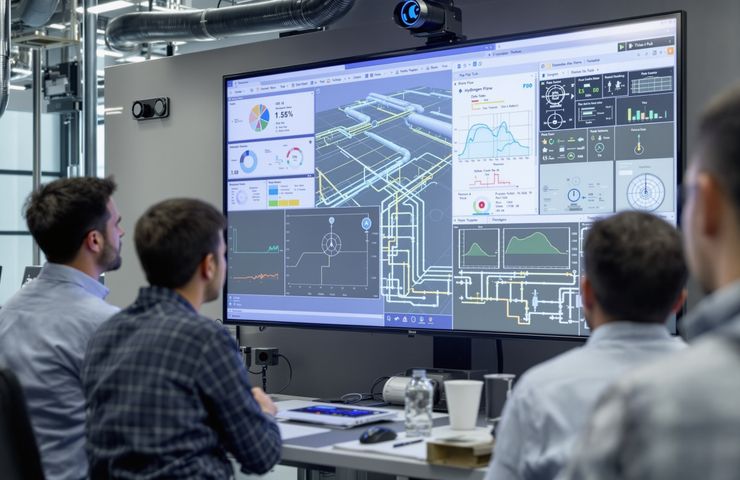
Ever skim through hydrogen news or green hydrogen news and think, “We’re still ages away from real-world uses”? Well, hold onto your hard hat—Fraunhofer EMI just unveiled a hydraulic simulation tool that lets you torture-test an entire hydrogen infrastructure digitally before you dig a trench. No guesswork, no surprises—just a mirror-image pipeline network that flexes and bends exactly like the real deal.
This isn’t just another footnote in hydrogen fuel cell news or hydrogen fuel news; it’s front-page clean hydrogen news and on the tip of every hydrogen energy news feed. Why? Because whether you’re charting hydrogen production curves, designing green hydrogen production plants or figuring out hydrogen storage methods, one rogue leak or a bad valve sequence can cost you millions—and put safety at risk.
A Fragile Pipeline Finds a Digital Bodyguard
Hydrogen’s low density and ninja-like permeability make it a handful. From how do hydrogen fuel cells work to the burning question of what is green hydrogen, operators face a maze of challenges. Should you lean on green hydrogen vs blue hydrogen? How do your hydrogen production methods handle sudden demand spikes? And when you compare hydrogen fuel cell vs battery electric for backup power, can your network keep pace? Traditional models fall short—plain old gas pipelines aren’t the same beast.
Enter the EU’s sky-high green-hydrogen targets and Germany’s push for decarbonization. They’ve created a perfect storm of opportunity and risk. You need rock-solid hydrogen network resilience, the ability to anticipate everything from micro-pinhole weeps to full-bore ruptures, and you need to do it before your first investor demands “Where’s my return?”
Under the Hood: What Makes This Thing Tick
The magic mix here is pure engineering artistry: computational fluid dynamics, network equation solvers and transient analysis modules all playing nice together. The result? A simulation that tracks flows and pressures to the last micro-bar. With this hydraulic simulation tool you can:
- Model steady-state and transient flow across hundreds of kilometers of pipeline—exactly how you’d lay out your next hydrogen refueling stations network.
- Run leak scenarios—from sneaky micro-cracks to highway-size breaks—and map out impact zones in minutes.
- Really torture-test your controls: emergency shut-offs, compressor failures, rapid depressurizations, you name it.
- Paint the data on interactive dashboards: pressure heat maps, flow vectors, alarms—all at your fingertips.
Think of it as a digital twin with all the drama and none of the danger.
Turning Insights into Action
Data is great, but making it actionable—that’s the sweet spot. With Fraunhofer EMI’s toolkit in your corner, you can:
- Slash downtime by spotting wear on valves or creeping pressure drifts and scheduling preventive fixes before alarms light up.
- Fine-tune asset use across your electrolyzer farm, hydrogen data centers and green data centers, squeezing every percent of efficiency out of your operation.
- Blend renewables—wind, solar and more—with hydrogen production in real time, hunting down those sweet spots where supply meets demand.
- Back up your safety case with hard numbers for regulators—ideal for hydrogen project financing or locking in clean hydrogen offtake agreements.
Lower risk, leaner OPEX and a rock-solid pitch for the next round of funding, whether you’re powering hydrogen vehicles or rolling out fleets of hydrogen cars.
Proof of Concept: Trials in the Virtual Field
Fraunhofer EMI didn’t just run wild simulations—they took it to a simulated corridor featuring an electrolyzer, buffer tanks and a mock end-user. They injected leaks at random spots and—voilà—the tool flagged pressure dodges in seconds and predicted how flow would bounce around for hours. That let engineers shift sensors to the hottest hotspots or tweak pipe diameters for a more even ride. Reported accuracy? Spot-on with results from real-world test loops.
Standing on the Giants’ Shoulders
This tool isn’t conjured in a vacuum. It’s built on decades of R&D—think early DOE hydrogen-economy blueprints and the IEA’s sector-coupling models. Now it’s powered by Fraunhofer-Gesellschaft’s resilience push and backed by EU green hydrogen funds. In other words, this isn’t a side project—it’s a full-throttle effort to harden hydrogen infrastructure for tomorrow’s grids.
Beyond the Lab: Wins, Hurdles and Side Benefits
These simulations do more than geek out researchers. Policymakers get confidence to greenlight mega-projects. Investors get dynamic risk profiles that beat static spreadsheets. Operators can drill emergency protocols in virtual control rooms—with zero leaks in the real world.
Sure, high-fidelity models crave serious computing horsepower and a stream of sensor data. But with today’s cloud services, edge devices and AI-driven hydrogen storage analytics, those barriers are coming down fast.
Imagining the Next Generation Network
Picture live feeds from your pipelines streaming into the model. AI flags anomalies. You run what-if scenarios on the fly—no shutdowns, no sweat. One team oversees cross-border corridors, another balances megawatts for a cluster of green hydrogen plants. It’s a fully integrated digital twin universe weaving electricity, gas and hydrogen vectors into a single pane of glass.
Ready to Virtually Dig In?
At the end of the day, scaling green hydrogen production and keeping hydrogen cars or hydrogen vehicles humming depends on trust. Trust that pipes won’t blow, that your hydrogen production methods are sound, and that your network can adapt on the fly. Fraunhofer EMI’s hydraulic simulation tool is that trust anchor. With AI analytics, multi-energy coupling and cloud-based interfaces on the horizon, it doesn’t matter if you’re an operator in Hamburg, a regulator in Brussels or a researcher in Tokyo—you can jump in and start simulating today.
So if you’re serious about bulletproofing your hydrogen infrastructure, getting the edge on are hydrogen cars viable debates or optimizing your next hydrogen refueling stations rollout, your journey starts in silico. Because in tomorrow’s energy grid, resilience lives on the screen.
1. Source: Fraunhofer EMI. “Innovative Numerical Simulation Methods for Resilient Hydrogen Networks,” FuelCellsWorks.