Hydrogen Land-Speed Push: JCB’s Hydromax Charges Toward Bonneville Record
JCB’s Hydromax, driven by Andy Green, targets a Bonneville hydrogen land-speed record under FIA timing to showcase hydrogen combustion engines for industrial decarbonization.
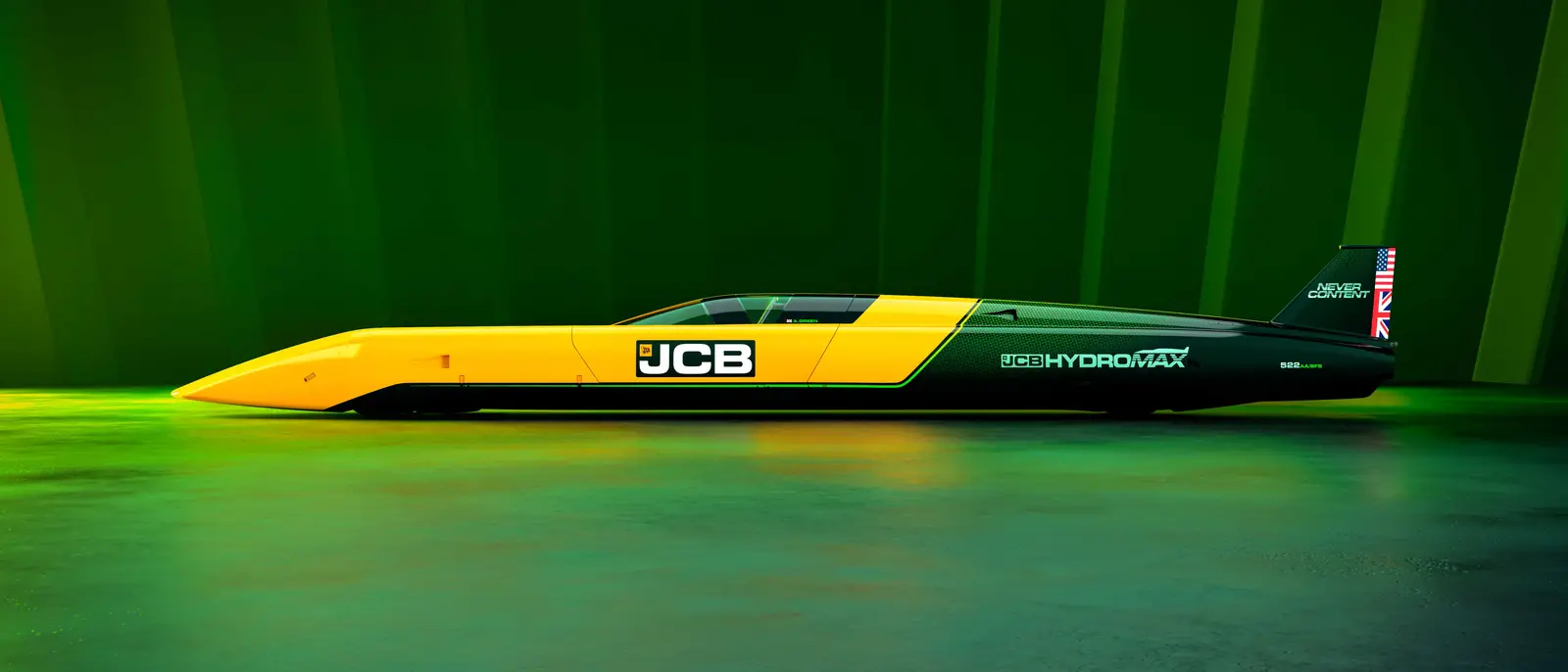
Forget all the fuss about diesel—JCB is making its way back to Bonneville, but this time, they're all about hydrogen! This summer, the Hydromax streamliner is set to smash land-speed records with a duo of production-based hydrogen internal-combustion engines, driven by none other than Wing Commander Andy Green. It promises to be quite the zero-emission spectacle, but there's a bigger picture here: they're showcasing that hydrogen combustion can withstand extreme demands outside the lab, proving its worth in the realm of industrial decarbonization.
On the Clock
JCB’s mission is pretty clear: they want to hit the Bonneville Salt Flats this August, under the watchful eye of the FIA, and snatch a new land-speed record powered by hydrogen. The team claims that their twin hydrogen engines churn out a whopping 1,600 bhp, and during test runs at RAF Wittering in the UK, they hit a top speed of 208 mph. They confirmed that their setup works well with parachute braking and stability on the pavement. Now, the vehicle is off to Utah, where the actual salt conditions and crosswinds will really put traction and chassis tuning to the test—something a British runway just can’t replicate. And who’s behind the wheel? You guessed it: Andy Green, the only person who’s ever held both an absolute land-speed record and JCB’s previous diesel record with Dieselmax.
Tech Spotlight
The Hydromax is all about repurposing familiar engine setups. They’ve swapped out the hydrocarbons for hydrogen but still kept the classic piston-driven combustion, turbocharging, and a standard gearbox—just now, the fuel injection is all about hydrogen instead of diesel. A custom clutch-and-transmission setup directs power to all four wheels, helping to manage torque on the tricky salt surface. This twin-transmission system splits torque between the engines, which is crucial given the patchy grip of the salt. Think of it as hydrogen vehicles stripped down to the essentials: inject, ignite, deliver. No fancy fuel cells, no complex drivelines—just raw power from high-pressure hydrogen, a spark, and some well-designed mechanics.
Behind the Numbers
The numbers look great on paper: 1,600 bhp from engines that come off a production line, four-wheel drive, and an official FIA-timed dash into history. But let’s keep it real—those 208 mph UK test runs are just the warm-up, not an official record. The FIA will only recognize the runs made at Bonneville. JCB acknowledges that while their engines share a lineage with their commercial digger lineup, they haven’t revealed details like duty cycles, efficiency curves, or how they handle hydrogen storage and flow during heavy loads. The RAF Wittering tests were all about checking parachute deployment and balance on smooth asphalt—salt is a whole different beast that could challenge suspension, tires, and temperature control in unpredictable conditions.
Strategic Stakes
At the end of the day, this is savvy marketing for JCB’s hydrogen engine strategy. Heavy machinery makers are under pressure from stricter emissions regulations and a push from customers for cleaner options. While battery power has its limitations—especially when it comes to energy density and speedy refueling during long work hours—JCB is sending a signal with this record attempt. Their green hydrogen venture isn’t just for show; they want it to be a high-output option for future excavators, loaders, and generators. It's a real-world test: push hydrogen combustion to its limits, collect data, and feed that back into practical applications. Investors and customers will be keeping a close eye on factors like torque delivery, cooling needs, and long-term reliability—because a 30-ton excavator relying on hydrogen cylinders needs the same kind of durability as a 1,600 bhp speed machine.
The Hydrogen Question
Sure, speed is impressive, but what about lifecycle emissions? Sure, tailpipe carbon could be virtually zero, but if JCB doesn’t secure low-carbon hydrogen production sources—say, from electrolysis powered by excess renewables or biogenic feedstocks—the overall environmental impact could overshadow any gains. Plus, the hydrogen infrastructure is still a bit of a patchwork right now. Will JCB collaborate on dedicated hydrogen production and storage, or count on third-party suppliers for cylinders? Long-term, they’ll need solid agreements and transparent supply chains rather than just some hit-or-miss deliveries. These questions are crucial because a record run powered by fossil-derived hydrogen is just good PR, not real progress.
The Bigger Picture
This isn’t JCB’s rookie outing at the salt flats; they’re back for a sequel. It’s been two decades since Dieselmax blew past the diesel land-speed record at 350.092 mph, and now they’re returning with hydrogen in tow. This project is just one part of a larger story about hydrogen speed attempts—think BMW’s H2R combustion car reaching around 185 mph or Ohio State’s Buckeye Bullet 2 pulling off approximately 303 mph with fuel cells. While none can quite match Dieselmax’s raw speed, each has helped illustrate hydrogen’s potential in a very public way. Now, Hydromax aims to set the bar higher, with FIA timing lending additional credibility to their results and reshaping the narrative around hydrogen vehicles.
Maverick Take
Let’s be real here: hitting 300 mph on salt is impressive, but it won't be the magic trick that flips heavy machinery over to hydrogen. The real takeaway is the data generated—how durable the machinery is under 1,600 bhp stress, how they manage cooling, torque distribution, and overall thermal efficiency in real-world situations. If JCB shares that data and collaborates on hydrogen production with verified green credentials, this project could spark serious conversations about hydrogen infrastructure and quick refueling capabilities. On the flip side, if they don’t deliver, Hydromax could come off as just another flashy PR stunt, disconnected from any real-world applications.
Looking Ahead
When the Hydromax makes its sprint at Bonneville, it’ll definitely grab headlines. But the real impact will come down to what follows: will JCB take that speed and turn it into a viable blueprint for zero-emission heavy machinery, or will it just add another number to the record books? If they manage to kick off a hydrogen engine line for their commercial fleet, that would be the ultimate trophy. In the push towards industrial decarbonization, substance trumps mere speed, and the key question is whether Hydromax will serve as a prototype or a preview of the worksite of tomorrow.