Methane-Driven Embrittlement in Nickel Superalloys Demands New Materials for H2-Ready Turbines
New research reveals a methane-driven embrittlement mechanism in nickel-based superalloys at 400 °C under hydrogen exposure, highlighting the need for innovative alloys and coatings in hydrogen-ready turbines.
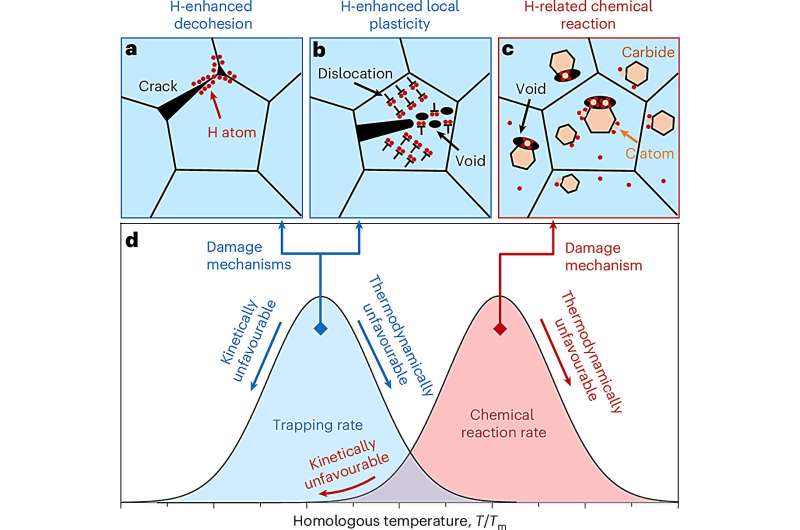
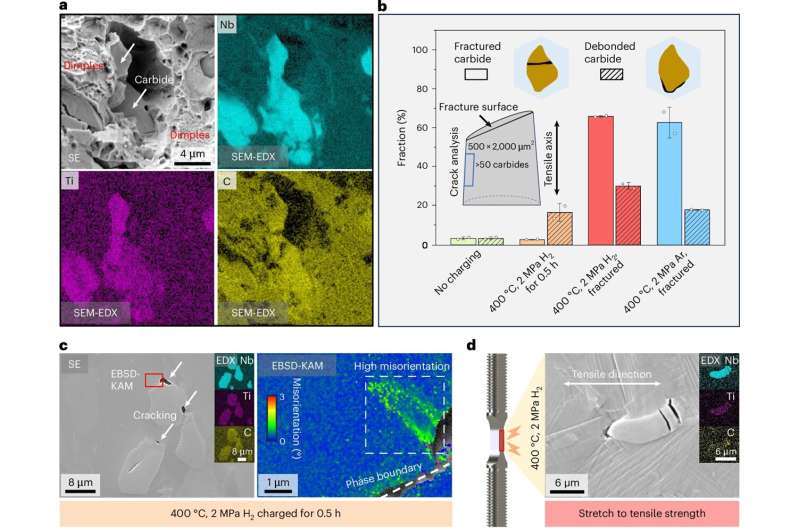
Big news in the world of hydrogen! Researchers from Max-Planck-Institut für Nachhaltige Materialien collaborated with East China University of Science and Technology and Hunan University to tackle a sneaky problem lurking in materials used for hydrogen production. Turns out that when hydrogen interacts with nickel-based superalloys at around 400 °C, it can cause embrittlement. But don't worry—they’ve found a way to handle it! By transforming strengthening carbides into methane pressure pockets, they found that cracks form way faster than we want them to.
The secret sauce: methane in carbides
So, here’s the lowdown: nickel-based superalloys generally hold it together at high temperatures thanks to their nickel-rich γ matrix, γ′ precipitates, and carbides. But throw in some hydrogen at those mid-range temps, and those carbides can become a weak link. The team's research involved exposing samples to hydrogen between 400 °C and 1000 °C and poking around with atom probe tomography and density functional theory. What they discovered is pretty wild—around that 400 °C mark, hydrogen atoms slip into carbon vacancies in the carbides. The hydrogen and carbon then react to produce methane, which builds up tiny pressure pockets at those carbide-matrix interfaces, ultimately weakening them. The kicker? These micro-bubbles trigger cracks much quicker than the usual embrittlement processes.
Built for the future: rethinking H2-ready turbines
This increased embrittlement isn’t just a minor inconvenience—it’s about twice as severe as what you'd see at room temperature. This raises a red flag for turbine blades that were designed with natural gas in mind. If we're serious about advancing hydrogen-fired plants or aviation engines, turbine manufacturers and service providers need to rethink how they're strengthening these alloys. It could mean tweaking carbide content or introducing advanced coatings to keep hydrogen out. These adjustments could revolutionize the way we think about alloy design and inspection protocols for the new wave of hydrogen infrastructure.
Serious about leading the energy transition: implications for operations
Gas turbines often go through start-ups, part-loads, and shut-downs, which means they frequently hit that critical 400 °C window where methane-related damage is at its worst. To counter this, operational profiles might need some updates—think quicker ramp rates or strategies to hold temperatures in check. By adjusting control systems, hydrogen-fired plants can really tackle this challenge and keep their turbine blades in top shape.
Innovation pathways: alternative strengthening
With these insights in hand, materials scientists can start exploring new avenues like oxide-dispersion steels or innovative intermetallic phases that resist hydrogen absorption. They're even looking into protective coatings that can act as shields against hydrogen diffusion, especially at those crucial temperature ranges. When you combine these strategies with real-time sensors for detecting hydrogen entry and micro-crack development, we could be looking at alloys that are truly ready for the hydrogen economy.
Economic ripple effects and industry shake-up
Now, let’s talk money. Faster embrittlement means shorter lifespans for turbine blades and more inspections, which changes the game for maintenance schedules and lifecycle costs—both for power plants and airlines. Turbine manufacturers will need to factor in hydrogen-centric high-temperature testing or think about alloy and coating upgrades in their proposals. Sure, this could bump up initial costs, but it also opens doors for specialized materials suppliers and testing services.
Regulatory readiness and global impact
If policymakers are putting together hydrogen infrastructure roadmaps, it’s high time they updated standards to include tests for high-temperature embrittlement, alongside combustion and emissions standards. Establishing robust material qualifications would inspire confidence in hydrogen-ready turbines around the globe, helping ensure safe, reliable, and low-carbon energy delivery from Europe all the way to Asia and beyond.
Bottom line: a materials challenge for hydrogen infrastructure
Hydrogen-fired turbines are at the center of many strategies aimed at cutting down carbon emissions, but this research underscores that the transition involves way more than just changing the fuel. By identifying this temperature-dependent, methane-driven embrittlement mechanism, scientists are better equipped to innovate superalloys, coatings, and operational practices that meet the demands of the future. Bottom line? Serious hydrogen infrastructures need materials that are just as ready for the new era as the turbines designed to burn cleaner fuel.