Hydrogen News: Nano-Engineered Membranes Set New Benchmark for Green Hydrogen Production
Researchers at UDE and CENIDE have developed nano-engineered membranes that boost efficiency, cut costs, and pave the way for scalable green hydrogen electrolysers in Germany’s Ruhr region.
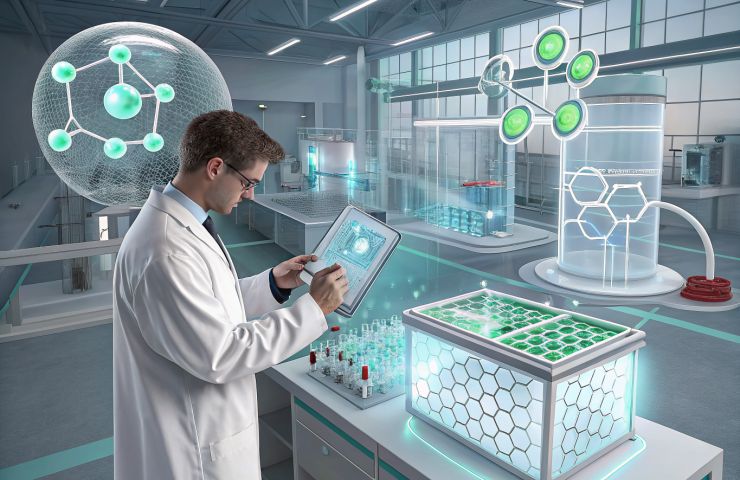
Have you ever thought about how we might change the game for green hydrogen production? This summer, a crew from the University of Duisburg-Essen, teaming up with their nanoscience hub CENIDE, rolled out a set of next-generation ion-conducting membranes, and honestly, this could be a game changer for efficiency while reducing our reliance on those hard-to-find metals. Seriously, hydrogen electrolysers might just be on the brink of a big transformation.
What’s the holdup?
Let’s not sugarcoat it: traditional electrolyser membranes have quite the juggling act ahead of them. They’ve got to efficiently move ions at high current densities, survive corrosive conditions, and keep gases from mingling—all while relying on pricey platinum-group catalysts. The end result? These systems can deliver impressive outputs in the lab but flounder once you try to scale them up. This often leads to higher costs, more maintenance, and slower adoption rates in the market.
Here’s the exciting part
Researchers are flipping the script on membrane design right down to the nano and microscale. They’re getting creative with the polymer backbone to amp up proton or hydroxide conductivity, layering in catalyst nanoparticles in super thin sheets, and fine-tuning interfaces to enhance durability. What’s the secret sauce? Nano-structured ion channels that ramp up transport speed while reducing degradation even in tough industrial conditions.
Ready for action
- At the Fraunhofer-inHaus Center, prototype cells featuring these membranes are currently undergoing endurance testing.
- Early attempts to integrate these membranes into compact electrolyser stacks are showing smoother start-stop cycles and extended lifespans compared to the old-school systems.
- Local partners in the Ruhr area are working together to connect these membranes with renewable energy and storage pilot projects, setting the stage for wider commercial rollouts.
Deploying in real-world scenarios
There’s a lot of action happening all across the hydrogen value chain:
- Teams from the GreenH2Metals project are busy crafting metal hydride alloys designed to sync up with the efficient outputs of these new electrolysers, enabling safe, solid-state hydrogen storage for stationary energy applications.
- Pipeline researchers are revisiting historic routes in the Ruhr area, testing out polymer liners and protective coatings that would work in tandem with decentralized production setups for flexible regional distribution.
- Partners from the chemical industry are lining up to sign demo agreements, eager to incorporate green hydrogen into existing plants and explore synergies with current purification and compression systems.
Why this matters
So, what’s all the excitement about? It boils down to three main points: cost, performance, and sustainability. By relying less on those platinum-group metals, we’re slashing material costs. Plus, these smarter nano-architectures enhance efficiency, which means we’re generating more hydrogen per kilowatt-hour of green energy. And by extending the life of these membranes, operators can push off costly replacements that often hit project budgets hard.
The strategic side
The movement behind these innovative materials is multifaceted. From a policy perspective, Germany’s national hydrogen strategy and the designation of “overriding public interest” can expedite approvals and open up funding avenues. On a local level, North Rhine-Westphalia authorities are investing in partnerships that connect universities, Fraunhofer institutes, and industry players. And the global shortage of platinum-group metals is driving a critical need for low-metal alternatives.
Looking at the bigger picture
By combining advanced materials research, AI-enhanced design tools, and pilot-scale testing, the Ruhr region is positioning itself to become a leader in the green hydrogen revolution. With Germany’s friendly policy environment, we could see the first commercial modules using these membranes hitting the market within the next few years—provided they hit their testing milestones.
Ready for disruption?
Picture this: electrolyser modules that power up in a matter of minutes instead of dragging on for hours, adapt seamlessly to fluctuating renewable power without losing effectiveness, and go for months without needing a makeover. Industries that are tough to decarbonize, like steel production and chemicals, could start using green hydrogen at a lower cost. Pipeline and storage outfits could even set up modular hydrogen production units right where the action is, alongside industrial hubs. Even isolated sites—think steel manufacturing, mobility centers, or data hubs—could benefit by deploying on-site electrolysers without the daunting capital expenditures.
In closing
This isn’t just another lab announcement; it could be a pivotal moment. With nano-engineered membranes breaking down barriers to high-performance, cost-effective large-scale green hydrogen production, we’re looking at a future where steel factories run on renewable hydrogen, trucks can refuel at modular stations along repurposed pipelines, and data centers tap into on-site power-to-gas units to meet their net-zero goals. Keep an eye on the Ruhr—this materials revolution in green hydrogen production is already unfolding, promising to reshape how we produce, store, and transport this clean fuel. Exciting times ahead!