Hydrogen storage in focus as EU CEO urges binding targets
Hydrogen Europe’s CEO urges the EU to adopt binding hydrogen storage targets, arguing that clear signals are needed to develop electrolysers, pipelines and caverns in sync. The proposal builds on the EU Hydrogen Strategy and REPowerEU plans but faces scrutiny over efficiency, costs and infrastructure sequencing.
Jorgo Chatzimarkakis, Chief Executive Officer of Hydrogen Europe, has urged the European Union to adopt binding hydrogen storage targets to capture surplus renewable electricity and reinforce energy security, in a recent opinion piece. His call frames storage as a missing link in a system increasingly dominated by variable wind and solar generation. Chatzimarkakis argues that without explicit targets for storing hydrogen, large volumes of renewable output risk being curtailed at times of peak production.
Chatzimarkakis notes that Europe has faced two major energy shocks: the disruption of Russian pipeline gas supplies after the invasion of Ukraine and the subsequent reliance on global liquefied natural gas markets. This volatile backdrop has driven the European Commission to accelerate renewable deployment, but it has also exposed gaps in balancing grids with growing wind and solar output. The recent upheavals, he writes, have sharpened concerns about security of supply and underscored the need for infrastructure capable of absorbing excess renewable generation.
Policy context and missing targets
According to the European Commission, the 2020 EU Hydrogen Strategy mapped out a phased expansion toward at least 6 GW of renewable-electrolysis capacity by 2024 and 40 GW by 2030, alongside production of up to 10 million tonnes of renewable hydrogen in the EU. That blueprint was bolstered by the REPowerEU plan, which set an indicative ambition of 10 million tonnes of domestic renewable hydrogen plus 10 million tonnes of imports by 2030. The revised Renewable Energy Directive enshrines binding demand requirements for renewable fuels of non-biological origin in industry and transport, but no reviewed source verifies that binding EU-wide hydrogen storage targets have been adopted. In short: production ambitions are explicit, but storage targets are not.
How hydrogen storage works
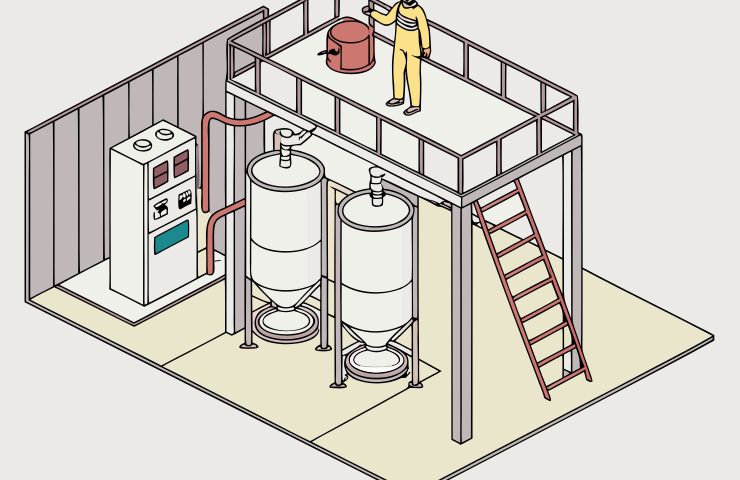
Surplus renewable electricity can power an electrolyser that splits water into hydrogen and oxygen. The dry hydrogen is compressed and injected into storage facilities such as underground salt caverns, depleted gas fields or engineered tanks. When demand surges, the hydrogen can flow through pipelines to industrial users, be converted into derivatives like ammonia, or reconverted to electricity via a fuel cell or hydrogen-capable turbine. Each step involves established engineering choices: conversion at times of surplus, secure containment for seasonal holding, and reconversion or chemical conversion when the energy is needed.
Independent technical literature, including an analysis in the Clean Energy journal, indicates that the power-to-hydrogen-to-power cycle typically achieves a round-trip efficiency of around 30 % to 50 %. Although this falls well below lithium-ion batteries, hydrogen storage becomes attractive for seasonal or multi-day flexibility when alternatives like batteries, grid expansion or demand response cannot absorb all surplus output without curtailment. The lower round-trip efficiency is therefore a trade-off: hydrogen can hold energy for long periods, while batteries remain more efficient over short-duration use.
Balancing benefits and limitations
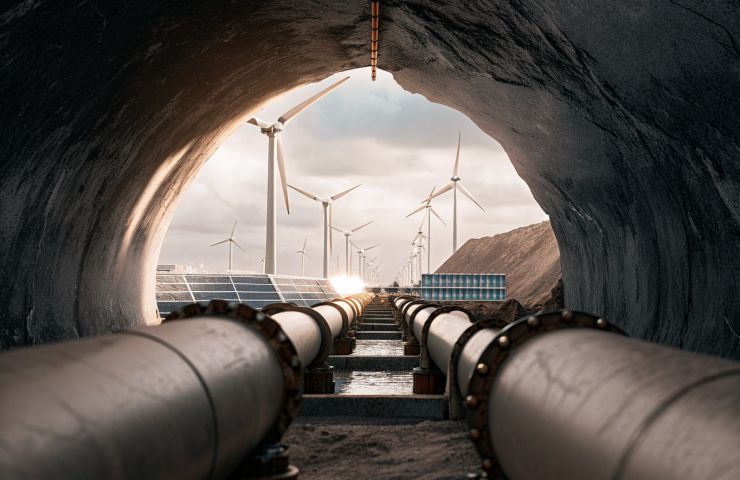
The European Commission highlights renewable hydrogen as a strategic energy carrier for hard-to-electrify sectors and long-duration storage. Hydrogen Europe argues that without explicit storage targets, electrolysers, pipelines and caverns may not be developed in sync, risking curtailed renewables and unbankable hydrogen projects. The organisation stresses that alignment between generation and storage investments is required to turn envisaged electrolytic capacity into usable, dependable energy services.
On the other hand, an environmental policy brief by the European Environmental Bureau warns against using hydrogen for applications better served by direct electrification, transmission interconnection, batteries or demand-side management. High capital costs, permitting delays, water requirements and potential lock-in of fossil-fuel infrastructure are cited as key challenges. The European Court of Auditors has also noted that the EU’s headline production and import ambitions may exceed near-term demand, underscoring the need for realistic infrastructure planning. Together, these voices urge caution: storage can help integrate renewables, but only where it genuinely adds value compared with cheaper or more efficient alternatives.
Industry perspective and infrastructure sequencing
Hydrogen Europe stresses that storage, pipelines and electrolysers must be planned together under a clear regulatory framework. It points to Important Projects of Common European Interest (IPCEI) schemes supporting hydrogen infrastructure, but emphasizes that private investment remains hesitant without market signals that guarantee offtake and revenue streams. In practical terms, developers seek clarity that assets built for hydrogen will have customers and predictable returns before committing to large, long-lived investments.
Critics counter that binding storage targets could divert capital from more efficient flexibility options and increase subsidy exposure if renewable hydrogen remains costlier than fossil alternatives. They argue for system studies to identify locations where multi-day or seasonal storage is truly needed, rather than imposing a universal storage mandate. The debate therefore hinges on sequencing: whether to lock in binding storage obligations now, or to wait for detailed grid studies that map out where hydrogen storage would be most cost-effective.
Outlook for long-duration flexibility
With variable wind and solar output set to grow, hydrogen storage may play a vital role in plugging seasonal gaps and supporting industrial decarbonization in steel, chemicals and shipping. However, its role must be carefully calibrated against costs, efficiency losses and alternative grid solutions. Policymakers face a choice between setting binding targets to accelerate infrastructure build-out and allowing market-led development informed by system studies and pilot projects.
As the EU prepares its next set of energy infrastructure proposals, the debate over binding storage targets will test Europe’s ability to integrate renewable hydrogen at scale without locking in expensive, low-efficiency assets. The outcome will shape whether surplus clean electricity is harnessed for long-term flexibility or left to spill at times of peak output. For proponents like Hydrogen Europe, the urgency is clear: without explicit storage goals, the planned electrolyser capacity risks producing hydrogen that cannot be stored or moved to demand centres when it is needed most.