Brazil’s Forza Composites Pioneers Ultralight Type IV Cylinders
Forza Composites, backed by FAPESP’s PIPE program, has built Brazil’s first domestic towpreg line and ultralight type IV composite cylinders, cutting weights by up to 70% and promising major gains for hydrogen storage and logistics.
Imagine being able to lighten the load of high-pressure gas bottles by more than half without losing any strength. That’s what Forza Composites, a startup from São José dos Campos, is all about. Nestled in the Parque Tecnológico, this innovative company is making waves with Brazil’s very first locally-produced towpreg feedstock for creating type IV cylinders. These are carbon-fiber composites wrapped around polymer liners—all set for housing hydrogen, biomethane, and other gases.
Turning Fiber Into Freedom
Up until now, Brazil has been entirely dependent on imports for its towpreg—a specially bundled set of carbon fiber filaments pre-impregnated with epoxy resin. This material is key to crafting those super-light storage vessels. But Forza Composites is on a mission to change the game by developing its own impregnation technology and tailored resin formula designed specifically for pressure cylinders. The outcome? A manageable towpreg that performs just as well as imported options, ready to hit the filament-winding market.
The Science Behind Towpreg and Tanks
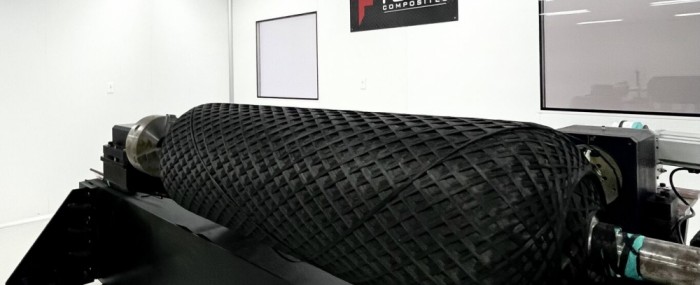
The heart of the process begins with a polymer liner—typically a high-density polyethylene—that keeps gases sealed tight and stands strong against corrosion. Around this liner, automated filament-winding machines skillfully wrap miles of towpreg in specific hoop and helical patterns. Once the epoxy cures, it binds the fibers into a solid shell capable of holding pressures up to 700 bar, which is commonly found in hydrogen fuel scenarios. Thanks to its superior strength-to-weight ratio compared to steel, these finished type IV cylinders can be a staggering 60-70% lighter than their metal counterparts.
Pre-impregnation plays an essential role in making manufacturing more consistent. Traditional wet winding methods can lead to uneven resin application and flaws—issues no one wants when safety is on the line. But with Forza’s towpreg, the resin is stabilized around each individual filament beforehand, promising lower scrap rates and more reliable performance in terms of burst and fatigue.
Big Wins for Gas Logistics
Let’s talk about weight. It’s not just a number—it affects costs at every step of the supply chain. According to experts from FAPESP, swapping out steel cylinders for these composite ones could reduce overall transport weight by about 20%, boost truck payloads by roughly 50%, and cut logistics costs per cubic meter of gas by up to 45%. Those are some impressive projections that hint at major savings for road, rail, and offshore operations alike.
In Brazil’s pre-salt oilfields, corrosion can wreak havoc on steel cylinders, limiting their lifespan significantly. With composite shells lined with polymer, you won’t have to worry about saltwater eating away at them, which means no more constant inspections or replacements. This makes type IV cylinders a fantastic choice for offshore green hydrogen operations or biomethane injection platforms, where safety and quick maintenance are paramount.
Innovation Rooted in São José dos Campos
Choosing São José dos Campos wasn’t a coincidence for Forza Composites. The city has a long aerospace history that’s given rise to specialized suppliers, testing labs, and a talented workforce—all coming together at the Parque Tecnológico. Within this innovative environment, Forza has set up a pilot impregnation line alongside filament-winding cells and mechanical testing rigs. Over the past few months, the startup has been busy cycling through prototypes, refining their resin mixtures, and starting on pre-industrial batches.
While they still have a way to go before full commercial scale-up, semi-industrial runs are already in motion. Forza is teaming up with partners in automotive, energy, and defense to explore how these cylinders can be integrated into trucks, fueling stations, and offshore platforms. Each collaboration not only affirms the technology but also helps to strengthen the local supply chain for resins, fibers, liners, and winding equipment around the new towpreg line.
Implications for Green Hydrogen
As the green hydrogen movement picks up steam, the challenges of storage and transport are becoming more pressing. These lightweight composite cylinders can extend the range of hydrogen fuel cell vehicles and reduce tanker costs on long-haul journeys. They also make way for modular refueling stations that can be set up in remote areas powered by solar or wind energy—crucial for off-grid industrial efforts aimed at cutting carbon emissions.
By bringing towpreg production into Brazil, the country tightens its grip on the entire hydrogen value chain—from electrolysis straight to the end use. Instead of relying on foreign sources for critical materials, Brazilian companies can innovate more quickly, reduce import expenses, and even look to export cylinders or raw towpreg to nearby markets. This local control aligns perfectly with broader clean energy goals and solidifies Brazil’s spot in a global market expected to exceed $100 billion in hydrogen infrastructure by the end of this decade.
Of course, there are still hurdles to overcome—like meeting international certification standards, scaling up resin supplies, and weaving automated quality checks into the process—but the Forza project stands as a tangible example of progress. By transforming fiber and epoxy into lightweight freedom, Brazil is taking significant strides toward a robust, zero-emission energy network where hydrogen truly shines.