Innovative Stainless Steel Boosts Green Hydrogen Production
HKU’s SS-H2 stainless steel resists seawater corrosion up to 1,700 mV, slashing structural costs and accelerating green hydrogen production.
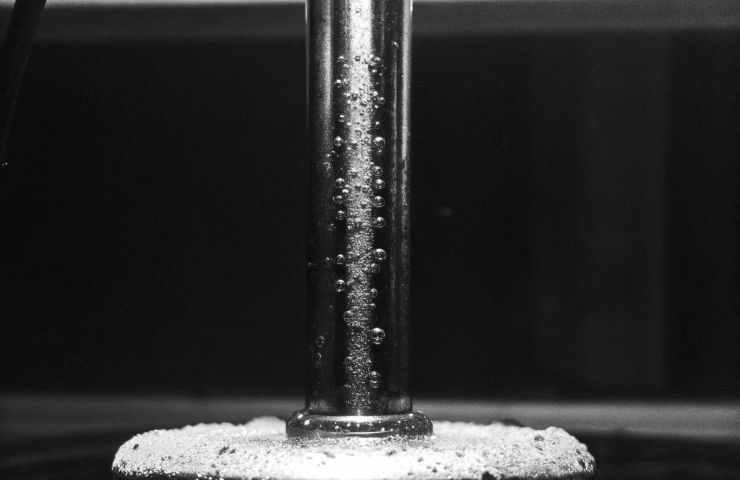
Picture this: coastal electrolyzer plants that can churn out green hydrogen straight from the ocean, ditching the expensive titanium and precious metals usually needed. Sounds pretty cool, right? Researchers at the University of Hong Kong (HKU) have come up with a groundbreaking new form of stainless steel—dubbed SS-H2—that’s designed to withstand the tough electrochemical conditions of seawater electrolysis. This could slash material costs by up to 40 times and supercharge green hydrogen production!
What’s so special about this stainless steel?
So, here’s the deal: traditional stainless steels start to corrode when they hit an anodic potential of around 1,000 mV in salty environments. But SS-H2 completely breaks that barrier. It does this by using a clever two-layer protective system. First, chromium in the alloy forms a base layer of chromium oxide. Then, when it reaches about 720 mV, manganese elements in the mix oxidize to create a second manganese-based oxide layer right on top of that chromium film. Together, these layers fend off chloride ions and keep corrosion at bay up to 1,700 mV—well beyond what you’d need for seawater electrolysis.
This breakthrough means SS-H2 can rival titanium’s corrosion resistance but at a fraction of the cost. Early estimates suggest that structural components made with SS-H2 could cost around 40 times less than those made with titanium or gold/platinum-coated materials, which would drastically bring down the initial investment for proton exchange membrane (PEM) electrolyzers.
Who’s behind this innovation?
The brain behind this project is Professor Mingxin Huang, the Chair Professor of Materials Technology and head of Mechanical Engineering at HKU. He’s backed by the talented doctoral researcher Dr. Kaiping Yu. Huang’s team is no stranger to making waves in materials science—they’ve previously developed ultra-strong Super Steel and even an anti-COVID-19 stainless steel! Plus, they’ve got access to HKU’s top-notch atomic-level microscopy facilities. As a cherry on top, they’ve teamed up with a factory in Mainland China, which has already cranked out tons of SS-H2 wire—a solid first step towards scaling up production.
Why does this matter?
- Cost savings: Structural materials account for more than half of PEM electrolyzer capital costs. With SS-H2’s help, these expenses could drop by 40 times, leading to an overall reduction in system costs by up to 25%.
- Supply chain resilience: Switching from rare metals to good ol’ stainless steel reduces geopolitical risks and cuts down on our dependency on titanium or platinum group metals.
- Environmental benefits: Using direct seawater electrolysis means we won't need freshwater, and it avoids the brine discharge that typically comes from desalination—something that's perfectly in line with carbon neutrality goals.
- Broader impact: The dual-passivation design opens doors for alloy advancements in other high-potential applications, like electrochemical CO₂ reduction and cutting-edge fuel cells.
How does this change the game for hydrogen production?
The production of green hydrogen relies on lowering both renewable electricity costs and the cost of the equipment. Although solar and wind energy prices keep coming down, electrolyzer costs have stubbornly remained high due to material challenges. SS-H2 could be a game changer by providing industrial-grade corrosion resistance in seawater—at about a fortieth of the cost of titanium parts. This directly tackles one of the major economic hurdles in rolling out green hydrogen on a larger scale.
What’s next?
The HKU team is already working on prototyping SS-H2 components specifically for commercial electrolyzers, and they're even looking at starting a venture to ramp up production. If everything goes according to plan, we could see the first commercial materials hitting the market within the next year or two. This would not only speed up green hydrogen production along coastal areas but also spark further innovations in alloy design and fuel cell tech.
As the world’s demand for clean hydrogen ramps up, SS-H2 represents a significant step forward: it’s a cost-effective stainless steel that lets seawater play a key role in fueling a global hydrogen economy.
```