Hydrogen news
Google emissions see massive spike and AI use is to blame
The tech giant’s efforts to lower its carbon footprint have been derailed by artificial intelligence. For years now, Google emissions have been dropping due to – among other things - the company switching to alternative and renewable energy sources to power its operations. In fact, Google reached its initial carbon neutrality level back in 2007 and has been aiming to achieve a lifetime net zero carbon footprint by 2030. However, according to a new environmental report released by the company, this 2030 goal might not happen because of increasing artificial intelligence (AI) energy demand. A n…
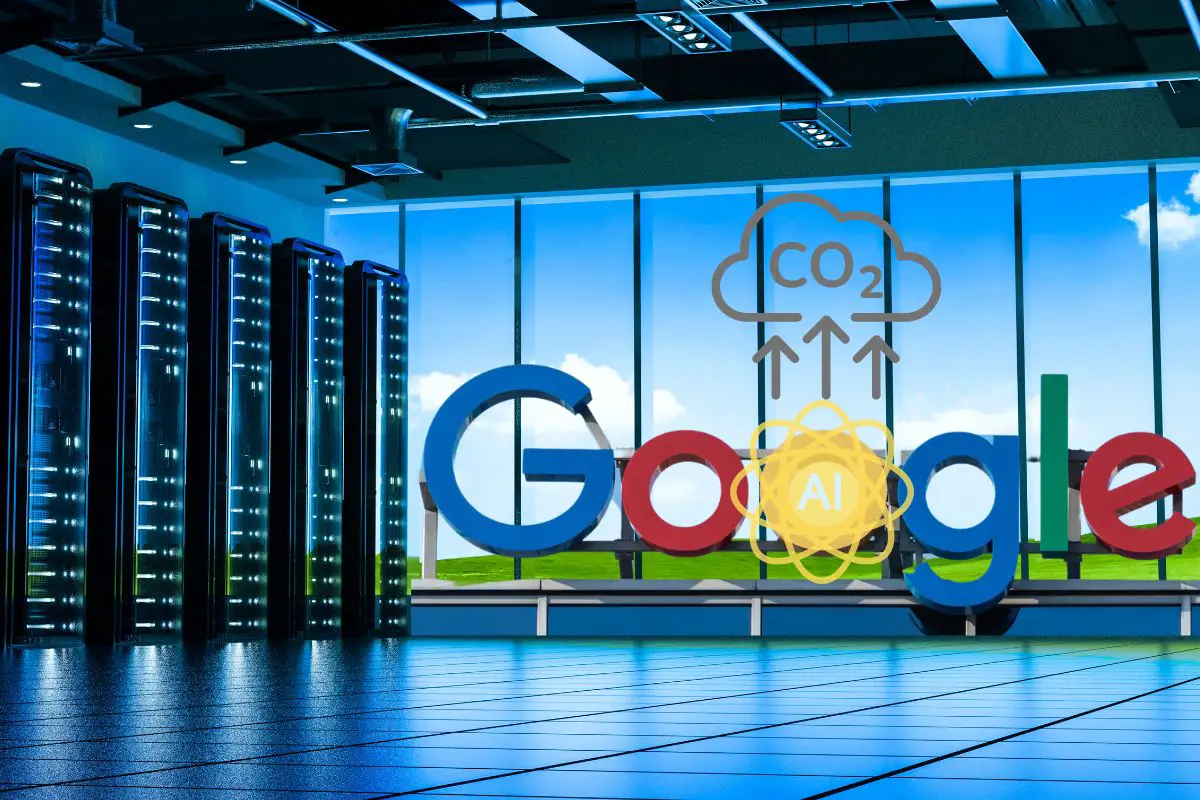
The tech giant’s efforts to lower its carbon footprint have been derailed by artificial intelligence.
For years now, Google emissions have been dropping due to – among other things - the company switching to alternative and renewable energy sources to power its operations. In fact, Google reached its initial carbon neutrality level back in 2007 and has been aiming to achieve a lifetime net zero carbon footprint by 2030. However, according to a new environmental report released by the company, this 2030 goal might not happen because of increasing artificial intelligence (AI) energy demand.A near 50% emission spike since 2019.
The popularity of AI and Google’s new AI products is forcing it to increasingly rely on energy-guzzling data centers to power and support growing user demand. Earlier this week, the company released its annual environmental report and revealed that in the past five years, its greenhouse gas emissions have climbed a whopping 48%. According to Google, the main cause of the increase is the amount of electricity being consumed by data centers and supply chain emissions. What’s more, Google emissions hit 14.3 metric tons from 2022 to 2023, with 2023 emissions rising 13% compared to 2022.Increasing Google emissions will make it difficult to achieve a net zero goal.
For Google to reach its net zero emission target, it needs to remove as much carbon dioxide emissions as it emits. Reaching the 2030 net zero Google emissions goal will now be a task much easier said than done as the company has heavily invested in AI, a technology that is only expected to gain greater popularity and widespread use in the coming years. In the Google Environmental Report 2024, it admitted that reaching the net zero emissions target by the start of the next decade “won’t be easy”. Far too much uncertainty surrounds the technology.
“Our approach will continue to evolve and will require us to navigate significant uncertainty–including the uncertainty around the future environmental impact of AI, which is complex and difficult to predict,” Google stated in the report.
In the Google Environmental Report 2024, it admitted that reaching the net zero emissions target by the start of the next decade “won’t be easy”. Far too much uncertainty surrounds the technology.
“Our approach will continue to evolve and will require us to navigate significant uncertainty–including the uncertainty around the future environmental impact of AI, which is complex and difficult to predict,” Google stated in the report.
AI emissions – a growing concern.
It’s not only Google emissions from its AI products that’s causing growing concern over the environmental impact of artificial intelligence. Data centers play a critical role in training and operating AI models, including those created by OpenAI and Microsoft. According to a 2024 electricity report from the International Energy Agency (IEA), the IEA estimates that the total energy consumption of data centers could double from 2022 levels to 1,000 terawatt hours (TWh) in 2026. To put this into greater perspective, the IEA notes that a standard Google search uses an average 0.3 watt-hours of power, while the typical ChatGPT AI request uses 2.9 watt-hours of power. When you add this up to 9 billion searches daily, the report suggests that nearly 10 TWh of extra power would be needed ever year.How was this article?
Thanks for the feedback!