Transmashholding Assembles Russia's First Hydrogen Passenger Train for Sakhalin Testing
Transmashholding has assembled Russia's first hydrogen passenger train for non-electrified routes in Sakhalin, potentially shaping the country's zero-emission transport future.
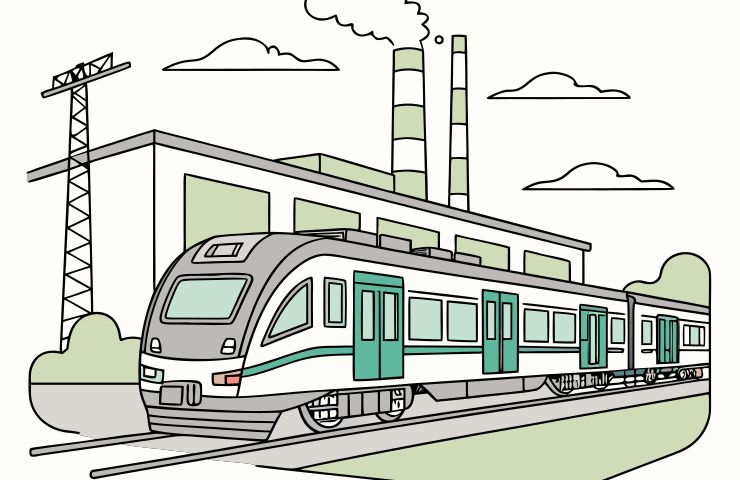
Transmashholding (TMH) has successfully assembled Russia's first hydrogen fuel cell-powered passenger train, designed specifically for operation on the non-electrified railway routes in the Sakhalin region. It is a purpose-built vehicle, intended to run where overhead catenary and third-rail electrification are absent. The announcement places the project squarely within the country's wider interest in zero-emission transport options and aligns it with global trends toward more sustainable energy solutions.
The newly developed hydrogen train, based on TMH's low-floor passenger-train platform, is reported to operate with varying configurations. In a two-car arrangement the train is specified to have a hydrogen range exceeding 700 kilometers. A three-car configuration, by contrast, can cover over 480 kilometers, bolstered by onboard batteries. Those batteries also provide an additional range — 40 kilometers in the two-car model and 80 kilometers in the three-car arrangement — illustrating a hybrid approach that blends fuel cell and battery capabilities.
Assembly work was completed at TMH's Demikhovo Machinebuilding Plant near Moscow. TMH says the platform is being developed for urban, suburban and regional services. Beyond the technical demonstration, the company frames the project as a strategic step to enhance industrial localization within Russia’s transport sector.
Strategic Partnerships and Future Operations
This development is a collaborative effort involving key players like Russian Railways (RZD), which will act as the intended operator, and Rosatom, the state nuclear energy corporation, responsible for hydrogen supply technologies. The Sakhalin regional government is facilitating the deployment through the establishment of a hydrogen testing ground and the necessary infrastructure, reinforcing local economic interests in clean technology. Those arrangements are intended to link vehicle supply, fuel provision and a local testing regime into a single programme.
Valery Limarenko, the Governor of Sakhalin Region, has expressed strong support for the project, noting the region's non-electrified rail network, suitable for hydrogen solutions due to the high cost of electrification. Initial testing is set for early next year, with certification anticipated later in 2027. The timeline, as stated, keeps the programme in a pilot phase for the foreseeable future while allowing time for safety checks and regulatory sign-off.
Technological Framework of the Hydrogen Train
The train leverages hydrogen fuel cell electric propulsion, an innovative technology wherein hydrogen and oxygen undergo an electrochemical reaction to generate electricity for traction motors. That process produces on-board electrical power without the need for combustion. This design avoids the need for extensive infrastructure associated with traditional electric trains, thereby reducing operational costs tied to electrification of trackside systems.
Furthermore, the incorporation of lithium-ion batteries enhances the train's operational efficiency by capturing energy through regenerative braking. The batteries serve multiple roles: they store recovered energy, they assist acceleration, and they extend operational range when hydrogen reserves are low. Together, the fuel cells and batteries form a dual-energy system that underlines the adaptability of hydrogen trains in demanding operational contexts, particularly in cold climates where reliability is crucial.
Broader Implications for Hydrogen Adoption in Russia
The completion of this hydrogen passenger train serves multiple purposes beyond mere transportation innovation. It aligns with Russia’s strategic goal of establishing a hydrogen economy, targeting infrastructure for production, storage, and refueling while reducing dependence on fossil fuels. Efforts in Sakhalin aim to leverage renewable hydrogen production, although specifics regarding the environmental impact remain to be systematically assessed. The project is therefore both technological demonstration and policy signal.
While the current project remains in a pilot phase, its success could catalyze further investment in hydrogen technology, pushing Russia towards a leadership role in the zero-emission transport sector. Comparatively, it also draws parallels with international projects like Alstom's Coradia iLint, which has already established operational hydrogen trains in European markets. The comparison highlights that hydrogen-powered rolling stock is no longer purely experimental elsewhere, and it provides a reference point for how the Sakhalin project might evolve.
Closing Insight
The commitment to developing and operationalizing hydrogen-powered trains in Russia signifies a change in rail transport strategy, one that aims to balance technical feasibility and environmental responsibility. Testing will determine how the concept performs under real-world conditions. As those trials progress, the results will inform decisions on future rail development and could influence how Russia positions itself within the global landscape of sustainable energy solutions.