Physics-Aware AI Blueprint Guides Solid-State Hydrogen Storage Discovery
Tohoku University coordinated an international effort to define a physics-aware AI ecosystem for solid-state hydrogen storage materials, integrating reproducibility-aware data, physics-constrained models, inverse design, and automated validation in a closed-loop framework.
Tohoku University has brought together an international team to create a blueprint for a physics-aware AI ecosystem aimed at solid-state hydrogen storage materials. This project draws on expertise from materials science, AI, and automated experimentation at its campus in Sendai. The framework, recently detailed in an ACS Energy Letters perspective and mentioned by various industry news outlets, outlines how reproducibility-aware data, physics-based modeling, and self-driving laboratories can come together to speed up discovery in hydrogen storage.
Hydrogen storage is one of the big hurdles in the green energy sector. Although we've seen progress with hydrogen fuel cells and electrolysis, safely locking away hydrogen at high density using solid-state materials still leans heavily on trial-and-error methods. Traditional machine learning tools often ignore key thermodynamic limits and the quality of diverse data, leading to predictions that just don’t hold up under real-world tests. This new ecosystem changes the game by framing AI as part of an end-to-end, physically grounded process.
Reproducibility-Aware Data Infrastructure
This blueprint envisions a solid data layer where centralized platforms operate with standardized formats, rich metadata, and clear sources for all data. Experimental findings—like pressure–composition isotherms, kinetics data, and cycling stability—are fed into databases such as the Digital Hydrogen Platform (DigHyd). By enforcing metadata standards and version control, researchers can trace each data point back to its origins, ensuring consistency and boosting collaborative efforts across labs worldwide.
Physics-Grounded Modeling
The second key aspect incorporates physical laws straight into the AI models. By coding thermodynamic relationships, kinetic barriers, and degradation paths as constraints, we can prevent AI from proposing materials that don't behave according to fundamental physics. Inputs like crystal structures and electronic properties lead to interpretable results; symbolic regression creates clear equations that connect material characteristics to storage performance—bridging that tricky gap between black-box predictions and usable insights.
AI-Driven Inverse Design
With these constrained models, the new inverse design tools enable researchers to specify target properties—think gravimetric hydrogen density or specific pressure ranges—and quickly receive candidate compositions. AI agents dive into the compositional spaces using algorithms informed by historical data in DigHyd, leading to faster ideation cycles and allowing teams to direct their experimental efforts on the most promising material chemistries.
Automated Closed-Loop Validation
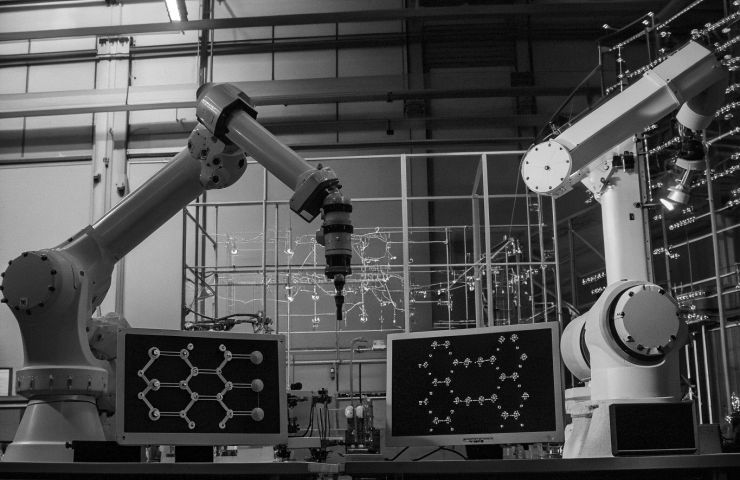
The ecosystem also incorporates self-driving labs for testing. Automated reactors and high-throughput tools run experiments as programmed by AI agents. The results then circle back into the data platform, updating model parameters and reducing uncertainty in real-time. This digital twin approach sets up a continuous learning loop, which enhances both prediction accuracy and lab efficiency.
Mining Literature with DigHyd and DIVE
At the heart of this vision is the Digital Hydrogen Platform, a well-organized database that includes over 30,000 entries drawn from more than 4,000 publications about metal hydrides and similar materials. Alongside it, the DIVE multi-agent workflow taps into AI models to extract quantitative insights from figures and tables, translating images into datasets machines can read. By setting up benchmarks with models like Gemini 2.5 Flash and DeepSeek-Qwen3-8B, DIVE is making strides in accurately capturing isotherm curves and capacity metrics, which fuel those inverse design pipelines.
This collaboration transforms years of scattered experimental data into a valuable, coherent resource. Interpretative algorithms generate design maps linking material features to performance metrics, giving researchers insight into why certain chemistries stand out. By marrying symbolic regression with curated data, the system ensures transparency and traceability at every turn.
Strategic Implications for Industry and Research
Embracing a physics-aware AI ecosystem can tremendously cut costs and speed up timelines in academic labs and materials supply chains. With interoperable data and transparent models, reproducibility and collaboration get a significant boost. Investors feel more confident about AI-driven project proposals since every candidate comes with a well-documented physical rationale and a clear assessment of uncertainty.
On the regulatory side, this framework aligns nicely with growing expectations for transparency in AI as it applies to crucial energy technologies. Documented data origins and model constraints can help streamline safety assessments and standardize performance reporting, potentially easing the path for new storage materials to hit the market.
Challenges and Next Steps
But let’s not kid ourselves—creating a physics-aware AI ecosystem isn’t a walk in the park. It requires a cooperative push in data management, computing infrastructure, and lab automation. Labs need to adopt standardized reporting methods, and developers are faced with the task of balancing model complexity against computational costs. Ensuring top-notch data quality across various global partners is also a significant challenge, especially when it comes to scaling models to tackle complex systems that behave differently as they degrade.
Regional Innovation Cluster
Tohoku University, nestled in Japan’s Tohoku region—rich in hydro and geothermal resources—is uniquely positioned to pilot this ecosystem. The local setup for materials synthesis and testing can mesh well with national networks, combining Japan's strengths in materials science with global AI expertise. Success here might spark the development of similar innovation hubs in Europe, North America, and beyond, paving the way for a new wave of collaborative hydrogen research.
Looking Ahead
By making physical laws fundamental aspects of AI-driven workflows, this physics-aware ecosystem could be a real game-changer in hydrogen storage research. It promises more reliable, interpretable, and efficient discovery processes, all of which could significantly speed up the rollout of solid-state storage solutions. As we move forward in the hydrogen economy, this integrated approach may become vital in the search for materials that make green hydrogen a practical and scalable answer.