Storengy Expands Hydrogen Storage Strategies with New Cavern Projects in France and Germany
Storengy is broadening its hydrogen storage strategy with new caverns in France and ongoing projects in Germany, marking a significant move in Europe’s hydrogen infrastructure.
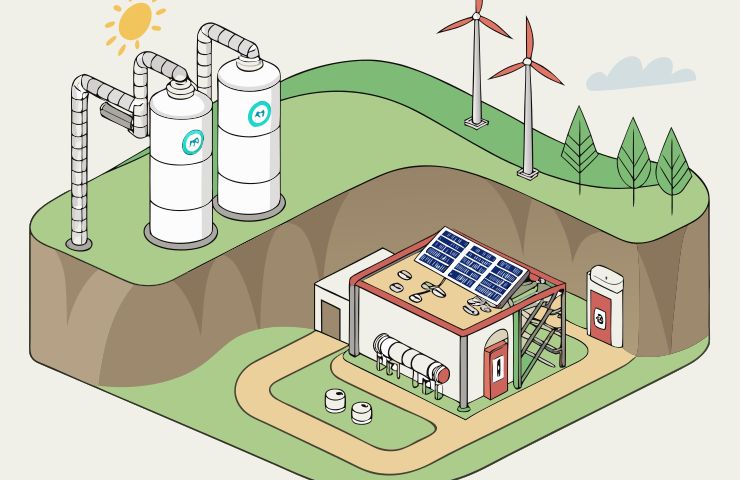
Storengy, a subsidiary of ENGIE, is broadening its underground hydrogen storage strategy, which now includes plans for both new caverns and the conversion of existing natural gas facilities. The company’s approach combines newly constructed underground spaces with repurposed infrastructure. Together, these moves signal a deliberate pivot in how Storengy intends to support hydrogen supply chains across Europe.
Recently, a report surfaced indicating that Storengy is seeking potential sites in eastern France for new hydrogen storage caverns, although specific details remain unverified. The report did not provide confirmed locations or timelines. Still, its appearance underlines that Storengy is in an active prospecting phase for additional storage capacity.
Hydrogen production and consumption do not align neatly in terms of location or timing; thus, large underground stores will provide necessary flexibility. That mismatch between when hydrogen is produced and when it is needed is a core challenge for scaling hydrogen use in industry. Large-scale storage smooths out those differences.
The industry aptly identifies salt caverns as ideal for large-scale hydrogen storage due to their rapid injection and withdrawal capabilities, making them economically favorable compared to surface storage options. Salt caverns allow fast cycling of volumes. They are therefore seen as operationally and commercially attractive where hydrogen must be moved into and out of storage frequently.
The proposed eastern France hydrogen cavern project, though still in the prospecting phase, is backed by significant investigatory work. Storengy has exclusive research permits for regions including Nord-Mulhouse, which may become potential site locations. Those permits let the company study geology and suitability before any decision on construction or conversion is taken.
These preparations illustrate the company's commitment to ensuring geological suitability and regulatory compliance before final investment decisions are made. Geological studies, permitting and other preparatory work help reduce the risk that a chosen site will prove unusable. Storengy appears to be prioritizing those steps in eastern France.
According to industry analysis, the advantages of employing salt caverns in underground hydrogen storage include their natural impermeability and ability to maintain operational pressure integrity, critical in preventing leakage and other safety hazards. That sealing quality is central to why salt formations are preferred for storing compressed gases over long periods.
At its Harsefeld site located in Lower Saxony, Germany, Storengy Deutschland is actively developing the SaltHy project. The initiative aims to create new salt caverns dedicated to hydrogen storage, adhering to German mining and environmental regulations and receiving support from the European Union. Harsefeld is therefore a live example of Storengy's strategy being put into practice under national and EU oversight.
The Harsefeld facility plans to store approximately 14,000 tonnes of hydrogen across two newly constructed caverns. That stated capacity conveys the scale Storengy envisions for individual storage sites when they are purpose-built for hydrogen rather than repurposed from other uses.
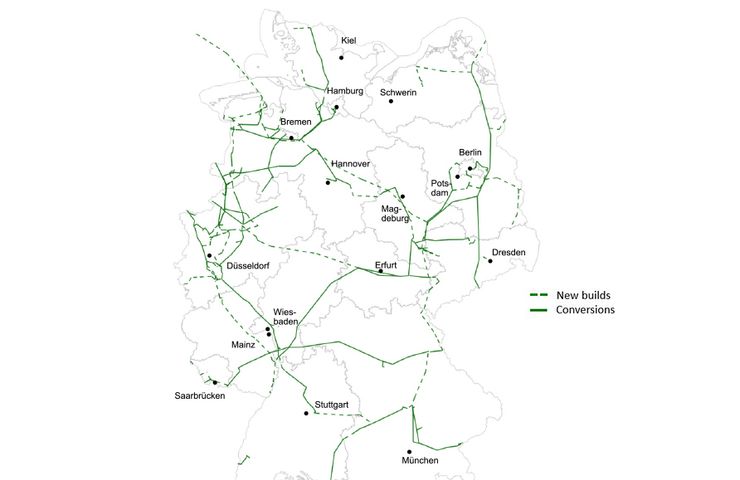
This project aligns with the EU’s goal of expanding hydrogen infrastructure through funding initiatives, exemplified by the European Hydrogen Backbone strategy. EU support is cited as a factor enabling development, indicating a policy environment that backs larger hydrogen networks and associated storage.
Furthermore, the FrHyGe project, another EU-supported endeavor, seeks to validate industrial-scale hydrogen storage in salt caverns at the Manosque site in France, led by Storengy in collaboration with 17 European partners. That collaboration underlines how Storengy is working with a broad consortium to test and demonstrate storage at industrial scale.
The FrHyGe effort includes thorough safety, economic, and environmental assessments necessary for effective replication across various sites. Replication is a stated objective: to learn from one site and apply those lessons to others with similar geological and regulatory profiles.
Technical advancements in hydrogen storage technology drive this evolution. Underground hydrogen storage involves complex mechanisms, primarily through the process of cavern leaching. The technique is well established in principle but requires careful design and monitoring when applied to hydrogen.
Water is injected into underground salt domes to dissolve salt and create caverns that can house compressed hydrogen. This method takes advantage of the salt's natural sealing properties, ensuring that hydrogen remains securely stored until needed. The leaching process produces cavities that are then prepared for cyclic injection and withdrawal operations.
With other projects like HyPSTER aiming to establish cyclic renewable hydrogen storage capabilities, there is optimistic anticipation around the technological benchmarks being set for emerging hydrogen markets. Each project contributes operational experience, and together they build a technical foundation for storage solutions intended to be repeatable across Europe.
Interestingly, each project contributes to a growing repository of data and operational insights that will refine future developments in hydrogen infrastructure. Operational data, safety findings and economic analysis from SaltHy, FrHyGe, HyPSTER and similar initiatives will feed into decision-making for subsequent projects.
The expansion into eastern France represents a calculated step for Storengy, optimizing a blend of new construction and the strategic conversion of existing assets. Converting natural gas facilities can shorten timelines and leverage existing connections to pipelines and customers; new caverns allow purpose-built design. Storengy’s strategy explicitly embraces both options.
Still, it raises questions about market demand and the regulatory landscape as Europe progresses toward its net-zero emissions goals. According to industry trends, the trajectory of hydrogen demand will need to be carefully monitored, taking note of how projects like SaltHy develop and align with broader European hydrogen network ambitions. Monitoring demand will be essential to justify the scale and timing of further investment.
In summary, Storengy’s extensive strategy for hydrogen storage is a promising move toward establishing an interconnected hydrogen economy throughout Europe. The projects in both eastern France and Germany not only highlight technological progression but also define critical aspects of how industries can adapt to meet future energy demands sustainably. As these initiatives evolve, they will shape the discourse on hydrogen infrastructure, impacting market dynamics, regulatory frameworks, and environmental considerations well into the future.
Such developments excite stakeholders across energy sectors, as they signify a deeper commitment to sustainable energy solutions and establishing a resilient hydrogen economy through strategic infrastructure investments. The unfolding work at Harsefeld, Manosque and the prospecting in eastern France will be watched closely for the lessons they deliver.