Switzerland’s H2-Sling: Student-Built Hydrogen Fuel Cell Aircraft Readies for Zero-Emission Alpine Flights
A team of ETH Zurich students has developed H2-Sling, a hydrogen fuel cell-powered research aircraft equipped with a 100 kW PEM fuel cell, 700-bar hydrogen tanks and a TÜV-certified recirculation blower, aiming for two hours of zero-emission flight and a future alpine crossing.
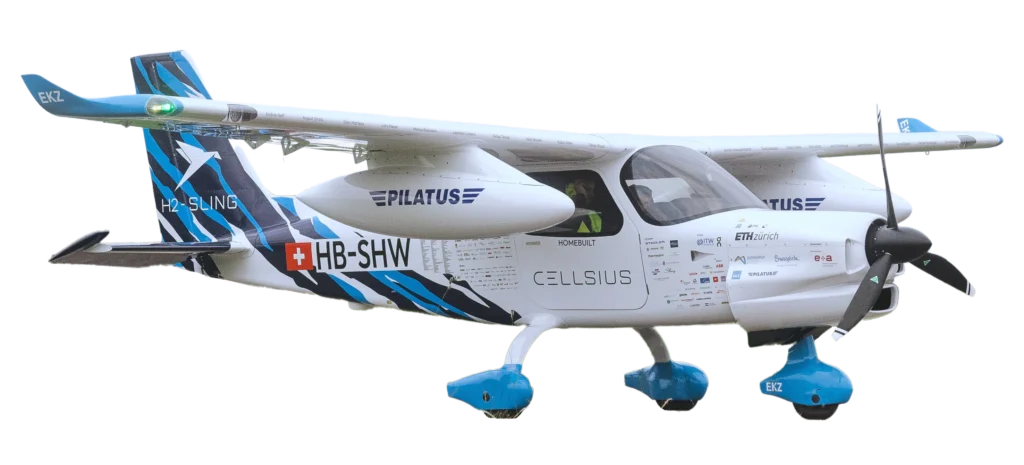
It’s not every day you see a group of undergraduates tackling one of aviation’s trickiest hurdles — showing that hydrogen fuel cells can actually power real, zero-emission regional flights. But that’s exactly what a team of students from ETH Zurich has taken on with their project, H2-Sling. They’ve modified a Sling High Wing airframe, packing it with a 100 kW PEM hydrogen fuel cell and high-pressure storage for gaseous hydrogen.
Working under the banner of CELLSIUS Aero, a non-profit group made up of mechanical and electrical engineering students, H2-Sling has twin 700-bar composite cylinders tucked beneath its wings, holding about 5.2 kg of hydrogen. These cylinders supply the fuel cell stack, which combines that compressed hydrogen with air to generate electricity. This powers an electric motor and a buffer battery, handling dynamic loads like a pro. With just water as its sole byproduct, the setup is designed to cruise for about two hours at a speed of around 162 km/h, covering nearly 200 km. That’s a solid demonstration of how clean hydrogen propulsion can really scale up.
A key player in boosting H2-Sling’s efficiency is the MINK MH hydrogen recirculation blower from Busch Vacuum Solutions. This TÜV-certified gadget employs oil-free claw compressor technology to snag unused hydrogen escaping from the fuel cell’s anode, compress it by up to 0.4 bar, and send it right back up the line. By recirculating up to 70% of that anode exhaust gas, the blower not only cuts down on hydrogen consumption but also reduces tank size and extends flight time — super important when every gram counts for a light sport aircraft!
Integration and Certification
The team has built on their previous work with the e-Sling project, which converted a Sling TSi to battery-electric power and made its inaugural flight in 2022 using a 110 kW motor and 44 kWh wing batteries. After spending two years getting the high-wing airframe ready for hydrogen propulsion, they fitted it with a 100 kW fuel cell, the twin 700-bar tanks, and a high-voltage buffer battery system that operates on Fraunhofer IISB’s foxBMS architecture. This battery not only protects against voltage spikes but also provides extra power during takeoff. They also integrated water and thermal management circuits, with coolant loops keeping the fuel cell stack at about 65 °C while condensers capture water vapor, funneling it into a dedicated reservoir. The composite tanks are securely mounted, and Kistler sensors track pressure and temperature, sending data back to a central control unit. Safety first, right?
After showing off the aircraft at Innovation Park Zurich in October 2025, logistics partner EMIL EGGER transported it by road to Payerne Air Base. There, the Swiss Federal Office of Civil Aviation (FOCA) initiated a detailed approval process similar to the one used for the e-Sling’s battery systems. Inspectors are currently examining the integrity of the hydrogen tanks, checking leak detection systems, emergency shut-off valves, and overall system reliability. Their findings could pave the way for new EASA standards for small-scale hydrogen aircraft and might influence certification processes throughout Europe.
Following a Legacy of Hydrogen Aviation
Hydrogen-powered flight is not exactly a brand new idea. Early experiments trace back to NACA’s liquid hydrogen-fueled jet tests in the 1950s. The German Antares DLR-H2 glider made strides in the 2000s by using PEM fuel cells for some limited crewed flights. More recently, the four-seat HY4 prototype, developed at Stuttgart Airport, successfully showcased passenger flights powered by hydrogen. Unlike those tricky cryogenic tank systems, H2-Sling opts for 700-bar gaseous storage and hydrogen storage methods honed in the automotive world, sidestepping the complications of cryogenics and allowing for quick refueling.
How the Fuel Cell Propulsion Works
The brain behind H2-Sling is a 100 kW proton exchange membrane fuel cell. When hydrogen molecules hit the anode, a catalyst breaks them apart into protons and electrons. Those electrons zip through the electric motor and a buffer battery, giving the aircraft its push, while the protons travel through the membrane to the cathode. There, they mix with oxygen, creating water and releasing heat. To avoid running out of gas locally, the MINK MH blower constantly grabs any leftover hydrogen from the anode outlet and pumps it back to the inlet. Its synchronized gearbox and internal coating are made to withstand extreme temperatures, all under a TÜV-certified design that’s already proven in other mobile and stationary applications.
Impacts on Sustainable Aviation
While battery-electric models like the e-Sling have shone a light on the potential for zero-emission flights, they’ve also highlighted the limits in energy density. Hydrogen fuel cells, on the other hand, bring a higher energy density to the table, setting the stage for longer flights. H2-Sling is like a live testing ground for regulators and planners, collecting data on hydrogen storage methods, refueling logistics at regional airports, and emergency response protocols. Even if the current hydrogen supplies come from conventional industrial sources, the design can be adapted to utilize green hydrogen production through electrolysis, which could lead to genuinely carbon-neutral operations.
Experts predict the hydrogen aviation market could skyrocket into the multi-billion-dollar territory by the mid-2030s, with regional and commuter services likely being the early adopters. Demonstrations like H2-Sling are key to reducing the risks associated with technology integration for suppliers and investors, offering real performance data — from blower recirculation rates to tank-to-propeller efficiency — that supports financing and offtake agreements. Plus, featuring the MINK MH blower in an airborne platform gives Busch Vacuum Solutions a solid reference case for mobile hydrogen applications in other industries, too.
These smaller projects are also speeding up the development of the supply chain for essential components like high-pressure vessels, valves, heat exchangers, and purifiers. These elements will be crucial when larger regional or narrow-body hydrogen aircraft take to the skies. The insights gleaned from FOCA’s certifying work and the H2-Sling campaign will help shape safety cases and design guidelines for even more ambitious hydrogen-powered aircraft programs that are planned out to 2050.
A New Generation of Engineers and Regulators
Beyond the impressive technical achievements, H2-Sling is shaping up to be a training ground for the next generation of experts in hydrogen aviation. Students are getting hands-on experience with everything from high-pressure system design and fuel cell integration to navigating civil aviation regulations, all under FOCA’s guidance. Plus, ETH Zurich recently honored the CELLSIUS team with the Jakob Ackeret Prize, highlighting institutional support for hydrogen infrastructure and workforce development in this emerging sector.
Looking Ahead
As H2-Sling gears up for its first hydrogen-powered flight, the team has ambitious plans for an alpine crossing over the Gotthard Pass to illustrate hydrogen’s promise for climate-neutral regional connectivity. Pulling off such a feat would not only capture public interest but could also rally political backing in a country known for its precision engineering and commitment to environmental protection. Regardless of whether they hit that milestone, H2-Sling has already made a statement on how student-driven innovation can propel fuel cell technology forward in real-world applications, steering the evolution of certification frameworks closer to making zero-emission aviation a reality.