European Resilience Alliance Unveils Framework to Advance Clean Hydrogen Initiatives
The European Resilience Alliance for Clean Hydrogen unveils its Clean Hydrogen Value Chain Bankability Playbook, aimed at addressing the challenges facing the clean hydrogen sector in Europe.
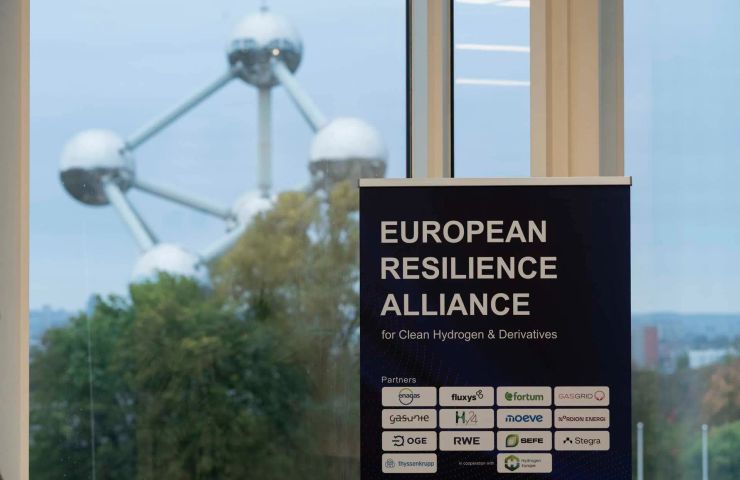
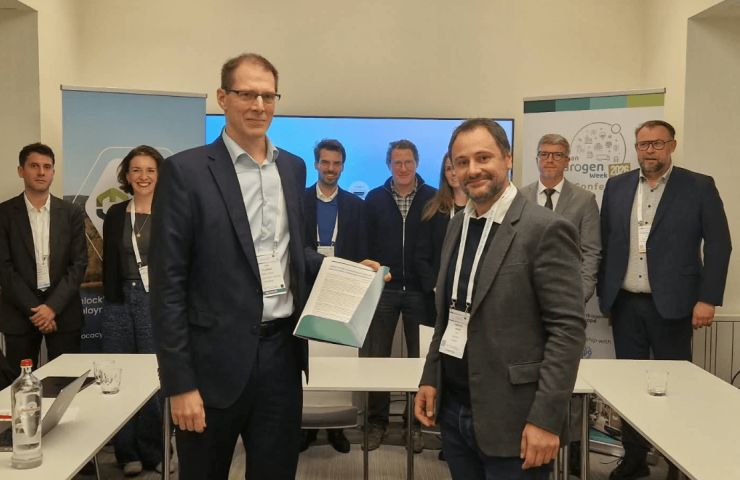
The European Union’s push toward sustainability and climate neutrality has sharpened attention on practical pathways for clean hydrogen. In that context, the European Resilience Alliance for Clean Hydrogen & Derivatives has published a new guide: the Clean Hydrogen Value Chain Bankability Playbook. The playbook, unveiled in Brussels recently, targets the persistent obstacles that are slowing the rollout of Europe’s clean hydrogen projects—chief among them uncertain demand and revenues, risks tied to infrastructure and technology, and regulatory hurdles.
Those constraints, the playbook argues, have left many projects financially fragile. The Alliance frames the problem as one of bankability: investors and developers face a landscape in which cash flows are difficult to predict and upfront infrastructure costs are high. To address that, the playbook proposes three targeted public support mechanisms intended to increase investment certainty and accelerate project development. The Alliance says these measures would create clearer revenue pathways and reduce exposure to early-stage risk.
Mechanisms for Financial Enabling
At the heart of the playbook are mechanisms designed to link commercial reality with longer-term planning. One is the introduction of double-sided hydrogen auctions. The idea is straightforward: connect hydrogen producers directly with buyers through longer-term contracts, giving both parties a more reliable revenue structure. The model would aggregate demand through intermediaries that contract with producers and manage resale to buyers, creating a single point for price discovery and contractual certainty.
That aggregation function is intended to lower the transaction costs and commercial risk that can deter investment at the production and midstream stages. By routing multiple off-takers through intermediaries, the mechanism could help match supply and demand profiles that are otherwise fragmented across regions and sectors. The playbook presents this auction model as a way to give market participants greater visibility into future revenue streams without creating direct regulatory mandates.
Another proposed measure targets the middle of the hydrogen value chain. The playbook calls for contracts for difference aimed at hydrogen midstreamers. These contracts are meant to offset the discrepancy between volatile market prices and the price levels that would make midstream investments viable. In practice, that means public support would cover the gap between market receipts and a predetermined reference price, thereby shielding investors from short-term price swings.
Supporters say this mechanism addresses the unique risk profile of infrastructure such as transport and storage. Midstream assets typically require large capital expenditures and long lead times, yet they depend on demand that may only materialize later. According to the playbook, contracts for difference for midstreamers would therefore act as a stabilising bridge between construction and sustained commercial operation.
The third recommendation is intertemporal cost allocation for hydrogen transport infrastructure. Under this proposal, early tariffs would be set at affordable and predictable levels to lower the barrier for initial users. Over time, costs would be reallocated to reflect the development of the network and the emergence of fuller demand. The intention is to make early take-up feasible while ensuring that the burden of future infrastructure growth can be managed sustainably.
Placing a portion of costs on later stages of network development, rather than fully on the first users, is a way to avoid choking off nascent demand. The playbook presents intertemporal allocation as a pragmatic tool: it recognises the need to attract first movers while preserving a pathway for cost recovery as the market matures.
Strategic Alliances and Collaboration
The playbook is not an isolated effort. The European Resilience Alliance for Clean Hydrogen & Derivatives draws on a broad coalition of industry actors. Key members include Enagás, Fluxys, Gasgrid Finland and thyssenkrupp. Their involvement signals a multi‑faceted approach that spans production, transmission, storage and industrial use.
These organisations bring operational experience across different parts of the hydrogen value chain. That practical perspective has shaped the playbook’s emphasis on mechanisms that are deployable across jurisdictions and adaptable to differing market conditions. The Alliance stresses collaboration as a means to align commercial incentives with public policy objectives.
Importantly, the publication of the playbook coincides with a separate process at the European Commission. The Commission has launched a new consultation for a Hydrogen Strategy that emphasises resilience and competitiveness. The playbook appears alongside that consultation and offers a set of actionable proposals that could inform policymaking. Yet the Alliance is careful to note that the playbook itself carries no official legislative weight.
That caveat is significant. The recommendations are intended to influence the policy debate rather than to function as binding regulations. By setting out concrete mechanisms—double‑sided hydrogen auctions, contracts for difference for midstreamers, and intertemporal cost allocation—the Alliance aims to shape the instruments that public authorities might choose to deploy.
Opportunities Awaken in Industrial Decarbonization
Beyond finance and infrastructure, the playbook highlights the role hydrogen could play in industrial decarbonization. Sectors such as steel, chemicals and refining are identified as particularly well placed to benefit from integrating hydrogen into their processes. These industries face hard-to-abate emissions and are already exploring routes to replace fossil fuels with zero-emission alternatives.
The playbook frames hydrogen as a medium for sectoral transformation rather than as a single technology solution. It stresses that a comprehensive hydrogen infrastructure could enable deep emissions reductions across multiple industrial value chains, provided that investment risk is managed and demand is credible.
At the same time, the playbook warns against premature overbuilding. If infrastructure is deployed in advance of real demand, the result could be stranded assets and misallocated public support. For that reason, the Alliance emphasises financing structures that prioritise genuine production and usage over speculative interests. Sustainable deployment, the playbook argues, must be anchored in verifiable demand signals and commercially viable off‑take arrangements.
Policy, industry and finance will thus need to converge on models that balance early support with long‑term market discipline. The Alliance’s proposals attempt to thread that needle: offering ways to reduce early‑stage risk while preserving incentives for efficiency and commercial scaling as the market grows.
As the European Union moves toward its climate goals, the Clean Hydrogen Value Chain Bankability Playbook presents a blueprint for aligning public support with private investment. Whether its recommendations take root will depend on policy choices at national and EU levels, on the willingness of industry players to coordinate across the value chain, and on the emergence of credible demand in the sectors most ready to switch to hydrogen. The interplay of supportive regulation and innovative financial structures will be critical to turning the playbook’s proposals into operational projects that advance both commercial and environmental objectives.