Novacium and Partners Secure Funding for METAGENE Green Hydrogen Project
HPQ Silicon has announced that a consortium led by Novacium SAS obtained French RAPID funding for the METAGENE project, focusing on decentralized hydrogen generation using a solid aluminum-silicon fuel.
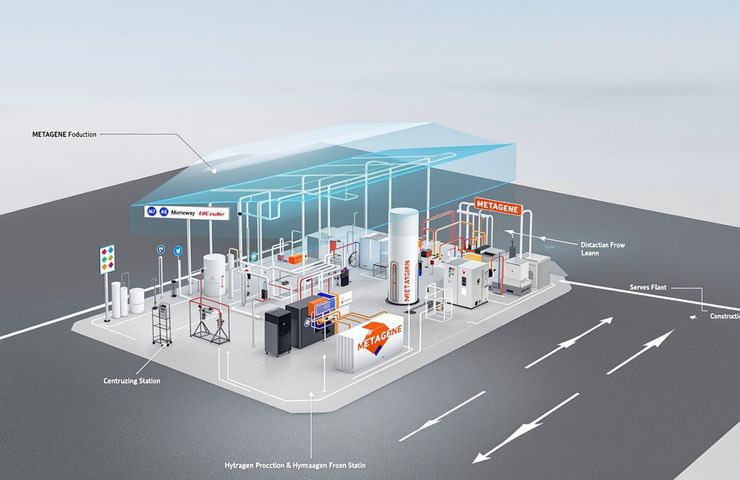
HPQ Silicon has announced that a consortium led by Novacium SAS has been awarded French RAPID funding from the Agence de l'innovation de défense (AID) and the Direction générale de l'armement (DGA) for the METAGENE project. This initiative aims to develop and validate a decentralized, high-pressure hydrogen generation station using a solid aluminum-silicon fuel that reacts with water in the presence of an activator.
The reported budget for the METAGENE project is €1.2 million, with the funding covering approximately €1 million, representing an 80% subsidy. The project has a planned duration of 30 months, starting from September 1, 2026, with the goal of advancing the technology readiness level (TRL) from 3 to 5-6.
Project Objectives and Technology Overview
The METAGENE project aims to create an onsite hydrogen generation system that produces hydrogen without the need for grid electricity. This is particularly advantageous for areas lacking reliable electricity sources or hydrogen delivery infrastructure. The proposed process will utilize a solid metallic fuel which can react with water, releasing hydrogen gas that would then be purified, compressed, and stored for distribution.
The consortium includes Axel'One, contributing its expertise in gas analysis and hydrogen purification, and AD-VENTA, which specializes in high-pressure hydrogen storage and dispensing systems. While the initial integrated version of the hydrogen station will still require limited electricity for ancillary systems, the core reaction is designed to be self-sufficient in this regard.
Implications for Military and Civilian Applications
Both military and civilian applications are anticipated for the METAGENE project. The military interest hinges on the system’s ability to provide portable and reliable energy in remote operations, such as for drones, sensors, and logistics. Civilian applications may range from decentralized energy supply in industries to service for isolated infrastructure. The intention behind this dual-use approach aligns well with France’s broader strategy for promoting low-carbon hydrogen technologies.
Funding and Development Partnerships
According to reports, the foundation of the METAGENE project builds upon existing technology collaborations. Novacium and HPQ Silicon, a Canadian advanced-materials company, have previously established a strategic research partnership that focuses on various silicon-based materials, including battery-anode technologies. HPQ holds exclusive commercialization rights in North America for applicable technologies developed under this project.
Additionally, the consortium's ongoing collaboration with AD-VENTA since late 2025 aims to adapt existing hydrogen compression and dispensing stations to integrate the METAGENE reactor. The project’s ambition to operate effectively in decentralized environments complements France’s national strategy on hydrogen, which has allocated substantial funding to enhance industrial infrastructure while supporting innovation in clean energy.
Challenges Ahead
Despite the enthusiastic optimism surrounding the METAGENE's goals and potential benefits, several challenges loom large. The project's success hinges on its ability to manage various critical engineering aspects, such as reaction control, gas purity, and safety measures, all of which have yet to be independently verified. Moreover, the environmental impact of lifecycle emissions, especially concerning the sourcing of raw materials for aluminum and silicon, must be comprehensively assessed to validate its green credentials.
While the project is framed as a solution for increasing hydrogen availability, it remains imperative to conduct thorough testing before any commercial deployment can be approved. Until proper evaluations are completed, stakeholders must view this development as a proposal rather than an already validated solution.
Conclusion
The METAGENE project represents a significant step toward innovative hydrogen production methods, particularly for decentralized applications. The collaboration among Novacium, HPQ Silicon, AD-VENTA, and Axel'One showcases a model for collaborative innovation in the evolving hydrogen sector. The projects worthiness will ultimately depend on overcoming the technical hurdles inherent in verifying the effectiveness of its proposed systems and ensuring its environmental sustainability.