Gold Hydrogen's Ramsay Project Shows Promising Natural Hydrogen Flow
Gold Hydrogen Limited has reported significant progress in natural hydrogen exploration at its Ramsay Project, confirming flow to the surface and high hydrogen concentrations.
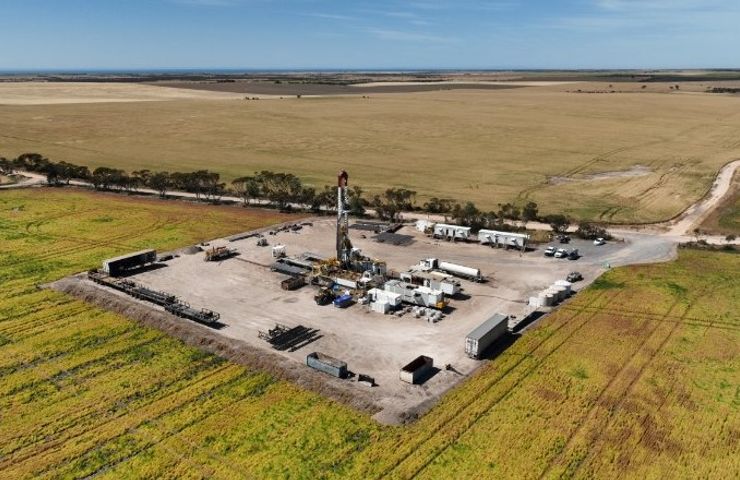
Gold Hydrogen Limited announced significant appraisal testing results from its Ramsay Project, located on the Yorke Peninsula in South Australia. The company said the testing at the Ramsay 3 well demonstrated natural hydrogen flowing to the surface, marking a crucial step in assessing the viability of naturally occurring hydrogen as a sustainable energy source.
The appraisal activities followed successful drilling operations. During a flow test conducted from mid-October, the company reported hydrogen concentrations reaching up to 97%. Gold Hydrogen also set a modelled production rate of 100 kilograms of hydrogen per day for future development wells, though it emphasised those figures remain contingent on further assessments of well performance, reservoir characteristics, and operational parameters.
Technical Insights into the Ramsay 3 Well
Testing focused on the Parara Limestone interval. When that interval was perforated, the operation yielded a maximum gross fluid rate of approximately 1,700 barrels per day. Such a fluid flow points to potential productivity from the interval. However, the measured hydrogen flow is described as a modelled potential rather than an established production rate.
Laboratory work will play a central role in the next phase. Gold Hydrogen plans comprehensive laboratory analyses to characterise the fluids and reservoir properties. Additional drilling is also scheduled as part of the company’s effort to confirm the initial findings and to clarify the well performance under varying operational parameters.
These steps are standard in appraisal campaigns. They help move results from an early demonstration—flow to surface—toward a clearer picture of what might be practical at commercial scale. The company has not presented production as proven; it has presented measured concentrations and modelled scenarios that require verification.
Strategic Partnerships and Future Prospects
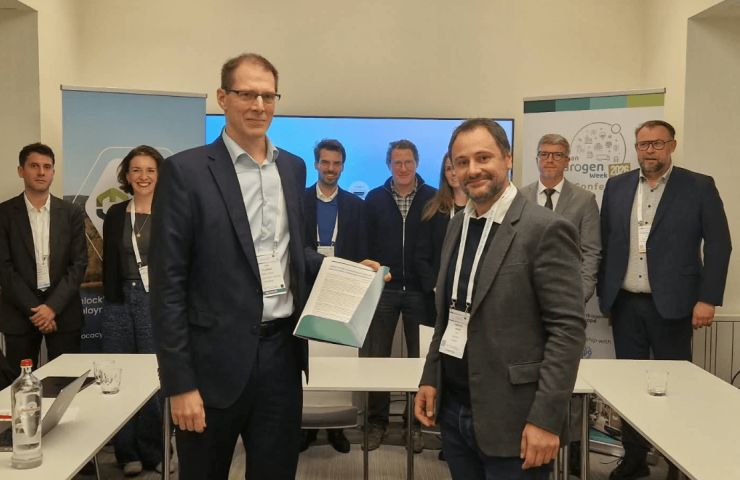
This testing milestone comes amid ongoing collaboration with Mitsubishi Gas Chemical Company, which has entered a non-binding memorandum of understanding to explore the feasibility of a green-methanol facility utilising Ramsay hydrogen, renewable electricity from South Australia, and biogenic carbon sources. The partnership remains under evaluation for commercial viability, but it outlines a potential pathway for converting a geological resource into a manufactured fuel product.
The MoU frames a concept rather than a commitment. It identifies a set of inputs — Ramsay hydrogen, renewable electricity from South Australia, and biogenic carbon sources — and proposes to examine whether those inputs can support a green-methanol facility. Gold Hydrogen and its partner will need to resolve technical, commercial and regulatory questions before any firm project decision is taken.
At the same time, the Ramsay results are being reviewed against local policy settings. South Australia’s regulatory environment is relevant to any future development. By classifying hydrogen as a regulated substance in 2021, the state has established a foundational framework that, according to the company, supports industry growth — as evidenced by Gold Hydrogen’s exploration license acquisition.
That regulatory step is one element among many that will influence whether the resource can be advanced. Other elements include reservoir continuity, sustained well deliverability, the economics of capture and processing, and the ability to integrate with proposed downstream facilities such as the green-methanol concept referenced in the MoU.
Why This Matters
The Ramsay Project’s reported results have prompted interest and caution in equal measure. Natural hydrogen is distinct from green hydrogen, which is typically produced via electrolysis. If natural hydrogen can be produced sustainably and at scale, it could represent another route into low-carbon energy supply chains.
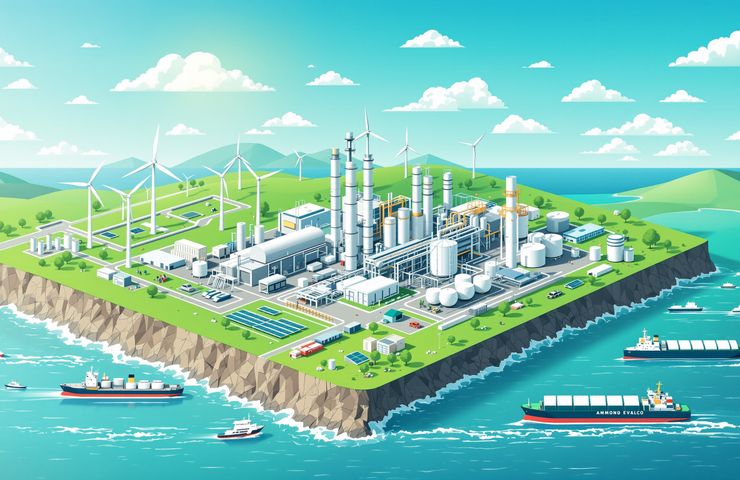
Potential applications are specific. Gold Hydrogen points to roles in decarbonisation for heavy industries, notably in producing clean ammonia and methanol. Those are exact uses the company highlights as possible beneficiaries should Ramsay’s findings translate into sustained production and a viable supply chain to downstream manufacturing.
Still, the pathway from a surface flow and high-concentration measurement to a commercial fuel product is not simple. The company itself frames its output as modelled and conditional. More data, from both laboratory testing and further drilling, will be required to move beyond an exploratory or appraisal stage.
Investors and industry observers will watch how successive steps unfold. Confirmation of reservoir characteristics and repeatable well performance are necessary before engineering, offtake and financing discussions can advance in any meaningful way. The MoU with Mitsubishi Gas Chemical Company sets out a potential offtake and use case, but it does not substitute for those technical confirmations.
In practice, converting a geological demonstration into an industrial-scale operation encompasses multiple streams of work: technical validation, environmental and regulatory approvals, commercial negotiation and project financing. Gold Hydrogen’s public update focuses on the technical demonstration and on early partnership talks rather than on any imminent construction plans.
The company’s messaging underscores that the current position is one of appraisal and evaluation. It highlights measured hydrogen concentrations from a specific flow test, a modelled daily production figure for future wells, and a collaboration under a non-binding MoU that aims to explore green-methanol production using local inputs.
In conclusion, Ramsay's progress illustrates the complexities and potentials at the intersection of geology and sustainable technology, reaffirming the importance of continued research and investment in this emerging sector. As Gold Hydrogen pursues laboratory analyses, further drilling and the evaluation of strategic partnerships, attention will remain focused on whether early measurements and modelled scenarios can be converted into reliable, long-term production and commercially viable supply chains for clean fuels.