Hydrogen Council Reports Over 570 Projects Committed to Clean Hydrogen
The Hydrogen Council recently reported that over 570 clean hydrogen projects have secured more than USD 130 billion in investment, underscoring a critical shift in the sector focused on energy security, decarbonization, and industrial growth.
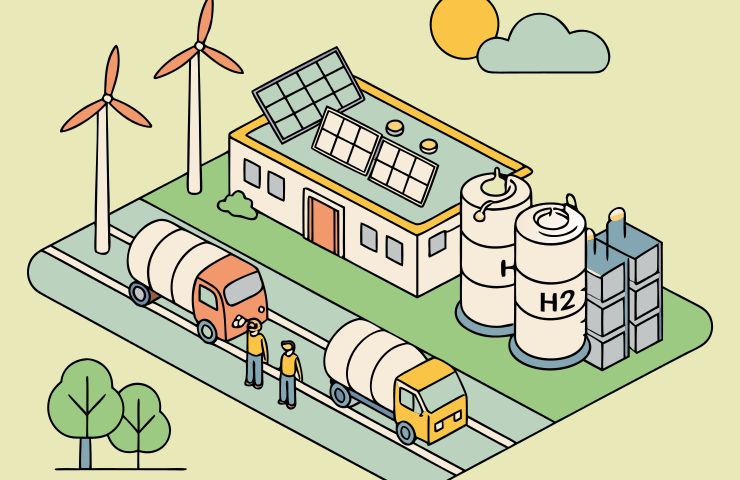
The global hydrogen landscape is undergoing a pronounced shift, as the Hydrogen Council recently reported that more than 570 clean hydrogen projects worldwide have reached a committed stage. That level of commitment has drawn more than USD 130 billion in pledged investment and equates to roughly 6.9 million tonnes per annum of hydrogen capacity. A striking detail: about 90% of these projects are already under construction or operational, not merely in planning.
A Stronger Motivation Beyond Decarbonization
Decarbonization remains a central aim. Yet the Hydrogen Council’s findings show motivations are diversifying. Energy security and industrial resilience have moved up the agenda. Those priorities reflect recent global energy crises and mounting geopolitical tensions. Such events have exposed weaknesses in systems that depend heavily on fossil fuels. As a consequence, governments and companies in many regions are increasing support for low-emission hydrogen production methods.
The shift is pragmatic. Policymakers are balancing climate goals with the immediate need to secure supplies and protect industry from shocks. Investors, too, appear to be responding: commitments of capital are following policy signals as well as environmental objectives. In short, hydrogen is being framed both as a climate tool and as an instrument of strategic resilience.
Collaborative Efforts Fueling the Hydrogen Boom
Growth in the sector is happening through partnerships. Major ecosystem participants are moving projects from concept to delivery. Plug Power Inc., for example, has played a leading role in implementing electrolyzer systems through alliances with partners including Galp in Portugal and Orica in Australia. Those deployments illustrate how industry players combine strengths: technology providers, energy producers and industrial users working together to build infrastructure.
Collaboration is not merely convenient; it is essential. Electrolyzer systems require not just capital and equipment, but integration into existing industrial processes and energy systems. By pooling capabilities, partners reduce technical and commercial risk. The result is a clearer pathway from project commitment to construction and operation—evidence of which can be seen in the high share of projects already under way.
Such partnerships also help distribute responsibilities. One party may bring manufacturing scale, another access to offtake or feedstock, and a third regulatory or market knowledge. That division of labor accelerates deployment while allowing each party to focus on core competencies. It also underlines why committed projects are a more robust indicator of sector maturity than announcements alone.
A Broader Network of Hydrogen Solutions
Geography matters. The international portfolio is concentrated in energy hubs across China, Europe, and the United States, placing significant project activity where markets, policy frameworks, and industrial demand are strongest. That concentration matters because it creates regional clusters of supply, demand and expertise that can scale more efficiently than scattered, isolated efforts.
Nonetheless, substantial hurdles remain. Independent sources, such as the International Energy Agency, note ongoing challenges: high costs, uncertain demand trajectories and regulatory ambiguity. Those issues persist even as capital commitments increase and construction accelerates. Addressing them will require sustained effort from policymakers, financiers and industry alike.
Still, the advance from announcements to committed, financed projects marks a qualitative change. Commitments backed by capital and active construction point to realism. They show the sector is testing commercial models in real markets rather than only promising theoretical pathways. That transition matters for investors and for the companies that will need reliable hydrogen supplies at scale.
Looking to the Future: Hydrogen's Potential
The USD 130 billion in committed investment signals confidence in hydrogen’s role beyond power-sector decarbonization. Industry actors are positioning hydrogen as a material input for hard-to-electrify sectors. Examples cited in current project portfolios include fertilizers, shipping fuels, and chemicals. For those industries, hydrogen can serve both as a feedstock and as an energy carrier where direct electrification is difficult.
Investment in hydrogen infrastructure could also trigger broader economic effects. Job creation, export opportunities and new industrial activity often accompany large-scale infrastructure programs. Economies that build domestic supply chains for electrolysis, storage, transport and end-use can capture more of the value created by these projects.
That said, the long-term viability of the hydrogen economy depends on more than capital and construction. Reliable, scalable production methods will be essential, as will fiscal and regulatory frameworks that encourage sustained deployment while meeting environmental goals. In practice, this means aligning public policy, market incentives and industrial planning to lower costs and expand demand.
For now, the sector’s momentum is evident. A large share of projects have moved past announcement and into committed stages, significant capital has been pledged, and construction is well advanced for many initiatives. Whether that momentum translates into broad, durable markets will hinge on how industry and policymakers manage costs, clarify rules, and stimulate sustained demand across sectors where hydrogen can uniquely contribute.
Ultimately, the recent data from the Hydrogen Council — showing more than 570 committed projects, USD 130 billion in investment and about 6.9 million tonnes per annum of capacity, with roughly 90% under construction or operational — paints a picture of an industry in active transition. The coming years will determine whether that transition delivers the strategic, economic and environmental outcomes proponents expect.