Innovative Digital Twin Project Aims to Lower Costs in Green Hydrogen Production
Siemens partners with InterContinental Energy and Mescada in a digital twin project targeting enhanced efficiency and lower costs for green hydrogen production in Western Australia.
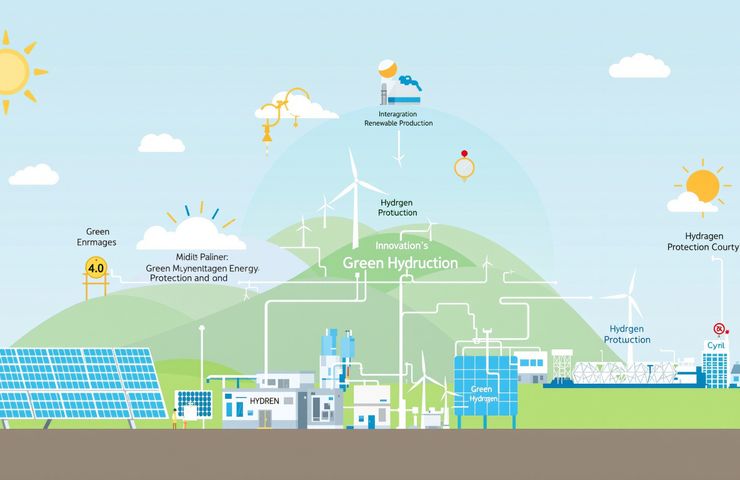
Siemens, in collaboration with InterContinental Energy Australia Pty Ltd and its Australian solution partner Mescada, is developing a cutting-edge digital twin and optimisation framework aimed at refining the production of green hydrogen through the patented P2(H2)Node architecture. The work is set to take place in Western Australia, a region known for its robust renewable energy resources, and will focus on testing integrated renewable-energy and hydrogen designs ahead of any physical construction.
Project Overview and Goals
At the centre of the project is a simulated environment that seeks to mirror a full-scale hydrogen production facility. The digital twin project will utilise Siemens’ gPROMS process-modelling and COMOS engineering software to simulate various scenarios involving renewable generation and electrolysis. Developers will be able to compare potential plant configurations, equipment choices and operational strategies in detail before committing capital or breaking ground. That comparison is intended to reduce uncertainty in design and operation; it can also reveal trade-offs between capital cost, efficiency and operational flexibility.
Project participants expect tangible financial benefits. They say the approach could potentially reduce hydrogen production costs by up to 20%, although this is an expected outcome and not yet verified, according to project participants. If validated, those savings could alter planning assumptions and influence investment decisions for subsequent projects.
Context and Significance
Green hydrogen, generated through electrolysis powered by renewable sources, is crucial for the future of zero-emission technology across various sectors, including transport and heavy industry. Yet producing green hydrogen remains expensive relative to conventional fossil-fuel-based alternatives. Financing large projects is therefore challenging, and developers must manage both technical and commercial risk.
Western Australia’s expansive land and significant solar and wind resources make it a logical testing ground for projects of this kind. At the same time, the region’s dynamic conditions introduce engineering constraints — from logistics to the availability of skilled labour — that large projects must address. In that environment, a robust digital twin can act as a risk-reduction tool, helping to iron out design issues and anticipate operational bottlenecks before they occur on site.
Key Technologies at Play
- Digital Twin Technology: A digital twin serves as a virtual representation of the energy system, designed to simulate performance and configurations before committing to physical construction. It enables in-depth analysis of design options.
- gPROMS Process Modelling: This software provides high-fidelity process modelling, allowing developers to understand equipment interactions within the hydrogen production cycle under variable conditions.
- COMOS Engineering Software: Helps maintain source control of engineering specifications across multiple disciplines, enhancing project organisation.
The project, which has received A$1.56 million from the Australian Renewable Energy Agency (ARENA), is part of a larger investment of A$3.12 million aimed at fostering innovation in green energy production and ultimately streamlining the pathway to a commercially viable hydrogen future. Public backing like this is intended to defray part of the upfront modelling and software integration effort so that subsequent private investment can focus on deployment.
Partnership and Support
InterContinental Energy, recognized for its focus on large-scale green energy projects since its inception in 2014, leads the project while employing the skills of Siemens as a technology supplier and Mescada for local software implementation and support. That arrangement pairs international project development experience with local execution capability. Siemens brings modelling and engineering tools; Mescada supplies hands-on implementation and ongoing software support in Australia.
Working together, the partners plan to use the digital twin to iterate design alternatives rapidly, test control strategies, and stress-test the proposed P2(H2)Node architecture under a range of simulated conditions. The aim is pragmatic: reduce design rework, shorten timelines and limit costly surprises during construction and early operation.
Future Insights
The initiative’s success will depend on both technological performance and market acceptance of green hydrogen. If the project meets its anticipated targets, it may create a template for standardised engineering workflows that other developers can adopt. That would help to cut time and cost from future projects, with implications for how the sector scales.
Implementation will not be automatic. Acceptance within energy markets, policy environments and financing circles must follow. Still, proponents argue that demonstrating a repeatable, standards-based approach to design and optimisation would be a significant step toward reducing the upfront risk associated with hydrogen infrastructure.
As the industry evolves, achieving a balance between reducing costs and maintaining sustainable practices will be essential. This project addresses both sides of that equation: it concentrates on lowering cost through better design while preserving the green premise by focusing on renewable-powered electrolysis. For developers, policymakers and potential offtakers, the outcomes will be watched closely. The results could inform decisions about hydrogen production methods, project financing and the broader push to decarbonise heavy industry and transport.