Air Liquide and Schenk Launch First Hydrogen Trucks in the Netherlands
Air Liquide and Schenk Tanktransport have launched a pilot deploying hydrogen fuel cell heavy-duty trucks in the Netherlands, testing zero-emission technology on key freight routes.
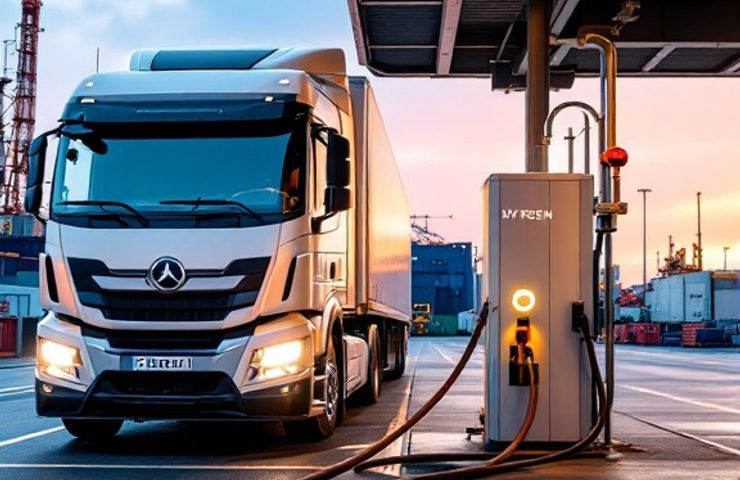
In the Netherlands, Air Liquide and Schenk Tanktransport have kicked off one of the first real-world projects using hydrogen fuel cell heavy-duty trucks in Europe. This exciting initiative aims to put fuel cell technology to the test on tough freight routes that connect ports, industrial areas, and distribution centers. With the Netherlands boasting a dense logistics network, it’s a fantastic proving ground: the flat terrain and high mileage can really push battery-electric options to their limits, while hydrogen trucks provide quick refueling and a longer range. This collaboration is right in line with the national hydrogen strategy and the emerging EU hydrogen corridors. They plan to gather data on performance, uptime, and costs to help ramp up zero-emission transport in the heavy-duty sector.
Truck Technology Profile
So, how do these trucks work? Each one in this pilot uses a fuel cell system that turns compressed hydrogen into electricity, powering an electric motor that produces zero tailpipe emissions. The hydrogen is stored on board at pressures of up to 350 bar, which is then fed into a fuel cell stack generating direct current. Plus, there’s a small buffer battery that captures energy from regenerative braking, helping to smooth out power spikes and increase efficiency. Compared to battery-electric trucks, fueling a hydrogen truck only takes minutes instead of hours, keeping them on the road longer. While the exact models haven’t been revealed, these trucks are designed for long-haul and regional freight, offering a range and payload capacity that stacks up against their diesel counterparts.
Hydrogen Supply and Refueling Infrastructure
Backing this pilot is Air Liquide’s robust hydrogen production and distribution network. They can create hydrogen using methods like electrolysis powered by low-carbon electricity or steam methane reforming coupled with carbon capture, although the specific method for this project hasn't been disclosed yet. Once the hydrogen is produced, it’s compressed, cooled, and either stored on-site or delivered in liquid form to refueling stations. At the pump, hydrogen is typically compressed to 350 bar for filling through special nozzles. Safety protocols and backup measures keep operations running smoothly, especially during busy freight hours. Air Liquide teams work to sync station capacity with fleet refueling needs, optimizing schedules to minimize downtime and ensure a steady supply.
Strategic and Business Implications
For Schenk Tanktransport, diving into this project represents a step towards sustainable heavy transport, helping the company align with stricter emissions regulations and meet customer demands for greener logistics. Sure, the initial costs for hydrogen trucks are steeper than diesel, but incentives, lower emissions charges, and the potential for future carbon pricing could balance the total cost of ownership in the long run. From the infrastructure angle, Air Liquide’s investments in production and refueling facilities make it easier for fleets to adopt hydrogen technology without worrying about access to stations. The data gathered from this initiative, covering fuel usage, uptime, maintenance, and driver experience, will give valuable insights to both commercial operators and investors about the real business case for hydrogen fleets.
Context in Dutch and EU Policy
This pilot fits snugly within the Dutch government’s national hydrogen strategy, which aims to position the country as a hydrogen hub in Northwest Europe. It also benefits from EU initiatives focused on hydrogen corridors and CO₂ standards for heavy-duty vehicles. The project taps into funding schemes and regulatory frameworks geared toward accelerating zero-emission transport. Key freight routes connecting Rotterdam, Europe’s largest port, with industrial regions are prioritized for hydrogen refueling stations according to EU guidelines. The insights gained from this initial deployment could help shape future policies surrounding station permits, safety standards, and incentives for hydrogen mobility.
Environmental and Market Impact
Hydrogen fuel cell trucks are quite the game-changer since they emit nothing but water vapor, which means they cut out nasty local air pollutants like NOₓ and particulate matter on busy freight corridors. Still, the overall carbon footprint depends on how the hydrogen is produced; using green hydrogen from renewable sources is the best option climate-wise. By showing that hydrogen trucks can operate effectively, this pilot could boost demand for low-carbon hydrogen, potentially prompting investments in more renewable capacity or carbon capture tech. On the market side, seeing big players in the industrial gas and logistics sectors deploying hydrogen options helps reduce uncertainty for shippers considering green transport solutions. This might lead to new long-term supply contracts and offtake agreements.
Historical Context of Hydrogen Mobility
Hydrogen's role in road transport isn't brand new, but it’s really picked up pace lately. Early fuel cell passenger cars and buses were getting attention back in the early 2000s, but adoption hit a wall due to high costs and sparse fueling stations. Over the last ten years, advances in technology and supportive policies have shifted focus onto sectors where quick refueling and high energy density are critical—like heavy-duty trucks and long-distance buses. The Netherlands has been able to build on its existing natural gas setup, expertise in gas handling, and dense industrial clusters to be pioneers in these pilot projects. Earlier hydrogen bus trials in major cities helped refine safety protocols and refueling processes, carving out a path for this foray into heavy goods vehicles.
Operational Challenges and Early Learnings
Bringing hydrogen fuel cell trucks into action is about more than just the technology; it’s also about syncing fleet operations, training drivers, and adjusting maintenance routines. The initial coordination efforts have underscored the need for telematics integration to keep track of hydrogen usage and fuel cell health in real-time. Drivers need training on high-pressure refueling tasks and emergency procedures, while maintenance crews are adapting to new service intervals for fuel cell stacks and compressors. Finding the right refueling schedules within tight delivery timelines has meant some tweaks to route planning strategies. Insights from cold-start operations in cooler climates and day-to-day fluctuations in hydrogen demand will be crucial for sizing future stations and control strategies. These learnings will feed back into truck designs and station setups, paving the way for smoother integration down the line.
Looking Ahead
As this pilot moves forward, scaling both the truck fleet and refueling network will be vital for demonstrating that hydrogen can work commercially on a larger scale. The data collected will guide decisions on where to place stations, how much compression and storage capacity is needed, and how to balance between renewable and low-carbon hydrogen supply. With the excitement around hydrogen building across Europe, many are watching to see if the Netherlands’ efforts inspire similar projects along cross-border routes. Successfully integrating hydrogen fuel cell trucks into mainstream heavy logistics could be a significant turning point for industrial decarbonization, offering a roadmap for zero-emission freight at scale.