Hydrogen Fuel-Cell Truck Completes Record Journey Across Canada
A hydrogen fuel-cell truck, operated by Loblaw, just completed a landmark 1,046-kilometre journey in Canada, demonstrating the viability of hydrogen for commercial logistics.
A Hyundai XCIENT hydrogen fuel-cell truck, operated by Loblaw Companies Limited, has successfully completed a remarkable 1,046-kilometre commercial freight journey from Vancouver, British Columbia, to its facility in Balzac, Alberta. The run set a new national benchmark: Canada’s longest commercial freight route undertaken by a zero-emission Class 8 truck, according to an announcement from the Edmonton Region Hydrogen Hub and its partners. It was a long haul. It was also a test of systems and logistics that normally only face scrutiny on routine routes.
The trip was organised under the banner of the Western Canada Hydrogen Corridors Initiative, a program built to establish hydrogen-powered trucking corridors across Alberta and British Columbia. By coordinating fleets, fuel suppliers, vehicle manufacturers, and government entities, the initiative aims to generate concrete operational data critical for future hydrogen refuelling infrastructure. That data is the point. Operators and planners need real-world evidence — not estimates — before they commit to new stations, schedules or equipment.
What Makes This Journey Significant?
The route put the vehicle through demanding conditions. It crossed mountainous terrain on major highways such as the Coquihalla and Rogers Pass, where gradients and weather can expose weaknesses in any drivetrain. In doing so, the trip demonstrated that hydrogen fuel-cell technology can handle sustained heavy loads and long distances in the same operational envelope where diesel has long dominated. For a sector that is widely regarded as hard-to-decarbonize, that matters. The results do not prove a wholesale replacement overnight, but they offer a working example of what is technically feasible today.
How Does the Technology Work?
The Hyundai XCIENT employs a hydrogen fuel-cell electric powertrain in which hydrogen and oxygen are turned into electricity that powers an electric motor. The only exhaust from that process is water, a feature that aligns directly with zero-emission goals. With the journey tallying a total of two days, it illustrates not only the truck’s capacity for efficiency but also its potential for rapid refuelling compared to traditional battery systems. Refuelling time and operational uptime are central considerations for fleets; shorter refuelling cycles can reduce downtime and fit more easily into existing freight schedules.
Key Players in the Initiative
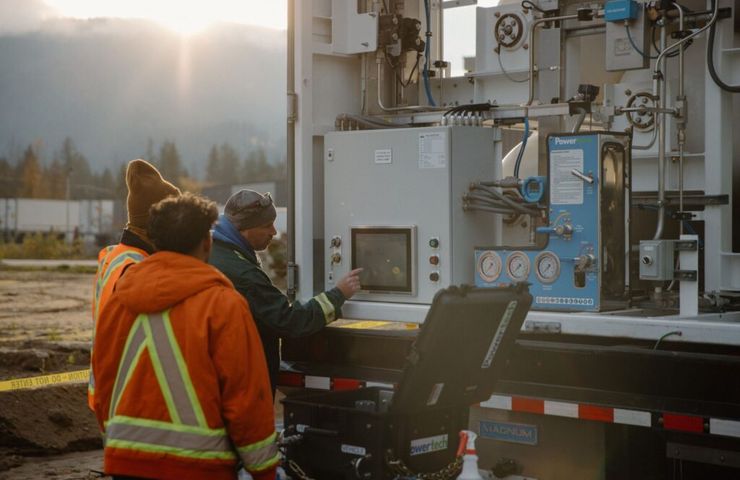
The success of this initiative is attributed to several key organizations: the Alberta Motor Transport Association (AMTA) played a pivotal role by connecting the trucking sector with this demonstration, while HTEC provided necessary hydrogen infrastructure and vehicle leasing. Engineering support came from Powertech Labs, which contributed technical expertise vital for the project’s execution. Notably, indigenous participation was ensured by Backwoods Energy Services, showcasing a commitment to community involvement in the hydrogen logistics sector. Each partner brought a discrete capability — from permitting and access to refuelling hardware and on-road technical validation — and the trip depended on that mix.
Environmental and Economic Implications
The implications of the run extend beyond a single operational milestone. On the environmental side, the truck produced no emissions from its tailpipe; but it is essential to consider the overall lifecycle emissions linked to hydrogen production. That is a qualification that remains central to any assessment of climate benefit. On the economic side, developing a robust hydrogen infrastructure could incentivize local production and create jobs, though the scale and distribution of those effects will depend on deployment choices and market uptake. At the same time, practical barriers persist: high costs and limited vehicle availability remain significant hurdles for fleet operators contemplating a transition.
What’s Next for Hydrogen Transport?
Beyond signalling a technical possibility, the demonstration work is aimed squarely at informing next steps. Future plans involve evaluating the performance data obtained from this journey, which could assist in determining optimal locations for refuelling stations and integrating hydrogen trucks within existing freight schedules. Planners will be looking at fuel consumption, refuelling cadence, downtime, and how the hydrogen trucks interfaced with conventional freight operations. That evaluation will feed back into decisions about where to place infrastructure and how quickly to scale further demonstrations.
Adoption will not be automatic. Fleet managers weigh capital costs, vehicle availability, maintenance ecosystems and the predictability of fuel supply. Still, demonstrations such as this create a body of evidence that operators, suppliers and regulators can assess side by side. They also reveal the operational questions that matter most in real freight movements, which in turn narrows the unknowns for planners considering pilot projects or broader procurement.
As hydrogen fuel-cell technology evolves, it has the potential to integrate seamlessly into the logistics framework, representing a promising frontier for sustainable transport in Canada. Continued collaboration between industry participants, infrastructure providers and community stakeholders will be required to translate demonstrations into routine operations. With ongoing collaborations and developments like the Western Canada Hydrogen Corridors Initiative, the future of hydrogen appears bright, paving the way for a cleaner, smarter transportation sector.