Hydrogen Production Potential at Ontario’s Seagull Property: Anteros Metals Confirms Up to 6,500 ppm
Anteros Metals Inc. has confirmed naturally occurring hydrogen in all gas samples from its Phase 2 deep drilling at the Seagull Property, reaching up to 6,500 ppm and highlighting the project’s potential as a white hydrogen production target within Ontario’s Midcontinent Rift.
A Quiet Corner Yields a Loud Signal
Deep in Ontario's stunning boreal shield, something unexpected has popped up during a routine drilling campaign: hydrogen hiding beneath the surface! For Anteros Metals Inc., a company mostly known for its work with silver, zinc, lead, and other critical minerals in Newfoundland and Labrador, this could open the door to an exciting new era in hydrogen production and storage.
Core News: Hydrogen in Every Sample
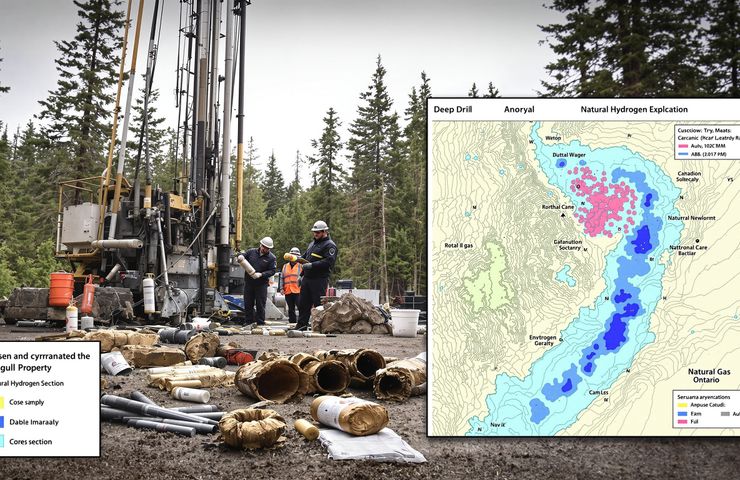
In a remarkable twist, Anteros Metals Inc. has announced that its Phase 2 drilling program at the Seagull Property has uncovered gas samples that contain hydrogen in every hole they've tested so far—talk about a jackpot! Concentrations have even reached 0.65% by volume, which translates to around 6,500 parts per million. They've collected three gas samples from holes that are about 150 meters apart, all confirming the presence of hydrogen and showing some interesting variations in gas composition that could help guide their future modeling. These findings come on the heels of revisiting and extending some historic wells targeting a deep geophysical anomaly dubbed “Big Blue,” linked to an intriguing geological setting tied to the Midcontinent Rift. Interestingly, while one sample had more carbon dioxide, another strikingly balanced sample showed a mix of 49.5% nitrogen, 44.2% carbon dioxide, 5.6% methane, and that impressive 6,500 ppm of hydrogen, hinting at the natural complexity of the gases in this area.
Deep Drilling Meets Gas Analytics
To get to the bottom of this find, Anteros teamed up with Chibougamau Drilling Ltd., going deep—beyond 800 meters—to grab what's beneath. Once they re-pressurized the boreholes, field teams employed specialized downhole sampling tools to gather this pressurized gas and quickly transport it to AGAT Laboratories Ltd. in Calgary. In the lab, analysts put this gas through the wringer using sophisticated chromatography techniques to meticulously sift through and measure each component: hydrogen, nitrogen, carbon dioxide, methane, and hydrogen sulphide. It's a relief that hydrogen sulphide wasn't part of the mix, making things safer and easier to process, but the varying gas profiles indicate that hydrogen concentration isn’t uniform and depends heavily on the underlying geology.
The Big Blue Anomaly
Seismic surveys at the Seagull site have uncovered something fascinating—a low acoustic velocity zone known as Big Blue, seen as fractured or altered rock that might hold fluids, including hydrogen and helium. In areas like this, a process called serpentinization can occur, creating hydrogen by oxidizing iron-rich minerals, while radiolysis—the splitting of water molecules—takes place in older geological formations. By tapping into this anomaly, Anteros is hoping to map out how hydrogen makes its way through rock layers, figuring out how it gets trapped and assessing whether these accumulations can be tapped for use.
Unraveling Hydrogen’s Origins
To make sense of the subsurface hydrogen, scientists have their work cut out for them delving into ancient geochemical processes. In these mafic–ultramafic rocks, the interaction of olivine and water at high temperatures can produce hydrogen while oxidizing iron. Additionally, in the Archean basement units, natural radioactivity can lead to radiolysis, which gives rise to hydrogen over long periods. Geologists believe that both these processes could be at play at Seagull: the mafic intrusion likely supports serpentinization, while the surrounding formations could contribute to radiolytic hydrogen production. Future analyses of core samples will aim to quantify these processes and give a clearer picture of hydrogen sources.
Flow Testing and Hydrogen Infrastructure Integration
While these ppm-level discoveries are exciting, the real test will be in flow testing. This boils down to measuring gas flow rates in a controlled manner, giving insights into things like permeability and reservoir pressure. If deeper drilling shows promising flow rates, the project could actually feed natural hydrogen into nearby pipelines or a storage facility. Unlike green hydrogen that needs loads of renewable energy for electrolysis, the hydrogen from Seagull will require some on-site treatment—like stripping out CO₂ and nitrogen—before compression and storage for future use in fuel cells or blending into existing hydrogen infrastructure.
Strategic Implications and Joint Venture Dynamics
The partnership at Seagull with Ontario's Rift Minerals Inc. involves a staged earn-in, where Anteros has put in 20% and has the opportunity to increase that stake to 49% by hitting various exploration milestones. For a junior explorer, this approach cleverly balances financial risk and the potential for technical advancement. Positive data on hydrogen production could really ramp up interest among investors who are keen on the latest clean hydrogen news and the natural hydrogen trend that’s emerging as part of the energy transition. It could also lead to discussions on potential contracts or partnerships with industrial partners looking for low-carbon hydrogen. Plus, Anteros is also doing multi-element geochemistry tests on core samples, exploring a dual prospectivity model that could make the project even more enticing for investors who are interested in diverse energy transition opportunities.
Natural Hydrogen’s Global Tapestry
Natural hydrogen—sometimes referred to as “white hydrogen”—has shifted from being just a theoretical concept to actual field trials worldwide. Places like Mali have shown high-purity hydrogen flows, while there are developments in Russia and Australia contributing valuable data. The findings at Seagull may seem modest at first glance, but they're critical in demonstrating that geological formations like the Midcontinent Rift could be home to recoverable hydrogen. With governments and companies investing in hydrogen infrastructure, these initial results could play a big role in shaping exploration strategies and funding efforts. Plus, there's a growing interest in whether natural hydrogen can support clean ammonia and fuel cell production without the heavy reliance on the grid that comes with electrolysis.
Regulatory and Environmental Considerations
In Canada, regulatory bodies are just starting to figure out how to license natural hydrogen wells—whether using existing oil and gas regulations or crafting new ones. These rules will impact royalties, environmental assessments, and consultations with Indigenous communities, which is especially crucial in boreal areas. A recent paper in Nature Communications pointed out some risks, like pressure build-up and degradation in hydrogen wells. The good news for Seagull is the absence of hydrogen sulphide, but any future production will still need a comprehensive lifecycle assessment to evaluate potential greenhouse gas emissions, especially if they end up producing significant CO₂ or methane alongside hydrogen. The boreal ecosystems also require thorough safeguards to protect groundwater and habitats, ensuring that drilling has minimal impacts.
Looking Ahead: Next Steps for Seagull
In the coming months, Anteros is planning an eight-line seismic survey to fine-tune the understanding of the Big Blue anomaly and guide the drilling of a new 1,200-meter well. They’ll be using advanced logging techniques to map out the pore networks and fluid saturations. If pilot flow tests show that they can sustain a good flow rate, the company might even pursue the first resource statement in line with the new guidelines for hydrogen resource classification. As debates about hydrogen fuel cells versus battery electric continue to heat up, Seagull’s unique position—naturally sourced hydrogen without the hefty costs of electrolysis—could carve out a fresh niche in the low-carbon hydrogen production landscape.
About the Company
Anteros Metals Inc. (CSE: ANT) is a Canadian exploration outfit focused on critical minerals and naturally occurring gases like hydrogen and helium. With ongoing projects in Newfoundland and Labrador alongside its joint venture at the Seagull Property in northwestern Ontario, Anteros is keen on linking mineral exploration with opportunities in the energy transition, all through targeted drilling, geophysical surveys, and detailed laboratory analysis.