UK Budget 2026 Slashes Hydrogen Grants: What It Means for the Future of Clean Energy
The UK government has announced a £500 million cut in hydrogen capital grants through Budget 2026, shifting from grants to public funding for supported projects, driven by a strategic focus on the Defence Investment Plan.

In a move that has reshaped the funding landscape for clean energy in the UK, the government announced a steep reduction in hydrogen capital grants as part of its Budget 2026. The change was cast as a strategic rebalancing of priorities rather than a simple budget cut. For the sector, however, the shift feels more like a redefinition of how public support for hydrogen will work going forward.
Setting the Stage
The government’s decision cuts hydrogen funding by £500 million, redirecting those sums to support the Defence Investment Plan. That figure is central to the announcement and explains why the shape of hydrogen support has been altered. Instead of continuing to rely on capital grants, ministers have signalled a move toward providing public funding for approved contracts. In practical terms, this means fewer up-front grants and more targeted contractual support tied to projects that meet approval criteria.
Also cancelled was the planned Gas Shipper Obligation, a mechanism that had been intended to collect a levy from gas shippers to finance hydrogen projects. Removing that levy eliminates one prospective revenue stream for the sector and underscores the broader change in financing mechanisms. The net effect is a narrowing of routes through which hydrogen projects can secure public backing.
The Role of the Department for Energy Security and Net Zero
The Department for Energy Security and Net Zero (DESNZ) sits at the centre of the new approach. DESNZ has been given responsibility for prioritising more mature hydrogen developments, with particular emphasis on projects in regions such as Teesside, Merseyside and North Wales. That regional focus is intended to concentrate limited funds where projects are closer to delivery and where they may deliver earlier benefits.
The official Budget document confirms that while there will be continued support for Hydrogen Allocation Round 1 contracts, new projects will face a tougher financing landscape. In addition to protecting those first-round awards, the administration has said up to £300 million could potentially be allocated for strategically important projects. Any such allocation, however, will be conditional — dependent on value-for-money assessments against the government’s fiscal tests.
What This Means for the Hydrogen Sector
For investors and developers, the change is a double-edged sword. On one hand, avoiding a fresh charge on gas bills removes a politically sensitive levy; on the other hand, the reduction in capital grants and the cancellation of the Gas Shipper Obligation create fresh uncertainty for project financing. Industry groups have been quick to warn that this uncertainty could erode market confidence and slow investment decisions.
Clare Jackson, Hydrogen UK’s chief executive, highlighted the need for greater certainty to encourage businesses to invest in new hydrogen technologies and projects.
That single sentence, issued by a trade body, encapsulates a widespread concern: firms considering hydrogen ventures now face a changed risk profile. With grants scaled back, developers will need to rely more on competitive contracts, private finance and longer procurement processes — all of which can alter timelines and commercial models.
Transformative Potential of Hydrogen Production
Even so, the government continues to describe hydrogen as a strategic technology for decarbonisation. Officials point to its role in heavy transport and industrial applications where electrification is difficult. The new funding approach is presented as a way to streamline support and to target scarce public resources where they might deliver the greatest return.
Shifting the delivery model from broad capital grants to public funding tied to approved contracts could, in theory, reduce the overall cost burdens on consumers by ensuring taxpayer funds are committed to projects that pass rigorous value-for-money tests. Whether that outcome materialises will depend on how transparently and efficiently the new contractual pathways are administered.
Real-World Applications and Future Directions
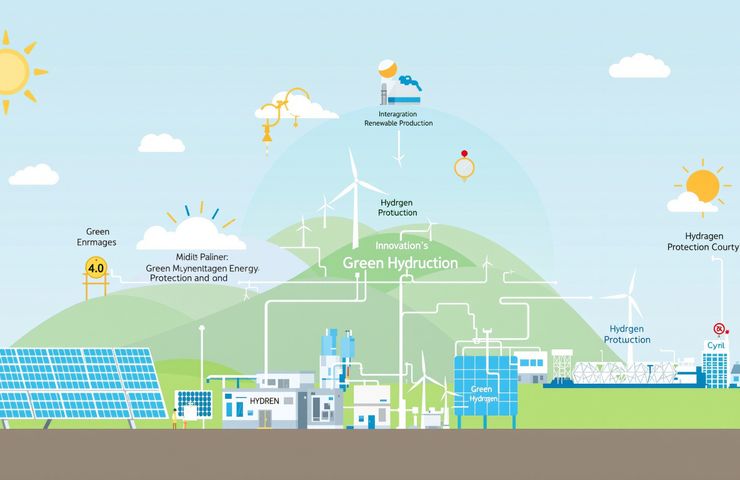
The Budget’s changes will ripple through the hydrogen production landscape. Projects already secured under the first Hydrogen Allocation Round provide a baseline of activity and demonstrate what the government believes is viable. Over 11 electrolytic projects with a combined capacity of 125 MW are being developed, signalling a continuing, if narrower, pipeline of green hydrogen capacity.
Those early-stage electrolytic schemes serve as practical tests of commercial and technical models. They also offer localised benefits: proponents argue that successful projects can support energy independence at a regional level and help create jobs tied to construction, operation and ancillary services. In other words, the projects are meant to be both testbeds and anchors for nascent supply chains.
At the same time, the tougher financing environment could mean slower scaling. Developers may need to adapt business plans, seek more private capital or stage project development to meet the new public procurement criteria. For some projects this will be manageable; for others it could prove prohibitive.
Conclusion: Navigating Uncertainty with Evolving Strategies
The Budget 2026 decisions do not amount to an abandonment of hydrogen policy. Rather, they signal an evolution in how the UK government intends to support the sector under tighter fiscal constraints. The policy now favours targeted contract support and prioritisation of mature projects over broad-based capital subsidies.
That leaves the industry with a clear set of choices. Stakeholders must weigh the implications of reduced grant availability, altered revenue mechanisms and the conditional nature of any new strategic allocations. Careful navigation will be required to preserve project momentum, attract investment and translate pilot-scale activity into wider deployment.
In short: the framework has changed. Momentum is not guaranteed. But with focused public contracts and a protected set of first-round projects, the route forward remains open — if narrower, more selective, and more dependent on demonstrable value for money.