Hydrogen news
New biofuel project may convert forestry waste into aviation biofuel
A consortium of aviation companies and scientists are investigating whether forest-industry waste could fuel jet planes. A project that will be led by the University of British Columbia (UBC) and NORAM Engineering and Constructors, and includes aviation and aviation-related companies Boeing, Air Canada, Bombardier, WestJet and SkyNRG, will assess whether waste from the forest industry, including sawdust and leftover branches, can be converted into sustainable aviation biofuel. A study determined that the forestry waste to energy conversion could meet 10% of B.C.’s annual jet fuel demand. Earl…
A consortium of aviation companies and scientists are investigating whether forest-industry waste could fuel jet planes.
A project that will be led by the University of British Columbia (UBC) and NORAM Engineering and Constructors, and includes aviation and aviation-related companies Boeing, Air Canada, Bombardier, WestJet and SkyNRG, will assess whether waste from the forest industry, including sawdust and leftover branches, can be converted into sustainable aviation biofuel.A study determined that the forestry waste to energy conversion could meet 10% of B.C.’s annual jet fuel demand.
Earlier this year, a feasibility study supported by Boeing and completed by UBC found that aviation biofuel produced from forestry waste through thermochemcial processing, could meet 10% of the annual jet fuel demand in British Columbia (B.C.) alone. This is about equal to 46 million gallons of fuel. Additionally, the study determined that if biofuel is used in ground and marine vehicles it has the potential to save approximately 1 million tons of carbon emissions a year, according to a press release from Boeing.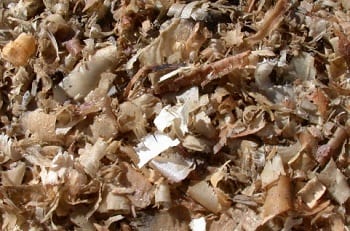 Julie Felgar, managing director of Environmental Strategy & Integration, Boeing Commercial Airplanes said that “Sustainable aviation biofuel will play a critical role in reducing aviation's carbon emissions over the long term,” Felgar added that “Canada is in a terrific position to leverage its sustainable forests to make environmental progress for its aviation industry and other transport sectors.”
Boeing has active biofuel projects on six continents.
Boeing has several biofuel projects in the works and has been making efforts to reduce the aviation industry’s carbon footprint and help protect the environment. Currently, the company has active biofuel projects in many places around the globe including the United States, Brazil, Australia, China, Europe, Southeast Asia, South Africa and the Middle East. According to the U.S. Department of Energy, compared to conventional petroleum fuel, using biofuels that have been sustainably produced lowers lifecycle carbon dioxide emissions by 50 to 80%. The forestry waste to fuel project has received funding form Green Aviation Research and Development Network of Canada as part of its strategy to support technologies that would decrease aviation-related carbon emissions. Canada has extensive stretches of certified forest, which could help the country’s aviation industry asses the long-term feasibility of biofuel produced from forestry industry waste.How was this article?
Thanks for the feedback!