ACWA Power China: Saudi Giant Ushers in Green Hydrogen and Renewable Energy Boom
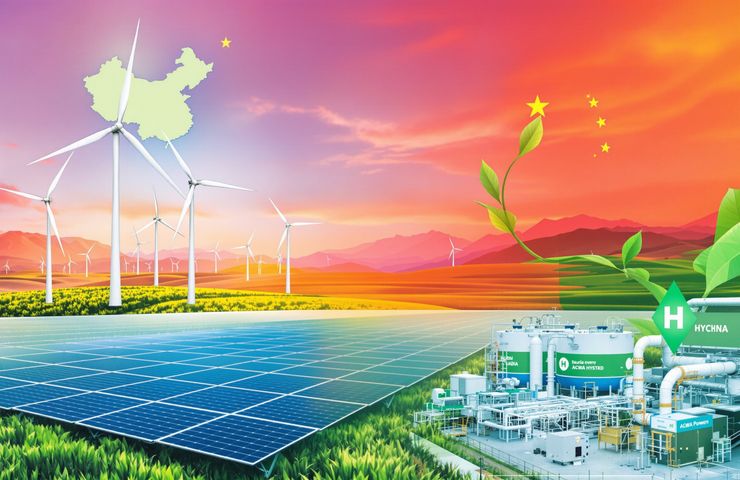
December 16, 2025ACWA Power CEO Marco Arcelli has announced they’re plowing a staggering $30 billion into ACWA Power China by 2030. With the deep pockets of the Saudi Public Investment Fund behind them, ACWA Power has already doubled its assets under management over the past three years—and they’re gunning to double again by 2030. Bottom line? They’re dead set on steering the renewable energy wave at home and abroad.
Today, they’ve got more than 300 MW up and running in Guangdong, and their pipeline stretches past 1 GW across China—from the sun-drenched sands of Xinjiang to the breezy shores of Zhejiang. It’s more than growth; it’s their way of saying Saudi Arabia’s clean ambitions don’t stop at the Gulf.
China’s manufacturing might—stuff like JinkoSolar panels, Sungrow inverters, and Mingyang turbines—gives them a sweet edge. Plugging into that ecosystem means quicker rollouts and cheaper per-megawatt rates than if they were doing this back in Saudi Arabia.
Saudi Vision 2030 and the Secret Sauce
Thanks to Saudi Vision 2030, the kingdom is on a fast track to diversify—building huge solar farms, wind parks, even mega desalination hubs to wean off oil. The real trick? Pairing the latest tech with big-scale projects to drive costs down and get things built at lightning speed.
Take their water game, for instance: ACWA Power is already the world’s biggest private desalination outfit, churning out billions of litres of fresh water daily. And they’re not stopping there. Their $8.4 billion NEOM Green Hydrogen venture—featuring 1.2 GW of solar and wind projects plus massive electrolyzers—is on track to crank out 330,000 tonnes of green ammonia annually by 2027, all while weaving in desalination tech in one of the driest spots on Earth.
And over in Yanbu, they’re cooking up the next mega-site—soaking up sea breezes and endless sunshine to generate clean power and fresh water. It’s a clever mash-up of renewables and desalination that feels straight out of the future.
China as the Next Big Hub
China has rocketed up the renewable ranks. Their 14th Five-Year Plan is dead-set on carbon neutrality and a roadmap for green hydrogen, and let’s not forget their rare earth stash that fuels the world’s turbine and panel supply chains.
Back on January 14, 2025, ACWA Power officially planted its flag in China, inking deals for north of 1 GW of solar and wind projects with Sungrow Renewables and Mingyang Smart Energy. From a 132 MW PV setup in Guangdong to a 100 MW wind IPP in Jiangsu, these homegrown alliances are their ticket through China’s tricky permitting and grid-connection maze.
They’ve got 300 MW already feeding the grid, and the rest of the gigawatts are waiting in line for the green light—stretching from the dry northwest to the verdant central plains. It’s a hands-on answer to juice up factories, drive city expansion, and kick coal to the curb.
How Green Hydrogen Works: Real-World Solution
Here’s how the magic happens. You take clean solar and wind juice, feed it into electrolyzers that split water into hydrogen and oxygen—voilà, a carbon-free loop. That hydrogen then powers everything from factory furnaces and heavy-duty trucks to being mixed with nitrogen for shipping-grade ammonia.
In NEOM, they’ll turn that hydrogen into ammonia and ship it across oceans. Meanwhile, in Uzbekistan, ACWA Power teamed up with POWERCHINA to drop 20 MW of electrolyzers cranking out about 4,000 m³ of H₂ every hour—enough to shave off millions of tonnes of CO₂ or light up roughly 600,000 homes for a year.
And green hydrogen? It’s not some niche toy—it’s the Swiss Army knife of decarbonization. Steel mills, cement kilns, shipping lines, long-haul rigs—you name it, hydrogen can step in. Plus, with electrolyzer tech getting smarter and cheaper, it’s closing in on the price tag of old-school, gas-derived hydrogen.
NEOM Green Hydrogen: Built for the Future
The NEOM Green Hydrogen gig—teamed up with NEOM itself and Air Products—is marrying 4 GW of clean energy with top-tier electrolyzers to churn out green ammonia on an unheard-of scale. It ticks all the boxes: ammonia production, integrated desalination, even zero-carbon local manufacturing in one sprawling hub.
Come 2027, those electrolyzers will be humming away in a desert that basks in over 2,800 sunlit hours annually—showing the world you can run mega-factories purely on renewable energy. And the real kicker? It sets the stage for whole cities powered without a drop of carbon.
Collateral Impacts and Alliances
ACWA Power’s reach now spans the Middle East to Central Asia—and yes, China too. That 20 MW H₂ plant in Uzbekistan with POWERCHINA isn’t just a flex; it’s a proof-of-concept, proving renewables plus electrolyzers can work at commercial scale.
And down in Bahrain, the 2.8 GW solar-plus-storage setup with Bapco shows Gulf states can team up, export clean power, and beef up their grids. These aren’t just green headlines—they forge real strategic bonds, home-front supply chains for batteries, electrolyzers, turbines, and turbocharge a regional green economy.
Big projects like these do more than move electrons—they spark jobs, tech know-how, and fresh infrastructure. In China’s countryside, solar farms and wind parks from ACWA Power China and partners will give locals work by the thousands, while in Uzbekistan, that H₂ plant is hands-on training the next generation of green engineers.
The Real Kicker: Demand Challenges
But let’s get real—demand for green hydrogen is still finding its footing. Europe’s queue of H₂ steel mills and ammonia plants looks great on paper but is moving at a snail’s pace, and Germany’s hit pause on some bids over oversupply jitters. ACWA Power gets it: you can’t just flood the grid; you’ve got to weave things together smartly.
That’s why they bundle power purchase deals, desalination slots, and battery backup—so projects can switch lanes if one market stalls. If export deals hit a snag, they’ll just dial up domestic offtake in Saudi Arabia, ACWA Power China, and wherever else they’ve got skin in the game.
Of course, red tape lurks—China’s grid curtailments and fickle tariffs can pinch margins, and Saudi Arabia is still hashing out water rights and export routes. But ACWA Power’s knack for nailing long-term offtake deals and PPAs is their ace up the sleeve against shifting policies.
Built for the Future: Strategies and Ambitions
On the ambition front, ACWA Power is pulling out all the stops—planning roughly $20 billion a year in capex to hit over 20 GW of clean energy and crank out up to a million tonnes of green hydrogen by the early 2030s. After doubling AUM once already and aiming to double again by 2030, they’re strapped in for a decade of hypergrowth.
Sure, you see the flashy export plays, but they’re also growing roots at home—testing hydrogen-powered fleets, fueling ports, even piloting fuel cells in local factories. This twin export-domestic game plan is their safety net against any offtake hiccups and keeps growth bulletproof.
Bottom line? By mixing Saudi Vision 2030 muscle with China’s manufacturing might, and cranking up green hydrogen, solar and wind projects around the globe, ACWA Power isn’t simply chasing numbers—it’s writing the playbook for tomorrow’s clean energy, gigawatt by gigawatt.

 With over 15 years of reporting hydrogen news, we are your premier source for the latest updates and insights in hydrogen and renewable energy.