
Africa’s Hydrogen Production Gap: 78 Green Projects, 38 GW Pipeline, Only 17 MW Online
January 20, 2026It’s hard to miss Africa’s big dreams for green hydrogen – everyone’s talking about how it could flip the script on global energy trade. But even with endless desert sun and breezy coasts that seem tailor-made for renewable power, most plans are still stuck on paper. The latest deep dive from the Energy Industries Council cuts through the hype, spotlighting the gap between big ideas and real-world wins.
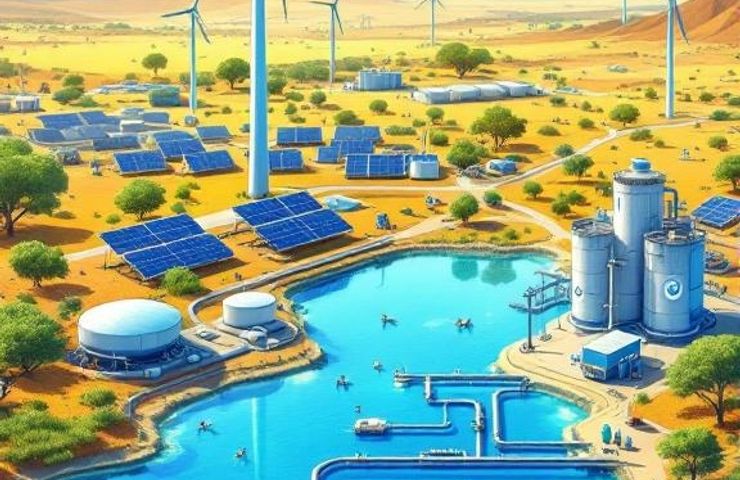
The EIC report from January shows a whopping 78 projects spread throughout North, West and Southern Africa, all in the planning mix. If they all come together, we’re talking about up to 38 GW of electrolysis capacity and close to $194 billion in investment. But here’s the kicker: you won’t find many actual, big-scale operations running yet – a clear sign that this sector still has some hurdles to clear.
Right now, only two tiny setups in Namibia are up and humming, putting out about 17 MW of power. They mainly serve ammonia facilities shipping to Asia. That huge gap between what’s planned and what’s actually turned on exposes a real crossroads for both developers and decision-makers.
Over in Egypt, which leads the pack in proposed spending, the government rolled out a low-carbon hydrogen roadmap driving about $88.5 billion in project ideas. They’re dreaming big on exporting green ammonia to Europe, and they’ve even slapped on a rule for 20 percent local content to spark homegrown supply chains and create jobs.
Morocco isn’t far behind. Thanks to some of Africa’s sunniest skies, it’s shaping up as a reliable supplier to Europe. Big-name developers are already negotiating power purchase deals to keep the numbers sweet.
And down in South Africa, the government’s Hydrogen Society Roadmap sets its sights on churning out half a million tonnes of green hydrogen by 2030 and installing 10 GW of electrolyzers in the Northern Cape. They’ve even got a pilot plant in Sasolburg running since 2023, thanks to some EU funding, to experiment with local production and ironing out the value chain.
Those two tiny operations in Namibia remain the lone players on the ground, grabbing coastal wind to make green ammonia bound for Japan and South Korea. Modest? Yes. But they’re a reality check against the continent’s sky-high ambitions.
Why Projects Stall
All that sun and wind is great on paper, but a handful of headaches are slowing everyone down—especially when it comes to building out real hydrogen infrastructure. Banks won’t open the purse strings if there’s no guaranteed buyer. We’re talking about hardly any dedicated pipelines or desalination plants, and local supply chains for gear like electrolyzers are barely a blip on the map—so most parts end up on expensive, delayed sea voyages.
- No secure offtake agreements, which makes revenue a guessing game.
- Huge upfront bills—close to $194 billion across the board.
- Spotty pipeline and grid integration to shuttle hydrogen or ammonia.
- Almost no desalination capacity where it’s needed most.
- Zero local electrolyzer manufacturing, so everything has to be imported.
Technical Framework
When it comes to hydrogen production, the star of the show is electrolysis—you run renewable power through water to split it into hydrogen and oxygen. In Africa’s case, the prospective 38 GW of capacity is built around a mix of PEM (proton-exchange membrane) and alkaline electrolyzers. Both need sunshine, wind and plenty of water, which often means firing up some energy-hungry desalination.
Not all electrolyzers are cut from the same cloth. PEM setups are nimble, jumping on and off with power swings, but they cost more up front. Alkaline models are kind to the wallet but less forgiving when renewables ebb and flow. Project teams have to juggle these trade-offs—think sizing, storage buffers and grid services—to drive down the cost of green hydrogen.
After you’ve got your hydrogen, a lot of folks choose to turn it into green ammonia right there on the spot. The old-school Haber-Bosch route is perfect for shipping and storage, fitting into existing global networks. While you can crack ammonia back into pure hydrogen, most early movers are just selling the ammonia itself—to fertilizer makers or as a zero-emission fuel in Asia and Europe.
Strategic Implications
Getting solid offtake agreements in the bag is the name of the game. Lenders want to see guaranteed buyers before they sign on, and those contracts are what give developers the confidence to push for that all-important financial close. Without them, everyone’s stuck in limbo, stretching out pre-FEED studies and delaying final investment decisions.
Then there’s the supply chain headache. You’d think manufacturing electrolyzers, catalysts and the rest of the plant gear locally would be a no-brainer, but it’s almost nonexistent. Instead, most hardware ships in from Europe or Asia, so projects are at the mercy of currency swings, freight rates and customs queues.
Clear-cut policy is key too—folks need transparency on permits, grid hookups and tax breaks. EIC’s own Rebecca Groundwater argues for blended finance deals that spread risk across governments, multilaterals and private investors to bridge those early funding gaps.
On the bright side, these ventures could spark a wave of job creation. Take the Coega ammonia yard—word is it’ll create over 20,000 direct and indirect roles. Beyond jobs, we’re talking about diversifying industries, kicking the fossil fuels habit and pushing more zero-emission fuel into power, shipping and agriculture around the globe.
Still, the roughly $194 billion price tag isn’t pocket change. If things go sideways—projects stall or markets shift—there’s a real risk of stranded assets. Gaps in roads, ports and water supply, plus loads of investment sitting in just a few countries, also stirs up questions about who really benefits at a local level and what it means for land use and the environment.
Looking Ahead
The EIC’s advice? Take it step by step: kick off with smaller, less risky pilot plants that lock in firm buyers, then ramp up from there. You’ll need rock-solid policy signals, open tender processes and creative financing—blended models that pull in public and private cash—to move from blueprints to real-world projects.
Get these ducks in a row, and Africa could tap its sun-splashed deserts and wind-swept coasts to become a top supplier of sustainable energy in the form of hydrogen and ammonia. Europe, Asia—you name it. But the next few years are make-or-break. Will this be the start of massive, zero-emission exports, or another pipeline full of good intentions?
 With over 15 years of reporting hydrogen news, we are your premier source for the latest updates and insights in hydrogen and renewable energy.
