
Ammonia Production on Demand: Tsubame BHB’s Low-Pressure Pilot at Kashiwazaki Hydrogen Park
January 8, 2026Ever dreamt of grabbing a latte while peeking at a tiny ammonia plant buzzing behind glass? That’s the vibe I get from picturing distributed ammonia production—and it’s not far-fetched with Tsubame BHB Co., Ltd. stepping onto the scene. This January, they kicked off trial runs of ammonia at INPEX Corporation’s Kashiwazaki Hydrogen Park, marking Japan’s first commercial-scale demo of ammonia synthesis from blue hydrogen under cozy, low-temp, low-pressure conditions—and a neat showcase for next-gen hydrogen production.
Trial Synthesis at Kashiwazaki Hydrogen Park
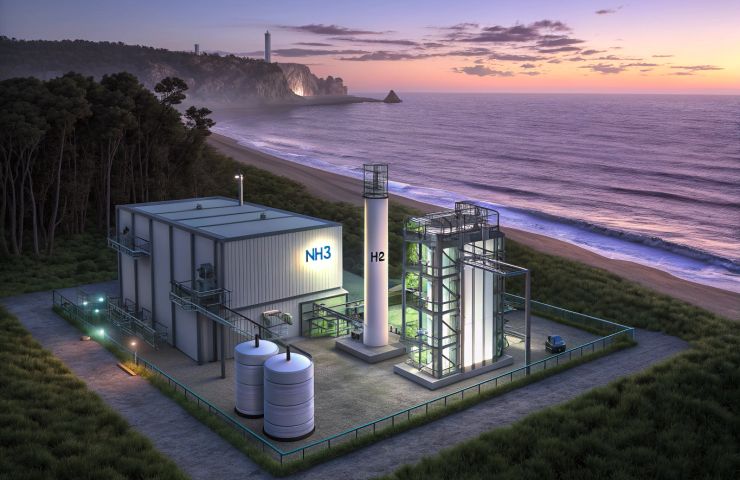
Tucked away on the Sea of Japan coast in Niigata Prefecture, the Kashiwazaki Hydrogen Park swung open its doors in November 2025 as a playground for blue hydrogen tests. They reform natural gas, snag the CO₂ and stash it in the depleted Hirai field, then funnel a steady trickle of hydrogen into a compact, 500-ton-per-year ammonia unit. With Daiichi Jitsugyo Co., Ltd. tackling the nitty-gritty of engineering and installation, the setup just wrapped its first successful run—proving that Tsubame BHB’s electride catalyst can split nitrogen and hook it up with hydrogen at a fraction of the heat and pressure the old-school Haber-Bosch routine demands.
Why Electride Catalysts Matter
Traditional ammonia plants crank up to 400–500 °C and 150–300 atm, guzzling electricity or natural gas like there’s no tomorrow. Tsubame’s secret weapon, the electride catalyst, is loaded with free electrons acting as negative ions. It loosens nitrogen’s stubborn triple bond at lower temperatures and pressures, slashing energy needs and shrinking the plant’s footprint. Think of swapping a sledgehammer for a scalpel: you still crack the rock, but with finer, more efficient strokes.
Blending Old and New
The story kicks off back in 2017 at the Institute of Science Tokyo, where Professor Emeritus Hideo Hosono dove headfirst into electride research. Fast-forward to 2026 under CEO Koji Nakamura’s leadership, and the team’s shipping its first commercial modules. It’s a classic spin on a time-tested reaction: keep Haber-Bosch’s chemical magic, then inject modern materials science so it’s nimble, safe and ready to plug into any site.
Partners and Projects
But Kashiwazaki isn’t just a scenic backdrop—it’s the full chain in action: Japanese natural gas, CO₂ storage, blue hydrogen, ammonia and right back to power. Daiichi Jitsugyo placed the inaugural order, marking Tsubame’s first commercial sale. And they’re just getting started: two more 500-ton units are locked in for Japan, with Brazil, Africa and India on the shortlist. Next up on the drawing board: a 5,000-ton model aimed squarely at heavy-duty industrial hubs.
Implications for Industrial Decarbonization
Why does this matter? Because ammonia production isn’t just about fertilizer—it’s an energy carrier, a marine fuel and a feedstock for power plants. Picture Japan’s coal fleet blending in blue ammonia to slash CO₂, or remote microgrids tapping on-site units and skipping the long-haul logistics. By cutting compression costs and CO₂ leakage risks, electride-powered synthesis tightens the loop on industrial decarbonization.
Global Ripples
Imagine distributed hydrogen production and ammonia hubs reshaping energy security in the Global South. Instead of banking on mega-plants and endless pipelines, ports or factories can install container-sized skids. For investors, that means modular rollouts and co-investment with local utilities. For policymakers, it’s a golden opportunity to build homegrown hydrogen infrastructure without gutting national grids.
Looking Ahead
The real test? Scaling up from 500 to 5,000 tons a year while keeping capex in check. But if Tsubame BHB’s electride modules live up to the hype, we could soon see ammonia stations popping up like EV chargers—powering turbines, ships or fields right where they’re needed. It’s a reminder that revolutions often happen in smart, small steps toward sustainable energy and a zero-emission future.
 With over 15 years of reporting hydrogen news, we are your premier source for the latest updates and insights in hydrogen and renewable energy.
