
Ballard Power Systems narrows loss and beats Q3 2025 revenue
November 18, 2025Ever had that gut feeling that a hydrogen maverick could pull a fast one on Wall Street’s lowball forecasts? Well, this fall Ballard Power Systems delivered just that: a Q3 report that had us doing a double take. No gimmicks, no fluff—just solid finance numbers hinting at a real shift in the hydrogen fuel cells game. After months of whispers about restructuring and cost cuts, the Canadian trailblazer showed the world what disciplined fuel cell technology execution looks like.
Strong top-line performance
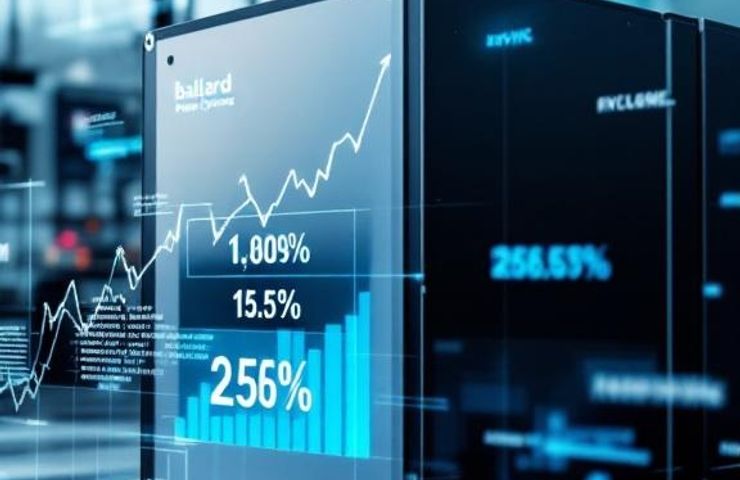
In Q3 2025, Ballard raked in $32.5 million in revenue, blowing past analysts’ $24.14 million estimate. Better still, its net loss shrank year-over-year, courtesy of tighter expense controls. Gross margins widened too, thanks to smarter production runs and renegotiated supplier deals. In a sector where cash burn is par for the course, seeing those numbers climb is no small feat. When the results dropped, the stock popped after hours, proving how much faith investors place in tangible wins over empty promises.
Cost discipline and restructuring
Remember when Ballard kicked off its big restructuring in early 2025? The plan trimmed away non-core projects and brought R&D home to its British Columbia hub. Sure, it stirred a few uneasy looks, but the Q3 results suggest management’s “back to basics” strategy is paying off. By streamlining operations on its signature PEM fuel cells—the heart of every cell split that drives out electricity—the company is squeezing more performance out of every dollar spent. It’s a classic “leaner is stronger” story, where paring down can boost margins and set the stage for healthier, more sustainable growth. Headcount shifts probably followed, but Ballard’s sticking to the script: show the gains, not the cuts.
Roots and resilience
Let’s not forget, Ballard’s been around since 1979, when hydrogen cells were more curiosity than commerce. They weathered the early European transit pilots, survived the 2008 crash, and toughed out years when mass-market adoption felt like a pipe dream. That persistence is paying dividends now as governments and transit agencies double down on zero-tailpipe-emission goals. In a world chasing sustainable energy solutions, Ballard’s decades of experimentation and grit make it a go-to name. This Q3 beat feels like the payoff for staying in the hydrogen race long enough to cross the finish line.
Backlog dips, capex trimmed
It wasn’t all blue skies: the order backlog slid to $132.8 million, down 9% from Q2, and the 12-month book fell by 15%. Those dips could mean softer near-term demand or elongated delivery schedules, so it’s a signal to watch. On top of that, Ballard trimmed its full-year capital expenditure outlook to $8–12 million. Tightening the belt can be a savvy move to protect cash, but it also shows they’re pacing investments until the path to scale—and to more robust hydrogen production—becomes clearer.
A local advantage
There’s a reason Ballard’s R&D and manufacturing live under one roof in British Columbia. With cheap hydro power, progressive provincial policies, and a history rooted in mining and forestry, the region is a hotbed for hydrogen innovation. That local ecosystem helps drive down production costs and fuels experiments on next-gen electrolyzers. In a world hunting for reliable sustainable energy sources, having that regional backbone is a real edge.
A bellwether for hydrogen fuel cells
When a veteran like Ballard flexes its financial might, the shockwaves hit the entire hydrogen fuel cells space. Folks start to rethink the narrative: maybe this isn’t just “emerging tech,” but a serious contender. A tighter loss and fatter margins can light a spark under fresh capital for fueling stations, large-scale electrolysis projects, and fleet electrification plans that hinge on dependable, cost-effective fuel cell stacks.
Looking beyond
The global push for industrial decarbonization is picking up steam. You’ve got European transit fleets rolling out fuel cell buses, Asian ports trialing hydrogen trucks, and marine players dreaming of zero-emission vessels. Ballard’s story reminds us that it’s not enough to build cool prototypes—you need operational rigor and financial discipline. Still, with order books softening and battery-electric rivals nipping at their heels, the hydrogen sector can’t afford to get comfortable.
What’s next?
So, where to from here? For Ballard, it’s all about turning that refreshed order backlog into concrete deals, deepening ties with bus and truck OEMs, and tapping new markets across Asia and Europe. The trimmed capex gives them runway, but if the demand rollercoaster keeps jolting, investors will want a clearer long-term roadmap. For the rest of the field, the question is simple: can you match Ballard’s cost cuts and margin jump, or will you watch from the sidelines? Either way, this quarter was a crucial check-in on whether hydrogen’s promise can keep pace with its hype.
In the end, Q3 2025 feels like a pitstop, not a finish line. Ballard Power Systems proved that with laser focus on efficiency and the guts to shed distractions, a pioneer can still drop jaws. That narrower net loss and revenue upside might not erase every worry, but it sure breathes new life into a sector crying out for proof. As we inch toward a zero-emission transport future, these results show progress often looks like small, steady wins—quarter by quarter.
About Ballard Power Systems: Founded in 1979 in British Columbia, Canada, Ballard Power Systems is a global pioneer in fuel cell technology, specializing in the design, development, and manufacture of proton exchange membrane (PEM) fuel cells for heavy-duty motive, stationary power, and marine applications. Ballard partners with OEMs, transit agencies, and integrators worldwide to drive sustainable energy and industrial decarbonization through innovative, zero-emission mobility solutions.

 With over 15 years of reporting hydrogen news, we are your premier source for the latest updates and insights in hydrogen and renewable energy.