Belgium Green Hydrogen: EU-Funded Projects Supercharge Production
January 13, 2026You’ve probably heard buzz about Belgium green hydrogen lately—and for good reason. This little powerhouse in the heart of Europe is quietly setting the pace for renewable hydrogen projects that could reshape industry, transport, and power generation. Thanks to a fresh wave of EU-backed initiatives, nimble tech startups scaling up fast, and a national playbook that’s equal parts bold and clever, Belgium is positioning itself as a go-to hydrogen hub. Historically, the country leaned heavily on imported natural gas and nuclear power—but now green hydrogen isn’t just a buzzword, it’s a ticket to energy security, economic dynamism, and a reinvigorated industrial base. I’m Dr. Angie Bergenson, and I’ll walk you through the game-changing ideas, the folks making it happen, and the secret ingredients driving Belgium’s surge in green hydrogen. Whether you’re knee-deep in city planning, an energy aficionado, or just plain curious about the next big thing in clean tech, you’re in the right place.
Historical Context: A Hydrogen Vision Takes Shape
Cast your mind back to October 2022: Belgium’s Ministry of Energy rolled out its very first hydrogen strategy. The goal? Build up to 150 MW of hydrogen electrolysis Belgium capacity by 2026. This move dovetails perfectly with the EU hydrogen strategy under the European Green Deal and the REPowerEU plan, which together aim for 10 million tonnes of renewable hydrogen and 40 GW of electrolysis across Europe by 2030. The Belgian Hydrogen Council is at the helm, steering efforts around four pillars: rolling out infrastructure, jump-starting markets, sparking innovation, and forging international partnerships. With heavyweights like Antwerp’s port, broad river plains ripe for pipelines, and a centuries-deep industrial tradition, Belgium already had the building blocks—it just needed a blueprint. Throw in tax incentives, fast-tracked permits, and public-funding sweeteners, and you’ve got a launchpad ready for takeoff.
Accelerating Electrolyser Scale-Up with GIGA-SCALES
When it comes to chopping costs and cranking up volumes, few initiatives shine brighter than GIGA-SCALES. Just outside Antwerp, this CINEA-run project is busy mass-producing next-gen membranes for alkaline electrolysers, aiming for a jaw-dropping 20 GW of annual capacity equivalent. Backed by an €11 million grant from the Innovation Fund, the team has perfected a low-waste, high-throughput manufacturing line that trims material usage and energy draw. And they didn’t stop there—automated quality-control systems flag any hiccup before membranes leave the factory, so every batch meets strict performance benchmarks. It’s exactly this kind of industrial muscle that will bring down the cost per kilo of green hydrogen—crucial for renewable hydrogen projects—and make hydrogen electrolysis Belgium a globally competitive option.
Pioneering the World’s First Commercial Hydrogen Solar Park
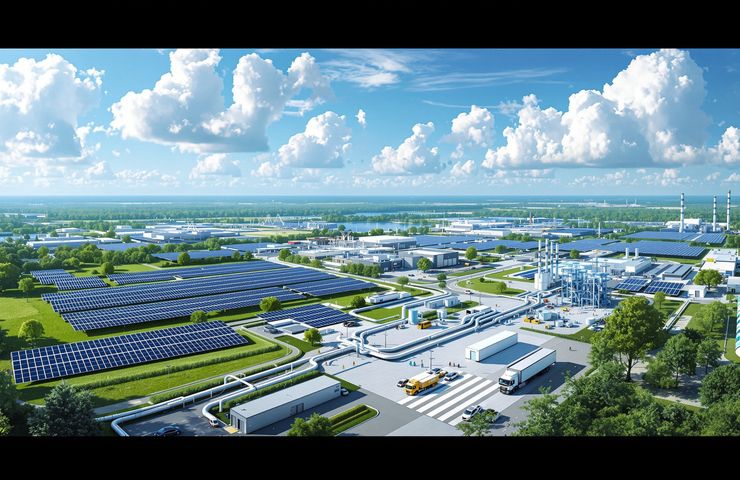
Imagine a sun-drenched field turning straight into fuel—that’s exactly what the Be-Hy consortium is building in Namur. This is Europe’s first commercial hydrogen solar park, powered by the cutting-edge Solhyd technology. Spread over 10 hectares, 3 MW of solar panels feed a 1.2 MW electrolyser that splits water into hydrogen and oxygen whenever the sun shines. What’s smart is how they stash any extra juice: surplus power is turned into hydrogen and stored for up to ten days, so they can keep the lights (and factories) running even when clouds roll in. Supported by both national and EU bodies and coordinated by the Belgian Hydrogen Council, the park is slated to fire up in 2026. It’s a blueprint for turning sunlight into a portable, storable fuel that could slide right next to industrial sites—no long wires or grid upgrades needed.
Driving Decarbonization in Transport with LIFE NEW HYTS
Getting transport off diesel used to feel like a mission impossible, but the LIFE NEW HYTS project is proving otherwise. They’ve tucked a 2.5 MW electrolyser into a regional corridor, pumping out green hydrogen for heavy-duty trucks and industrial machinery. A €4.6 million boost from the LIFE Programme funds everything from fuel-consumption tracking to emission monitoring and refueling logistics. Alongside utilities, logistics fleets, and equipment makers, the team is fine-tuning station layouts and safety protocols, gathering real-world data to craft a plug-and-play blueprint. By documenting every pit stop and performance metric, they’re turning short-term trials into a replicable model, ready for rollout across Europe’s transport hotspots. The payoff? Picture ports, quarries, and construction sites saying goodbye to diesel fumes—cutting carbon emissions and air pollution in one clean swoop.
Environmental and Grid Impact through HYDRA
Scaling up hydrogen production isn’t just about making more—it’s also about doing it safely and sustainably. That’s where HYDRA comes in, backed by €3.8 million from Horizon Europe. Their team models all sorts of leakage scenarios, tests sleek new detection sensors, and develops mitigation tactics to keep any greenhouse-gas impacts in check. On top of that, the hydrogen they store can be fired back into the grid, enough to power roughly 2,000 homes, giving grid operators a handy buffer for peak demand. All this research feeds straight into shaping smarter regulations, so as hydrogen volumes ramp up, communities and ecosystems stay protected. It’s proof that safety and sustainability can—and should—go hand in hand.
Infrastructure and Export Ambitions
Belgium isn’t stopping at making green hydrogen; it’s gearing up to move it too. By 2026, the plan calls for retrofitting or laying down 100–160 km of dedicated hydrogen pipelines, piggybacking on existing gas corridors to stitch production sites, ports, and industrial clusters together. At the same time, Brussels aims to import around 20 TWh of green hydrogen by 2030, cementing its role as a transshipment hub for neighboring markets. This web of pipes, trucks, and ships won’t just decarbonize local factories and fleets—it’ll also boost European energy independence. Planners are already mapping out strategic hubs at major ports and logistics centers to make sure hydrogen moves seamlessly from pipeline to tanker to storage tank.
Collaboration and Funding: Putting All the Pieces Together
No single player can pull off a hydrogen revolution alone—that’s why Belgium has orchestrated a real team sport. CINEA, the Belgian Hydrogen Council, and the Ministry of Energy have been corralling grants, incentives, and policy tweaks like conductors leading an orchestra. Beyond the €11 million funneled into GIGA-SCALES, the Belgian government has earmarked roughly €395 million for hydrogen infrastructure and tucks away €20–30 million a year for R&D through 2025. Throw in stakeholder forums, working groups, and public-private ventures that bring utilities, tech pioneers, financiers, and regulators together, and you’ve got a living, breathing ecosystem. It’s this kind of all-hands-on-deck approach that proves Europe means business on the energy transition—and Belgium is grabbing the baton with gusto.
The bottom line? Belgium’s all-in strategy—from ramping up electrolysers and rolling out a hydrogen solar park to greening transport lanes and locking in environmental safeguards—lays out a practical roadmap for a booming Belgium green hydrogen economy. As each of these trailblazing projects powers up, Belgium isn’t just tagging along with Europe’s energy transition; it’s leading the charge. Keep an eye on this small country’s big moves—they just might steer the future of clean energy. From the field to the grid, Belgium is showing us what’s possible when you stitch together innovation, investment, and collaboration.
 With over 15 years of reporting hydrogen news, we are your premier source for the latest updates and insights in hydrogen and renewable energy.