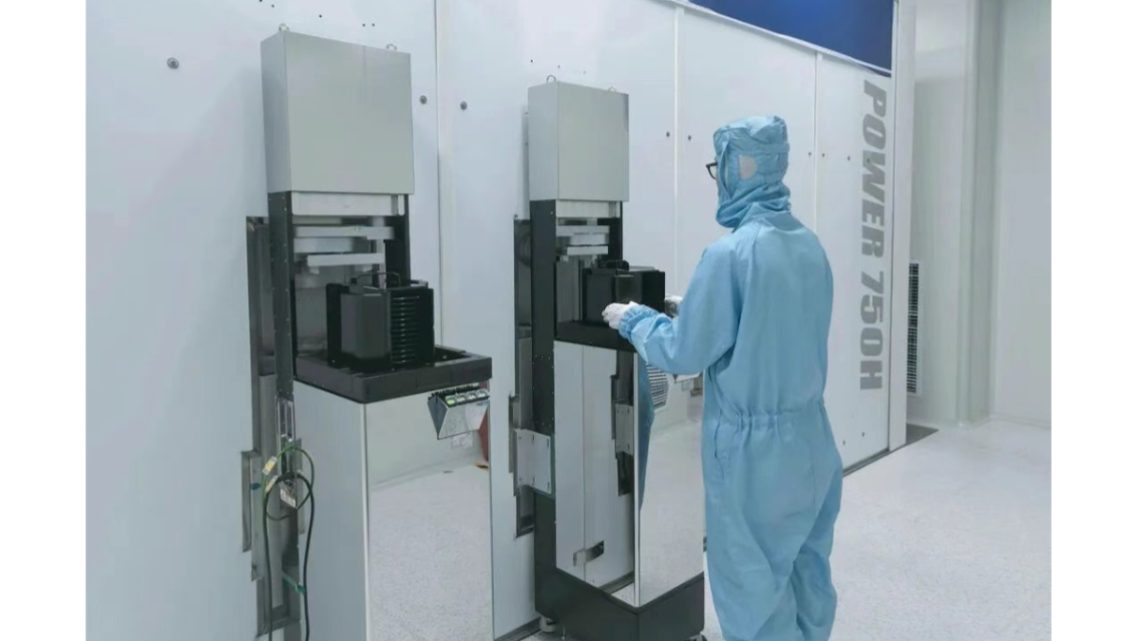
China Unveils First Domestically Developed Hydrogen Ion Implanter POWER-750H
January 20, 2026When the China Institute of Atomic Energy announced that its POWER-750H tandem high‐energy hydrogen ion implanter had finally pulled off a rock‐steady beam extraction, it was more than just another lab triumph—it felt like a rallying cry for China’s push toward homegrown semiconductor equipment. For the first time ever, a domestic crew delivered a full‐blown tandem accelerator setup capable of deep hydrogen ion implantation—a must‐have for power‐device doping, defect engineering and state‐of‐the‐art LED structures.
This breakthrough comes at a moment when tech transfer tensions are running high and self‐reliance is the watchword in Beijing. Up until now, China leaned on imports for lighter‐ion implanters—systems from Applied Materials, Axcelis and the like. But the POWER-750H, built under the umbrella of the state‐owned China National Nuclear Corporation (CNNC), has replaced those foreign machines. Its maiden test nailed beam extraction by using a charge‐exchange tandem accelerator to send high‐energy hydrogen ions deep into wafer substrates, ticking off critical boxes: power device doping, radiation hardening and advanced LED fabrication.
Technical Details of the POWER-750H
At its core, the POWER-750H runs on a two‐stage accelerator. First, a positive hydrogen ion source spits out protons that zip through a charge‐exchange cell, emerging as H− ions. Those negatives race up a high‐voltage column, hit a second stripper that whacks off electrons and turns them back into protons. The end result is a clean, high‐energy hydrogen beam that can burrow micrometers into wafers with pinpoint accuracy.
Key design highlights include:
- Energy range: Adjustable from a few hundred keV to low MeV levels (exact ceiling still under wraps).
- Beam current: Tunable between tens and hundreds of microamperes, balancing implant speed and thermal load.
- Wafer handling: Accepts ultra-thin substrates as slim as 30 μm—ideal for next‐gen packaging.
- Radiation safety: Keeps facility levels around 60 μrem/h gamma equivalent, so operators stay protected.
Put the POWER-750H alongside global heavyweights, and it stands its ground. Applied Materials’ VIISta MeV line cranks out protons up to 1.5 MeV at nearly 900 μA, while Axcelis’ Purion H manages scanned‐spot beams at about 500 wafers per hour. China’s design team zeroed in on adaptability for power semiconductors and nitride LEDs—letting engineers tweak hydrogen profiles to fine‐tune defects and carrier lifetimes.
Strategic Implications for China’s Semiconductor Supply Chain
Why does this matter? Simple: ion implanters are fundamental to front‐end wafer processing. By forging its own semiconductor equipment, China cuts its exposure to export bans and trade snarls. Fabs adopting homegrown gear can map out expansion plans without sweating supply hiccups or surprise cost spikes.
And because the POWER-750H works with thin wafers and keeps radiation levels low, it’s tailor‐made for hot trends like 3D integration, GaN‐on‐SiC power modules and micro‐LED displays. The company hasn’t spilled throughput figures yet, but if they hit—or better yet, top—that 500 wph benchmark, China could even start exporting these systems by the end of the decade.
Historical Context and Comparison
Tandem ion implanters have evolved over decades, transforming from lab‐bound accelerators into factory‐floor workhorses. Early trailblazers like Applied Materials’ VIISta MeV set the standard by pairing charge‐exchange cells with high‐voltage columns for deep light‐ion dosing. Until now, every such system in China was either imported or produced under license. The POWER-750H flips that model on its head, featuring locally engineered core subsystems—from high‐voltage insulation to beam‐diagnostics electronics.
China’s journey kicked off by assembling basic medium‐energy implanters, then progressed through hybrid projects with foreign firms. As domestic know‐how matured, the institute and its partners began crafting their own ion sources, spectrometers and control software. This month’s milestone proves their designs can stand on their own—no foreign blueprint needed.
Looking Ahead
With beam extraction under their belt, the next chapters for the POWER-750H include reliability stress tests, throughput tuning and beta deployments in real fabs. Operators will be watching long‐term stability, maintenance cycles and how smoothly it slots into cluster tools. If those trials go well, we could see production‐ready units in Chinese fabs within a year.
Down the road, a domestic hydrogen ion implanter supplier could shake up global competition. Lower‐cost, process‐optimized systems might draw buyers from across Asia and beyond. At the same time, breakthroughs in beam scanning, multi‐charge implantation and process control will keep pushing the frontier. For now, this achievement underscores how strategic engineering bets can deliver world‐class tools and narrow the gap in the global semiconductor supply chain.

 With over 15 years of reporting hydrogen news, we are your premier source for the latest updates and insights in hydrogen and renewable energy.