
Cross-Border Hydrogen Cooperation Strengthens EU Clean Energy Partnership
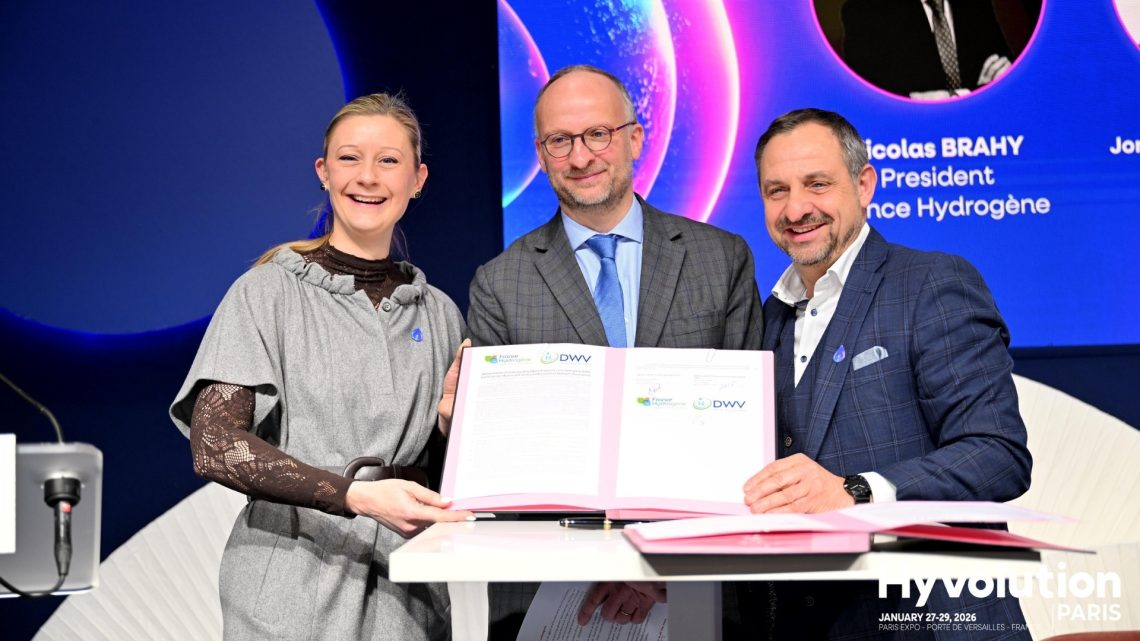
February 4, 2026At a bustling trade show in Paris this January, two heavyweights in Europe’s hydrogen scene decided to join forces. France Hydrogène and the German Hydrogen Association (Deutscher Wasserstoff Verband) shook hands on a Memorandum of Understanding aimed at accelerating cross-border hydrogen cooperation. It’s a blend of big-picture vision from France and down-to-earth supply-chain expertise from Germany, setting the stage for Europe’s next chapter in clean hydrogen.
What’s the deal with this partnership?
Earlier this month at Hyvolution Paris—a leading gathering for the hydrogen community—representatives from both associations gathered to make it official. Nicolas Brahy signed on behalf of France Hydrogène, while Silke Frank inked the agreement for the German Hydrogen Association. They pinpointed five core pillars:
- Policy advocacy at national and EU levels
- Market synchronization to align standards and demand signals
- Investment de-risking via joint studies and funding frameworks
- Skills development through training programs and exchange schemes
- Best practices sharing—from pilot projects to regulatory insights
By pooling resources and know-how, they aim to tear down barriers, bring costs down and speed up deployment of clean hydrogen technologies.
How does clean hydrogen work?
If you’ve ever wondered why clean hydrogen is the buzz in green energy circles, here’s the gist: renewable electricity splits water into hydrogen and oxygen in a process called electrolysis. That hydrogen can then power vehicles or generate electricity in fuel cells, emitting only water vapour. It’s a zero-emission answer for tough-to-decarbonize sectors—think heavy transport, steelmaking and long-duration energy storage.
Who’s on board?
France Hydrogène represents everyone from electrolyser makers to industrial users. Since the 2018 National Hydrogen Plan launch, France has earmarked roughly 7 billion EUR for electrolysis, mobility and industrial hydrogen projects between 2021 and 2030, and already supports dozens of refuelling stations and fuel-cell vehicles.
The German Hydrogen Association is Germany’s industry champion, steering strategy backed by over 1.4 billion EUR of funding (2016–2026) plus a 7 billion EUR boost in 2020, targeting transport, industry and buildings. Together, these groups cover nearly half of Europe’s hydrogen ambitions and drive the push for EU decarbonization.
Why does this matter for Europe?
What’s in it for us? A united front brings:
- Energy resilience by diversifying supply and linking French–German networks
- Industrial competitiveness via shared tech, harmonized standards and joint investments
- Cost reductions from economies of scale and aligned regulations
- Decarbonization of heavy sectors like steel, shipping and heavy transport
- Integrated ecosystems in the form of Hydrogen Valleys and offshore wind-to-H₂ hubs
As Jorgo Chatzimarkakis, CEO of Hydrogen Europe, notes, bringing France’s vision together with Germany’s engineering prowess could become the engine for Europe’s hydrogen market.
Putting national plans into practice
This MoU didn’t pop up out of thin air. It builds on layers of national and EU initiatives:
- France’s National Hydrogen Plan (2018): 7 billion EUR for 2021–2030 to kick-start electrolysis, heavy mobility and R&D
- Germany’s funding: 1.4 billion EUR under its National Innovation Program (2016–2026) plus a 7 billion EUR package in 2020 for scale-up
- EU’s Clean Hydrogen Partnership: aiming for 40 GW of electrolyser capacity by 2030 and about 100 billion EUR in infrastructure investments
On top of that, the EU’s rolling out calls to support Hydrogen Valleys and offshore wind-to-hydrogen projects, weaving production, storage and transport across borders. But to avoid a patchwork of rules, France Hydrogène and the German Hydrogen Association want to lead by example—syncing regulations and technical standards.
Looking ahead: what’s next?
Putting pen to paper is just the kickoff. The real work is getting joint working groups up and running, mapping pilot projects, and rallying investors. You’ll see aligned policy recommendations, shared tender docs and coordinated bids for EU funding. The aim? To make it quicker and cheaper to build big hydrogen projects connecting France, Germany and beyond.
Down the road, this partnership could spark a domino effect. If two of Europe’s largest hydrogen markets can find common ground, others might follow—leading to pan-European corridors and a truly integrated market. And that’s a game-changer for staying competitive in the global race for clean hydrogen technologies.
So while the handshake in Paris this January may have looked like a simple photo op, it’s actually the opening act of something much bigger—a blueprint for how nations can team up to tackle climate change, drive industrial innovation, and chart Europe’s path to a carbon-neutral future.
 With over 15 years of reporting hydrogen news, we are your premier source for the latest updates and insights in hydrogen and renewable energy.
