
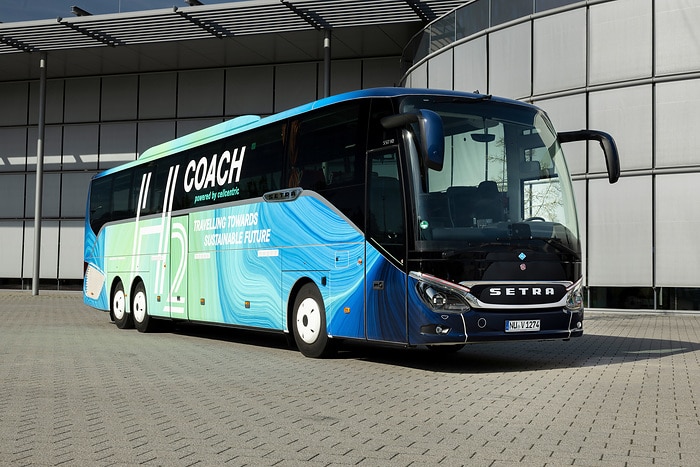
Daimler Buses Unveils Hydrogen Coach: The First Fuel Cell Setra Touring Coach
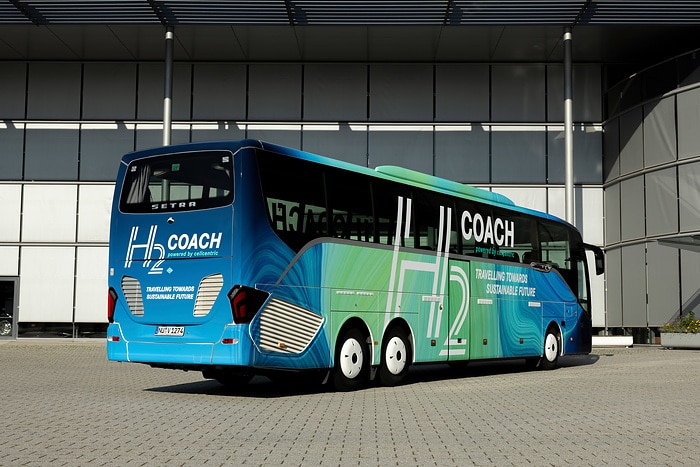
February 9, 2026In a bold leap toward cleaner travel, Daimler Buses and FEV have teamed up to roll out the H₂ Coach — their first hydrogen coach built on the proven Setra S 517 HD platform. It’s all about zero-emission solutions that don’t skimp on performance. On long runs where coaches usually gulp diesel, this fuel cell coach delivers the same power but leaves nothing behind except a wisp of water vapor.
Here’s the deal: you’ve got a 300 kW cellcentric fuel cell stack tucked under the floor, flanked by two beefy tanks that hold 46 kilograms of hydrogen. Pair that with a centrally mounted electric motor pushing up to 400 kW when you really need it, and a high-voltage battery smoothing out those peak demands, and you’re looking at roughly an 800-kilometer range and refueling in just ten to fifteen minutes. Two big hurdles for intercity travel? Consider them solved.
What is the H₂ Coach?
At heart, the H₂ Coach is a tech demonstrator riding on the trusty 13.9-meter high-decker Setra S 517 HD chassis. Rather than shoehorn this fuel cell coach into a city bus, the team picked a touring coach to prove hydrogen can handle the real deal—long hauls, luggage bays and all. Thanks to TÜV approval under Section 19.6 of German traffic regs, it’s legal for both closed-course trials and public road runs around the Neu-Ulm area.
Technology in a Nutshell
Fuel cells work their magic by turning hydrogen into electricity without any combustion: chemical energy becomes electric power, and water vapor is the only exhaust. Under the floor lives a 300 kW cellcentric stack, plumbed to two structural tanks pressurized at about 350 bar. These tanks feed hydrogen through precision regulators straight to the stack.
The electric motor, borrowed from the Mercedes-Benz GenH2 truck lineup, cranks out up to 400 kW and roughly 2,470 Nm of torque—enough grunt for highways or steep climbs. A battery pack steps in during acceleration or when hill grades spike, so the fuel cell can hum along at its most efficient.
Seamless System Integration
All these pieces—fuel cell, battery and motor—dance together thanks to a custom control unit engineered by FEV. It acts like the coach’s brain, deciding when the fuel cell should carry the load and when the battery should chip in. Cruise along and the fuel cell runs steady; hit the accelerator and the battery jumps in, ensuring smooth power delivery and extending the life of each component.
Made in Germany, Made for Europe’s Future
Built at the Daimler Buses competence center in Neu-Ulm, this hydrogen coach taps into local know-how across development, production and quality control. The site’s some 3,800-strong workforce turns cutting-edge concepts into rolling realities. FEV led the mechanical and electrical integration over two years of close collaboration, knitting together parts from different Daimler platforms, coordinating the software, and running safety checks—from crash tests to electromagnetic compatibility.
Fuel Cell Partnership
The key player behind the stack is cellcentric, the joint venture between Daimler Truck and Volvo Group that kicked off in 2021. By leaning on this fuel cell coach partnership, the project taps a global supply chain for high-performance stacks, shares R&D costs, and speeds up the road from lab bench to public highway.
Right in Step with Environmental Goals
Purists will love this: zero tailpipe emissions means the H₂ Coach breathes out only water. Noise levels dip to a whisper on the motorway, making rides calmer for passengers and neighbors alike. And with that 800 km minimum range, operators can plan routes exactly as they do today, all while helping Europe hit decarbonization targets.
Economic & Infrastructure Impacts
Bringing fuel cell coaches like this into service is more than an eco move—it could kickstart new jobs and investments across the board. Think fueling stations, specialized maintenance workshops, and hydrogen production hubs once supply ramps up. Sure, building a hydrogen network takes coordination between suppliers, operators and regulators—but once it’s up and running, you’ve got a resilient, scalable system that rivals diesel, minus the emissions.
Testing the Waters
With TÜV’s stamp of approval in hand, the H₂ Coach has been logging miles on test tracks and public roads around Leinfelden-Echterdingen and Neu-Ulm. Engineers are gathering data on everything from range and refueling times to performance in freezing starts or scorching afternoons. These insights are gold for shaping the next wave of series-production models.
Looking Ahead
We’re at the dawn of the hydrogen era, but this coach proves fuel cells can complement battery buses, giving operators both the range they crave and the clean credentials they need. If all goes well, series production could kick off once a proper refueling network is in place—heralding a quiet, green coach fleet across Europe for years to come.
See also: Hydrogen fuel cells power Daimler Buses’ H₂ Coach road trials in Germany/

 With over 15 years of reporting hydrogen news, we are your premier source for the latest updates and insights in hydrogen and renewable energy.