
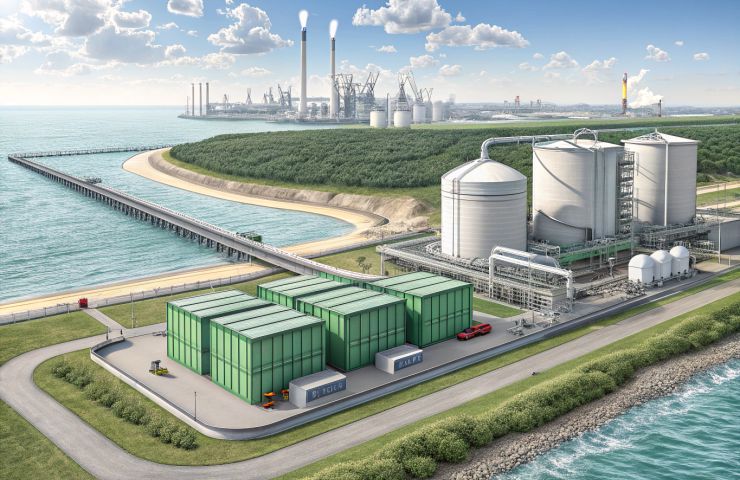
Fawley Green Hydrogen: A new step ahead for Industrial Decarbonisation in the UK
January 9, 2026Take a stroll along the western shores of Southampton Water and you’ll spot something exciting at the old Fawley Waterside site. What used to be an oil-fired power station is gearing up to be one of the UK’s flagship hubs for green hydrogen. Spearheaded by Hynamics UK, EDF Group’s homegrown innovator, the Fawley Green Hydrogen project plans to install up to 120 MW of electrolysers running on renewable juice—and funnel that low-carbon hydrogen straight into ExxonMobil’s Fawley refinery. It’s a shot in the arm for industrial decarbonisation, set to slash emissions, lift the local economy, and offer a sneak peek at the future of green hydrogen UK.
A New Era at Fawley Waterside
For decades, the Fawley Waterside site has been a landmark in the Solent region. On one side is the sprawling ExxonMobil Fawley refinery, which supplies fuel to one in four UK cars and over 20% of the nation’s aviation needs. On the other, the decommissioned Fawley Power Station once belched out electricity from heavy fuel oil until it shut its doors in 2013, with its iconic cooling tower falling in 2021. Now, Fawley Waterside Ltd is steering a massive make-over—mixing community green spaces, industrial innovation, and restored coastal habitats. Nestled between saltmarsh and shipping lanes, this brownfield canvas is perfect for a green hydrogen UK revival. Local groups are already buzzing, and Hynamics has promised an open-door approach, complete with an Environmental Impact Assessment that’ll tackle everything from landscape views to traffic flow.
Powering the Future with Green Hydrogen
At the heart of this transformation are state-of-the-art water electrolysers that split water into hydrogen and oxygen using renewable or low-carbon electricity. Thanks to a snazzy on-site water-treatment plant, the hydrogen is purified before zipping through air-cooling systems and into high-pressure compressors. From there, it’s tucked away in bespoke storage tanks until a buried pipeline whisks it off to the refinery boundary near Ashlett. By swapping out heavy fuel oil and grey hydrogen, this closed-loop setup offers a near-zero carbon alternative and shows how seamlessly hydrogen can slide into established industrial workflows.
Impact: Cutting Emissions and Boosting the Economy
Numbers tell the story. Hynamics UK reckons the switch to green hydrogen could shave off around 100,000 tonnes of CO₂ emissions per year at Fawley—think taking roughly 45,000 cars off the road. On the money side, the project could inject up to £10 million each year into the Solent economy, plus create about 200 construction jobs and roughly 100 permanent roles. As one of the UK’s first large-scale facilities linking green hydrogen to heavy industry, it slots right into the government’s net-zero-by-2050 blueprint. For a region long tied to oil and gas, these figures bring fresh economic life and top-tier upskilling in cutting-edge hydrogen tech.
Partnerships Driving the Project
Teamwork makes the dream work, and this scheme is no different. In July 2025, Hynamics UK signed a Memorandum of Understanding with French clean energy investor Hy24, tapping into its Clean Hydrogen Infrastructure Fund to back the estimated £300 million price tag. The MoU debuted at the 2025 UK–France Summit, highlighting cross-Channel momentum behind low-carbon hydrogen. The project also made the shortlist in the government’s Hydrogen Allocation Round 2 (HAR2), a competitive subsidy scheme for large-scale plants. With ExxonMobil locked in as the offtaker and policy support on its side, this partnership brings both deep pockets and serious industrial expertise.
Timeline and Next Steps
The roadmap is clear. A public drop-in event on 8 January 2026 kicked off community engagement, and a scoping request for the Environmental Impact Assessment is already with Hampshire authorities. Full planning applications should land early in 2026, setting the stage for construction to potentially begin in 2027. Since the brownfield site borders sensitive saltmarshes, the EIA will dive deep into habitat protection. If all approvals, HAR2 contracts, and final investment decisions align, the facility is slated to go live by 2029—a tight but realistic timeline for a pioneering project of this scale.
A Glimpse into the UK’s Hydrogen Network
The Fawley Green Hydrogen hub isn’t flying solo; it’s part of a national push to decarbonise “hard-to-abate” industries. By breathing new life into legacy energy sites and tapping existing pipelines and grid links, this model could be the blueprint for future hydrogen clusters. In the Solent industrial ecosystem, Fawley is showing that public programmes, private capital, and traditional oil & gas players can come together to hit net-zero targets. If it succeeds, Fawley could inspire similar green hydrogen UK hubs elsewhere, bolstering energy security, environmental resilience, and the region’s industrial heritage.
In the bigger picture of the UK’s energy transition, Fawley Green Hydrogen feels like a turning point. It proves what happens when bold ideas meet action, brownfield sites get a second shot, and hydrogen steps into the spotlight as a practical solution. We’re not just talking about electrolysers popping up on the Solent coast—we’re watching the dawn of a cleaner, greener industrial era that tackles climate targets, sparks local pride, and creates real jobs.


 With over 15 years of reporting hydrogen news, we are your premier source for the latest updates and insights in hydrogen and renewable energy.

Couple of questions:
1. Is the plan to use electricity from the grid?
2. To what pressure is the hydrogen compressed?