Fuel Cell Technology Powers South Korea’s AI Data Centers
January 15, 2026Power Play for AI Data Centers
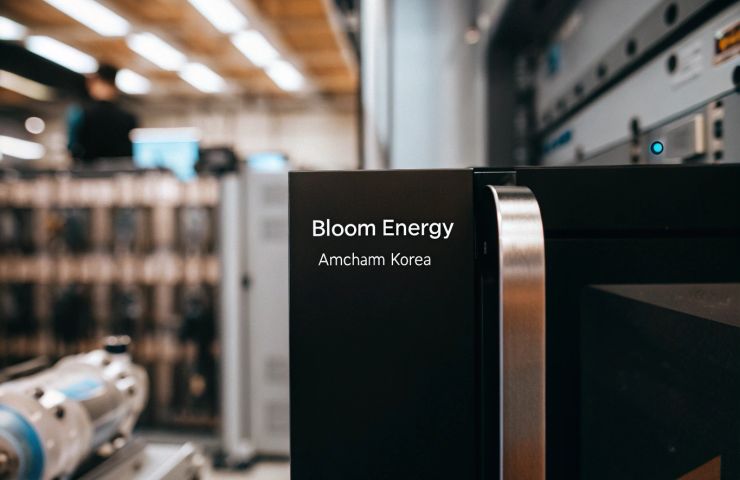
So, this month, AMCHAM Korea and Bloom Energy teamed up on an MOU that could totally shake up how South Korea keeps its AI data centers buzzing. With compute demand spiking, even a quick blackout can spiral into a full-blown crisis. This deal zeroes in on deploying fuel cell technology right on-site—think reliable, low-emission juice exactly where you need it, no fuss.
Context
Here’s the scene: South Korea’s home to about 52 million people and ranks as one of the globe’s top semiconductor powerhouses. They’ve thrown more than $7 billion at an AI master plan, and giants like Samsung and Naver are racing to stack up data farms. Yet around 80% of the country’s electricity still shows up via imports—mostly LNG—leaving everyone at the mercy of price swings and supply hiccups. When the grid groans under peak loads or freak weather, hydrogen fuel cells could act as a decentralized safety net for those mission-critical servers.
Bloom Energy: From Mars to Mainframe
Remember NASA’s Mars rovers? That’s where Bloom Energy—born as Ion America in 2001—cut its teeth on fuel cell research. Fast forward to 2018, and they’re trading on the NYSE (BE), chalking up $1.3 billion in revenue last year. Their modular Energy Servers have already delivered 1.4 GW worldwide across nine countries by 2025, powering big names like Google since 2008. In 2023, Bloom rolled out its first commercial hydrogen electrolyzer, swinging toward green H₂, and locked in a 500 MW pact with SK ecoplant—proof there’s real appetite for hydrogen infrastructure in Korea.
Tech Snapshot: Solid Oxide Fuel Cells
Let’s geek out: Bloom’s SOFC stacks run insanely hot—600–1,000 °C—turning natural gas, biogas or pure hydrogen into electricity without any combustion drama. They regularly hit over 60% electrical efficiency—outpacing combined-cycle gas turbines—and smash past 85% when you capture waste heat in CHP setups. On-site generation chops transmission losses and keeps your critical loads insulated from grid hiccups. Plus, the modular design scales from megawatts to gigawatts, matching AI centers’ voracious appetite.
What It Means
- Reliability: Keeps blackouts and voltage wobbles at bay.
- Decarbonization: Paves the way to swap gas for green hydrogen.
- Cost Control: Shields you from peak-rate tariffs and import volatility.
Strategic Stakes
For Bloom Energy, this MOU is a beachhead in Asia’s fastest-growing AI arena. South Korea aims for 5 million tons of green hydrogen by 2030—right in Bloom’s sweet spot with its hydrogen-ready lineup. Meanwhile, AMCHAM Korea—kicking off in 1957 to boost U.S.–Korea trade—cements its clean energy role, smoothing permits and lining up U.S.–Korea development funds. With tax credits and hydrogen subsidies on the table, that steep upfront cost suddenly looks a lot more manageable.
AMCHAM’s Role in Clean Energy
AMCHAM Korea has long been the go-to guide for U.S. firms navigating Korean red tape. Now, they’re turning that expertise toward sustainable energy, pulling policy levers and private capital behind on-site fuel cell projects—just the kind of public-private mashup that speeds up the switch to cleaner power.
Maverick Take
Here’s the real talk: upgrading the grid or stacking batteries is playing defense. Rolling out hydrogen infrastructure on-site? That’s playing offense—isolating your critical compute from any transmission drama. Sure, the MOU skirts exact megawatt figures and capex numbers—that’s par for the announcement course. But if you’re running AI at scale, “typical” simply won’t cut it. Diversifying with SOFCs is as much about business continuity as it is about cutting emissions.
Yes, sourcing enough ceramic components and covering capex hurdles can feel like climbing Everest. Still, with billions in policy incentives and a clear roadmap to green hydrogen, the scales tip in Bloom’s favor. The million-dollar question: will operators move past pilots and jump into full-blown rollouts? Stay tuned.
Looking Ahead
Right now, the timeline and capacity details are under wraps—expect pilots to roll out later this year, with broader installs by around 2027. If this model works, it could flip the script on industrial decarbonization across power-hungry sectors. Regulators will be watching—and a win here could unlock even more SOFC-friendly rules, spreading benefits into logistics, manufacturing and transport.
As AI compute demands skyrocket, one-size-fits-all power can’t keep up. The next frontier is on-site, hybrid systems built for resilience—and that’s exactly where fuel cell technology is poised to shine.

 With over 15 years of reporting hydrogen news, we are your premier source for the latest updates and insights in hydrogen and renewable energy.