
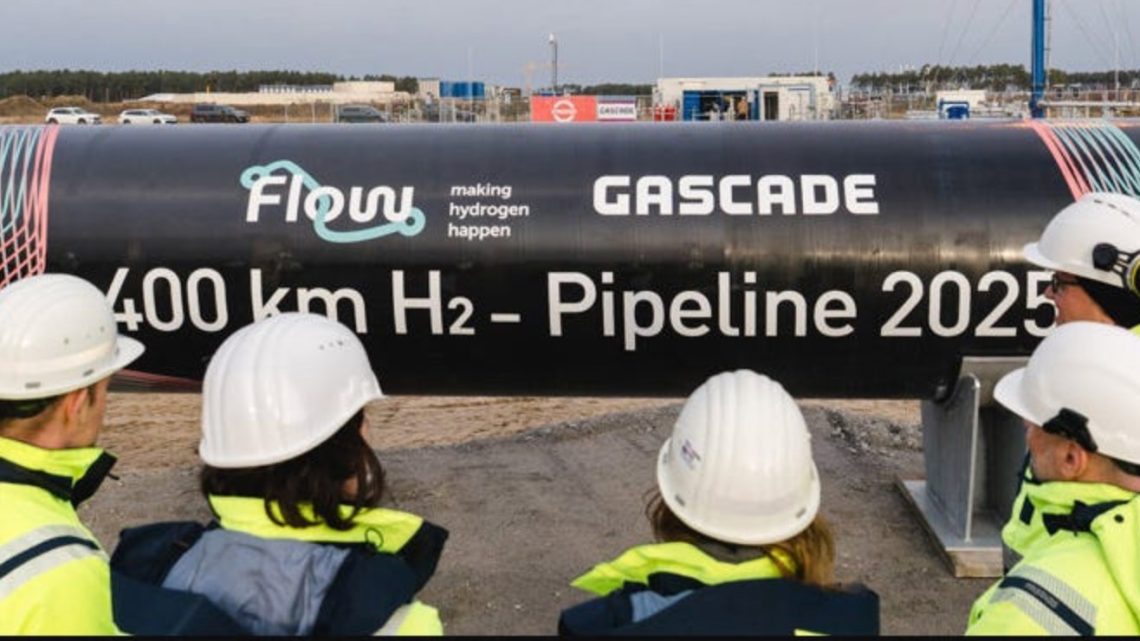
Gascade Gastransport Launchs Germany’s Longest Hydrogen Infrastructure Pipeline
December 15, 2025Gascade Gastransport GmbH has hit a pretty big milestone in Europe’s energy shift: they officially turned on Germany’s longest dedicated hydrogen infrastructure pipeline. This 400 km high-pressure stretch sprang to life by retrofitting old 1.4 m diameter gas lines, tracing a path from the Baltic ports of Rostock and Lubmin, cutting through Saxony-Anhalt’s industrial belt, all the way to the chemical hotspots in Leuna and Leipzig. It’s the very first leg of the planned 1,630 km “Flow” network, itself part of a grand 9,000 km hydrogen core system. After months of pressure tests and trial runs with electrolyzer pilots, it’s now primed to carry pure green hydrogen volumes, lining up with the Flow network’s 20 GW renewable target.
Strategic Implications
So, what’s the real deal here? By linking coastal producers of green hydrogen to heavy-industry hubs inland, this corridor flips the market script. Ulrich Benterbusch, Gascade’s Managing Director, dubs it a “technical pioneering achievement,” while co-CEO Christoph von dem Bussche calls it a “promise for the future.” With long-term offtake deals locked in with regional steelmakers and chemical groups, Gascade is derisking the next wave of electrolyzer investments and turbocharging industrial decarbonization. On top of that, it plugs neatly into EU game plans like Fit for 55 and REPowerEU, helping slash CO₂ emissions and cutting out dependency on unpredictable pipeline gas.
Investment & Financing
This wasn’t built from scratch. By leaning on existing lines, Gascade managed up to 30% savings in capex versus a greenfield project. The retrofit bill — sitting in the low nine-figure euro range — was softened by Germany’s €9 billion National Hydrogen Strategy and sweetened with European IPCEI grants. Funding comes from a strategic partnership between Fluxys Germany and Gaz-System East, mixed with bank loans that kick in based on performance metrics. The tolling model ties hydrogen volumes to indexed tariffs, so revenue looks pretty predictable. Financial analysts are already redrawing Europe’s cost-of-transport curves, saying we might hit cost parity with fossil gas by the early 2030s.
Technical Snapshot
Here’s where the engineering magic happens: crews started with mechanical pigging and chemical scrubbing to flush out every last hydrocarbon. Next up, ultrasonic tests scanned hundreds of weld seams, and teams swapped vulnerable segments for hydrogen-grade steel to dodge embrittlement. Compressor stations got a full makeover — think H₂-specific seals, sensors tuned for low density and high diffusivity, and control systems set up for real-time leak detection. A series of pressure cycles beyond 60 bar proved the pipeline’s rock-solid, and a final commissioning blow-off sent up a telltale bluish flame, confirming the switch from methane to pure green hydrogen. All upgrades meet DVGW standards, setting a benchmark for operators across Europe.
Cross-Border Corridor
Even though this first stretch stays within Germany, it was built with one eye on neighbors. Plans are in motion to hook into Polish and Czech grids, while future branches toward Austria will open up Southern Europe. There’s even talk of linking Scandinavian offshore hydrogen via fresh Baltic Sea pipelines. The idea? A resilient hydrogen infrastructure backbone that smooths out supply shocks and sparks a true pan-European market for green molecules.
Regional Economic Benefits
This project isn’t just about energy — it’s a real economic shot in the arm. Over 500 jobs sprang up in engineering, construction, and operations during the retrofit, with more roles lined up for maintenance and monitoring. Local SMEs got in on the action, supplying specialist valves, sensors, and testing gear, which sent a welcome ripple of growth through Saxony-Anhalt. For regional authorities, it’s a prime example of how sustainable energy projects can marry economic and environmental wins, fueling Germany’s broader industrial renaissance under the Energiewende.
Policy & Historical Context
Germany’s move into hydrogen isn’t overnight — it’s the latest chapter in pipeline know-how dating back to the 1970s. The 2010 Energiewende jumpstarted massive renewables growth, but it was the 2022 Russian supply crunch that really lit a fire under hydrogen plans. The 2020 National Hydrogen Strategy poured €9 billion into import and production infrastructure, and EU pushes like REPowerEU have since spotlighted green molecule corridors. By repurposing old pipelines, Gascade sidestepped countless permitting delays, proving that smart regulation paired with hands-on engineering can hit the 2030 climate goals.
Key Takeaways
- Operational leadership: First 400 km hydrogen-only pipeline in commercial use, and Germany’s longest at that.
- Cost efficiency: Up to 30% CAPEX savings over greenfield alternatives thanks to strategic retrofits.
- Demand anchors: Long-term offtake pacts with Leuna’s chemical parks and Leipzig’s steelworks.
- Scalability: A proven blueprint for expanding to 1,630 km within the Flow network and a 9,000 km national core.
- Security guardrail: Slashes reliance on Russian gas, lining up with EU energy sovereignty goals.
Future Outlook
Looking ahead, Gascade’s already eyeing a southward stretch of 200 km by Q3 2026 to tie into Bavaria’s industrial zones. By 2027, they expect full hookups to Austria’s grid, and Lubmin’s green hydrogen electrolysers — ramping up between 2026 and 2028 — will start feeding pure H₂ into the system. Hit your throughput targets, and this model could roll out across Europe’s major corridors, unlocking fresh private investment and fast-tracking the continent’s shift to green hydrogen.
About Gascade Gastransport: A joint venture of Fluxys Germany and Gaz-System East, managing over 9,000 km of pipelines, Gascade is at the forefront of converting fossil infrastructure for a carbon-neutral future.
With this 400 km stretch now live, Europe’s hydrogen highway is officially open for business.
 With over 15 years of reporting hydrogen news, we are your premier source for the latest updates and insights in hydrogen and renewable energy.