Green ammonia Morocco Hub Takes Shape with $4.5bn ORNX Consortium Deal
February 13, 2026Morocco just made a huge splash in the desert. The Government of Morocco has struck a landmark $4.5 billion deal with the ORNX consortium to build a massive green ammonia production hub in Laayoune. This partnership isn’t just talk—it’s a hands-on solution for decarbonizing the fertilizer and shipping industries by tapping into Morocco’s endless sun, steady winds, and seawater. It’s a crystal-clear sign that the kingdom’s serious about leading the charge in renewable energy.
Harnessing Desert Sun and Wind for Green Hydrogen
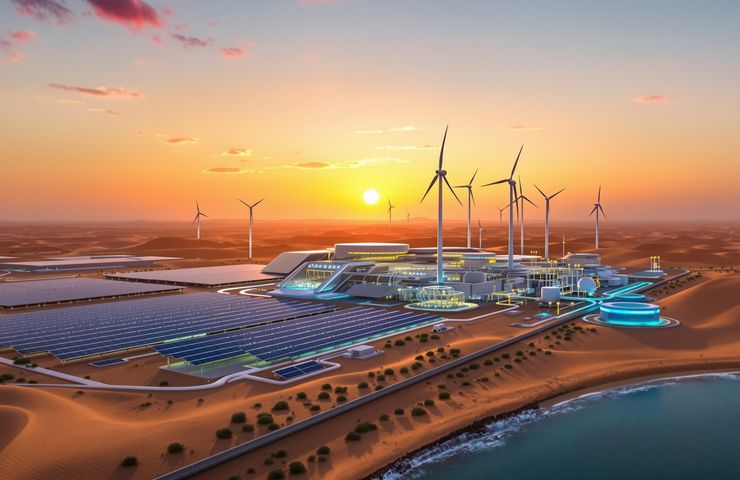
Ever wondered how you turn desert dunes into a green hydrogen hub? This ambitious build stitches together over 2 GW of solar power, wind turbines, battery banks, and a sleek seawater desalination electrolysis setup to keep roughly 900 MW of electrolyzers humming. They suck in desalinated seawater, split it into green hydrogen and oxygen, and funnel that hydrogen straight into a Haber–Bosch unit to churn out green ammonia. It’s a smooth, round-the-clock system that tosses the old grey-ammonia headache out the window.
Strategic Importance for Morocco and Europe
Morocco’s got its eyes on hitting 52% renewables by 2030, and right now it’s importing about 1.8 million tonnes of conventional ammonia every year. This new hub will seriously slash those imports, beef up national energy sovereignty, and open fresh channels for renewable energy export to Europe. The EU has plans to bring in up to 10 million tonnes of renewable hydrogen by 2030, and a muscle-flexing project like this is exactly what the EU Green Deal’s playbook calls for to decarbonize steel, shipping, and fertilizer.
Building on Early Successes
Believe it or not, this mega-hub didn’t pop up overnight. Morocco rolled out its Green Hydrogen Strategy back in 2021, followed by a 2024 Green Hydrogen Offer that freed up a million hectares of public land. Pilots like the HEVO project—a roughly $850 million tie-up by Fusion Fuel, CCG, and Vitol—are already on track to pump out 183,000 tonnes of green ammonia by 2026. And in 2025 alone, officials green-lit about $32.5 billion in renewables-to-hydrogen schemes with heavyweights like Ortus, Acciona, and Nordex. Momentum’s been building for a while.
Collateral Impacts and Challenges
On the upside, hubs like this could slice around 280,000 tonnes of CO₂ a year and create thousands of jobs—think construction crews, plant operators, and R&D teams. You’ll also see fresh ports, pipelines, and grid upgrades springing up, cementing Morocco’s rep as a North African green-tech hotspot. But it’s not all smooth sailing. Carving out huge tracts of land in an arid region, plus securing enough water for desalination, comes with environmental and social puzzles. And since Laayoune sits in a geopolitically sensitive zone, navigating the politics will take some serious diplomacy.
Complementary TAQA Morocco–Moeve Initiative
Meanwhile, over in Dakhla and Jorf Lasfar, TAQA Morocco and Moeve are cooking up their own green ammonia and e-fuels venture. They’re focusing on renewable power generation, synthetic fuel output, and setting the stage for both local use and export. These twin projects show Morocco’s all-in strategy—public land allocation, a string of international partnerships, and a dual focus on green ammonia and e-fuels that could set the blueprint for other sun-and-wind rich regions.
Looking Ahead
This $4.5 billion deal with the ORNX consortium isn’t a one-off stunt—it cements Morocco’s spot on the emerging EU-Africa energy corridor, invites more private cash, and fire-drills local supply chains, from desalination plants to electrolyser factories. By playing to its unique renewables profile and prime location, Morocco’s rapidly turning into a green hydrogen hub and green ammonia Morocco powerhouse. Buckle up: site prep and engineering are just getting started.
 With over 15 years of reporting hydrogen news, we are your premier source for the latest updates and insights in hydrogen and renewable energy.