Green Hydrogen at the Forefront in Cantabria’s Besaya Green Project
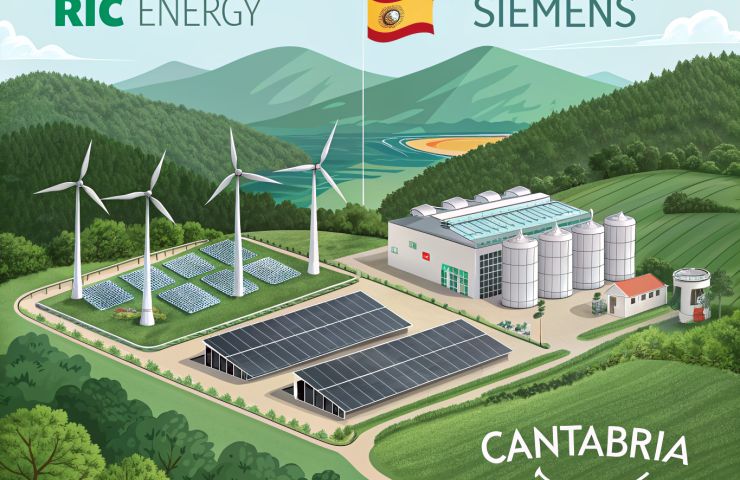
March 5, 2026In the rolling green hills of the Besaya Valley, just a stone’s throw from the industrial town of Torrelavega, something pretty exciting is brewing. Known for its chemicals and heavy-industry past, this corner of northern Spain is now pivoting hard into renewable hydrogen and the broader energy transition. The buzz? The Besaya Green project, a brand-new green hydrogen plant spearheaded by RIC Energy in collaboration with Siemens. Thanks to its “strategic” stamp from the Government of Cantabria, the project enjoys fast-track permits and front-of-the-line public financing—clear signs that the region is all in on cutting emissions, creating top-notch jobs, and carving out a spot at the forefront of Europe’s push for green hydrogen.
Torrelavega at the Forefront of Green Hydrogen
With around 52,000 residents, Torrelavega has a blue-collar soul—and it’s not afraid to reinvent itself. Tucked into the Besaya Valley, the town boasts regional roads that connect to the Port of Santander and access to abundant forest biomass from Cantabria’s woodlands. Instead of clinging to its coal-and-chemicals legacy, local authorities are championing projects that harness wind, solar and hydropower to feed new electrolyser units. Since more than half of the local grid already runs on renewables, Besaya Green is gearing up to churn out up to 500 MW of electrolytic capacity once all phases are live—enough green hydrogen to fuel hundreds of trucks or boost heavy industries across northern Spain.
A Powerful Partnership: RIC Energy and Siemens
At the core of this venture is the dynamic duo of RIC Energy—a Madrid-based specialist in green ammonia, e-fuels and green hydrogen—and global engineering giant Siemens. Back in mid-2025, they inked a memorandum of understanding not only for Besaya Green but also for the Compostilla Green project in León. Under that pact, Siemens S.A. and Siemens Industry Software will roll out the digital platforms and automation tools to keep those electrolysers purring at peak efficiency. Over in the financing corner, teams from Siemens Innovation Strategies and Siemens Financial Services are lining up green financing instruments and structuring support to lower execution risk—all with an eye on best-in-class EPC practices.
Scaling Up with Advanced Electrolysis
If you peek inside the plant, you’ll find next-generation water electrolysers that turn renewable power into hydrogen with razor-thin margins of energy loss. Traditional alkaline units deliver tried-and-true reliability, but proton exchange membrane (PEM) technology brings the agility to match the ups and downs of wind and solar. Couple that with real-time analytics and digital twins from Siemens Industry Software, and operators get crystal-clear insights into cell stack health and energy use. The rollout is staged: Phase 1 hits around 50 MW, Phase 2 ramps to 200 MW, and the finish line tops out at roughly 500 MW. From there, the green hydrogen gets piped straight to nearby chemical plants or morphed onsite into green ammonia for export and e-SAF (electro-synthetic aviation fuel) for a nascent sustainable fuels market.
Building on a Solid Foundation
Spain’s hydrogen scene has been turbocharged by the Hydrogen Valleys program and pioneers like Compostilla Green in León, which scored high marks from the Spanish Innovation and Development Agency (IDAE). These trailblazers proved you can mesh electrolyser plants with existing industrial parks, opening new revenue streams and shrinking carbon footprints. Cantabria’s taking those lessons to heart: tweaking permits to skip the red tape, blending Energy Saving Certificates with EU Innovation Fund grants, and fast-tracking approvals. Meanwhile, researchers at the universities of Santander and Oviedo are cooking up improved catalyst materials and carbon capture ideas that could feed right into e-fuel synthesis at Besaya Green. It’s a real-world example of how policy, tech and academia can team up to fast-track renewable hydrogen adoption.
Driving Regional Reindustrialization
For the Government of Cantabria, breathing new life into post-coal and petrochemical areas is mission-critical. By labeling Besaya Green a strategic project, regional leaders have paved the way for grid upgrades—think high-voltage interconnects—and beefed-up water treatment facilities. They’ve also dovetailed the plant with Spain’s national Hydrogen Valleys initiative, co-funded by IDAE, to spin up clustered hydrogen ecosystems that spark job growth and regional revitalization. Technical schools are already gearing up to train the next generation of electrolyser techs and e-fuel engineers, ensuring local students turn into local hires as soon as the plant fires up.
A Glimpse into the Future
With the EU sprinting toward its REPowerEU goals and the Fit for 55 push, Besaya Green stands as a working blueprint for scaling green hydrogen. The bloc wants 40 GW of electrolyser capacity by 2030; Spain alone is shooting for 4 GW. If Besaya Green hits its 500 MW mark, it’ll cover more than 10 percent of Spain’s national target. Beyond cutting thousands of tons of CO₂ each year, the plant could turn Torrelavega into a launchpad for sustainable fuels bound for shipping lines in the Bay of Biscay, airlines in northern Spain, and heavy industries across Europe—all of them chasing carbon-neutral solutions.
Of course, big electrolyser projects come with their share of hurdles: hefty water demands, the need for rock-steady renewable power, and a maze of permits. RIC Energy isn’t blinking: it plans advanced water-reuse systems and long-term power purchase agreements to keep supply reliable. And on the people side, local training centers are already hashing out curriculums to upskill technicians in electrolyser upkeep and fuel synthesis.
It’s an electric moment for Cantabria. The Besaya Green project shows what happens when public support, industry muscle and cutting-edge tech collide: new jobs, fresh economic life and a real shot at slashing carbon footprints. From wind turbines dotting the ridges to the gleaming electrolyser halls down below, a cleaner energy future is unfolding in Torrelavega. If all goes to plan, this could be the showcase other regions point to when they ask, “Can green hydrogen and renewable hydrogen really power an energy transition?” The answer’s coming into focus right here.

 With over 15 years of reporting hydrogen news, we are your premier source for the latest updates and insights in hydrogen and renewable energy.