Green Hydrogen Costs and Capacity Gap Threaten EU 2030 Targets
December 10, 2025Ever since the European Green Deal landed in 2019, green hydrogen has been hailed as a cornerstone of Europe’s shift away from fossil fuels. When supply hiccups hit in 2022, the REPowerEU plan kicked in, promising to slash fossil fuel imports and boost energy independence. The big goal? Hit 40 GW of electrolyser capacity by 2030—enough to churn out up to 10 million tonnes of renewable hydrogen every year. But here we are, nearly halfway to that deadline, and the rollout feels more like a crawl than a sprint.
So, is Europe losing steam on its green hydrogen ambitions? The ACER 2025 European Hydrogen Markets Monitoring Report (published 05/12/2025) says we’re falling wildly short of the 2030 electrolyser target, held back by high costs, red tape and patchy deployment.
Snapshot of the EU Hydrogen Market
In 2024, Europe added just 308 MW of electrolyser capacity—a 51 % jump from the year before, but only about 7.7 % of the 6 GW we needed that year. To stay on track for 40 GW by 2030, we’d have to install over 4 GW annually, not a measly 0.5 GW. And despite policy backing from REPowerEU, only six plants topped 10 MW by year-end, totalling roughly 90 MW. With most projects still under 6 MW, scaling up remains a headache. Country-wise, Germany led with 46 MW of new capacity (15 % of EU growth), then Denmark with 18 MW and Hungary with 11 MW—together covering about 72 % of the increase. Even with 1.8 GW under construction as of October 2025, we’re staring at a multi-gigawatt shortfall each year.
Stark Cost Competitiveness Gap
The real pinch point? Money. Producing green hydrogen via electrolysis still costs around four times more than conventional hydrogen from steam methane reforming. Blame steep capital expenditure on electrolysers, pricey renewable electricity contracts and hefty balance-of-plant costs. Recent dips in natural gas prices have only made green hydrogen look less appealing, spooking investors. Some developers are eyeing low-carbon hydrogen with carbon capture and storage—about €3.00/kg, according to ACER—but CO₂ transport and storage costs are still a wild card. Until green hydrogen approaches price parity, heavy industries like steel, refining and chemicals will stick with what they know.
Funding and Support Schemes
Brussels has put €20 billion on the table through initiatives such as the Mechanism for Market Creation for Renewable Hydrogen, one of the biggest public bets on green hydrogen worldwide. Member states have added their own grants, tax breaks and state guarantees, but uptake has been sluggish. The European Hydrogen Bank, live since mid-2024, has run two auctions and is now in its third, targeting a 1 GW project pipeline. Yet without clearer rules and faster permitting, many auction winners haven’t signed the dotted line. Stakeholders complain that mismatched timelines between funding awards and approvals leave successful bidders in limbo, and opaque national match-funding requirements only add to the confusion.
Geographic Concentration
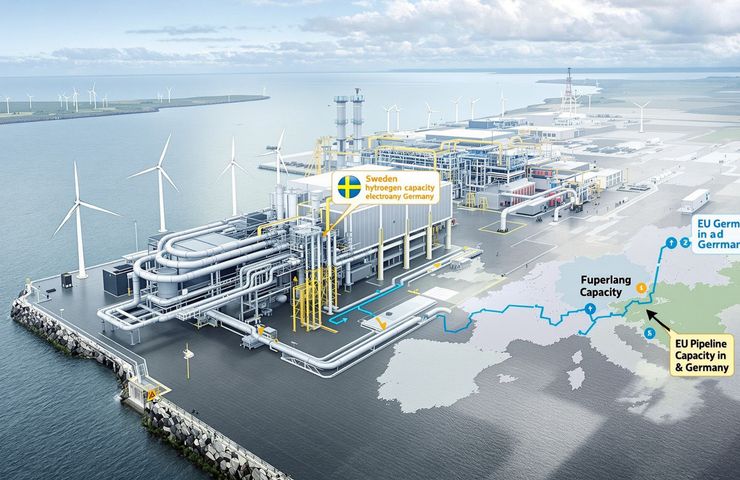
The distribution of projects is anything but even. Sweden, thanks to its hydro and biomass legacy, boasts 742 MW under construction, supported by a solid national hydrogen strategy and early auctions near industrial hubs. Germany isn’t far behind, with 1.04 GW in the pipeline—anchored by Emden, where EWE has broken ground on a 320 MW electrolyser to supply refineries and heavy industries. Outside these hotspots, the pipeline all but dries up, highlighting stark regional imbalances across the bloc.
Regulatory Roadblocks
Fragmented rules are another hurdle. While RED III set binding quotas for renewable hydrogen in industry, few member states have woven these targets into national law, leaving offtake mandates in limbo. The directive’s mid-2025 deadline has come and gone, but adoption varies wildly—some governments are still consulting, others are sidetracked by competing legislative priorities. On top of that, getting a permit for an electrolyser can take 2–3 years, thanks to lengthy environmental impact assessments and grid-connection approvals. Without harmonised regulations, developers face unpredictable timelines and surprise costs.
Collateral Impacts
- Investment Risk: High-profile project cancellations and scaled-back decarbonization pledges are eroding investor confidence.
- Industrial Competitiveness: EU manufacturers are at a cost disadvantage compared to non-EU peers using cheaper hydrogen or fossil fuels.
- Regulatory Credibility: Patchy transposition of EU directives undermines trust and deters long-term capital.
- Stranded Assets: Mismatched production and network roll-out can leave pipelines and plants underutilised.
- Energy Security: Delayed uptake of green hydrogen hampers efforts to curb fossil fuel imports and diversify energy carriers.
- Regional Imbalances: Heavy concentration in Sweden and Germany risks leaving other industrial hubs without crucial decarbonization support.
Path Forward
ACER highlights several levers to get things back on track:
- Streamline permitting and grid connections to cut approval times from years to months.
- Enforce RED III consumption targets with clear penalties and tie funding to compliance.
- Refine auction-based support via the European Hydrogen Bank to reward genuine cost reductions.
- Align hydrogen infrastructure build-out—pipelines, storage and refuelling—with realistic hydrogen production and demand forecasts.
On top of that, ACER calls for a cohesive EU-wide hydrogen market design—think rules for trading, balancing and transport, similar to the electricity market framework. Closer collaboration between TSOs and producers will be key to integrating electrolyser flexibility into the power grid.
Looking Ahead
Europe’s green hydrogen journey is underway, but the road to 2030 demands urgent, coordinated action. Closing the cost gap and resolving regulatory fragmentation will be crucial if the EU wants to hit its climate, energy security and industrial decarbonization targets.
Keep an eye on these milestones:
- Results of the European Hydrogen Bank’s third auction in mid-2026.
- Member state transposition reports under RED III due by end-2025.
- European Commission’s 2026 update on hydrogen market design proposals.
- First wave of large-scale electrolyser commissioning by 2027.


 With over 15 years of reporting hydrogen news, we are your premier source for the latest updates and insights in hydrogen and renewable energy.