
Green Hydrogen Hub Grows with UK National Wealth Fund Support for HyMarnham Power
February 4, 2026Yesterday, the UK National Wealth Fund rolled out news of a game-changing partnership to supercharge HyMarnham Power in the East Midlands, right in step with its fresh five-year strategic plan. The move teams up GeoPura and JG Pears in a fair 50:50 joint venture, aiming to swap out a rusty old coal-fired station for a shiny new zero-emission hub churning out green hydrogen. It’s one of the biggest bets yet in the fund’s clean energy investment spree, and it proves that hydrogen can be more than just a buzzword—it can power real communities and local economies too.
Powering Hard-to-Abate Industries with Zero-Emission Hydrogen
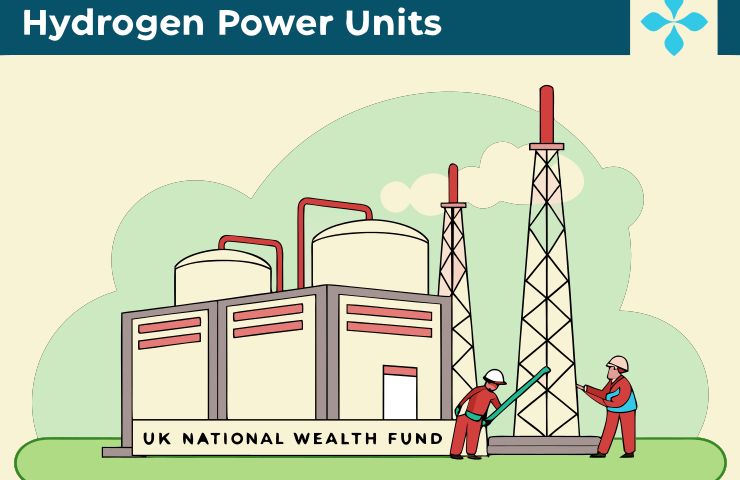
At the core of HyMarnham Power are the Hydrogen Power Units (HPUs) dreamt up and built by GeoPura at its buzzing Newcastle workshops. Think of them as compact powerhouses that can be trucked to wherever backup or off-grid juice is needed—factories, remote sites, you name it. Instead of diesel, each HPU runs on pure green hydrogen, topping up the grid or keeping lights on without a whiff of CO₂. Over its lifetime, a single unit could cut around 4,000 tonnes of carbon emissions versus a traditional generator. With plans to crank out roughly 3,600 of these by 2032, we’re looking at knocking out something like 14.5 million tonnes of CO₂ in total. Plus, with more predictable hydrogen pricing, operators can dodge the diesel price rollercoaster.
Made in Newcastle, Made for the UK’s Future
Newcastle’s industrial heritage is getting a techy reboot. By tapping local talent, supply chains, and even hosting apprenticeships, this facility is more than a factory—it’s a training ground for tomorrow’s hydrogen workforce. GeoPura’s plant is humming with two shifts of engineers, technicians, and interns, all busy fine-tuning those HPUs. It’s a perfect example of place-based regeneration—showing that high-tech, low-carbon kit can be designed and built in the North before rolling out nationwide.
Transforming Legacy Infrastructure
The plan at the former coal-fired site is to slot in a 50 MW green hydrogen plant, reusing existing buildings, grid connections, and even some old gantries to keep civil works—and costs—down. Local residents will have input on landscaping and noise management, so the revamped site feels part of the community, not a tower block in the sky. Plus, with JG Pears bringing decades of construction know-how, the team is geared up to keep disruption minimal and timelines tight.
Driving Economic Growth and Jobs
This isn’t just about cutting carbon—it’s about kicking local economies into gear. The UK National Wealth Fund plans to pour £4–5 billion a year into new ventures until 2030/31, focusing on ten priority areas: from hydrogen and carbon capture to battery manufacturing, steel, ports, energy storage, grid upgrades, transport infrastructure, and local regeneration. By anchoring money in local supply chains, the fund’s cash flows into steel mills, haulage firms, and service providers, helping to create or support roughly 200,000 jobs across the UK and sparking fresh spin-off businesses along the way.
Alignment with Net Zero Goals
This project sits neatly within Britain’s mission to hit Net Zero by 2050, targeting a hefty 500 million tonnes of CO₂e savings by mid-century. After slashing emissions by half since 1990 while growing the economy by nearly 80%, the focus now shifts to hard-to-abate sectors—heavy transport, steelworks, event power supplies—where batteries just don’t cut it. Deploying HPUs in defence training grounds, major construction sites, and even music festivals eases grid pressure and ditches diesel backup generators once and for all.
Partnerships That Accelerate Impact
Of course, big ideas need big backing. Back in early 2024, the UK Infrastructure Bank injected £30 million into GeoPura, joined by Barclays Sustainable Impact Capital, GM Ventures, SWEN Capital Partners, and Siemens Energy Ventures. That catalytic cash laid the foundation, and now, under the UK National Wealth Fund banner, it’s unlocking even more private investment for emerging clean-tech players. It’s a masterclass in how public funds can draw in private partners and scale up innovations fast.
Next Steps and Looking Ahead
Site prep begins this quarter, with old sheds coming down and foundations going in. The first electrolyser modules should arrive in Newcastle before the next financial year-end, ready for testing and fine-tuning. Once they pass muster, those modules will ship straight to the East Midlands site for plug-and-play installation. Early adopters—like defence bases and National Grid substations—will see these HPUs in action as soon as 2026, replacing noisy diesel sets with clean, whisper-quiet power.
Beyond HyMarnham Power, the UK National Wealth Fund is already backing a suite of other headline projects: a £600 million loan to ScottishPower for grid upgrades, guarantees to help SSEN Transmission beef up its network, and a stake in the Sizewell C nuclear plant. Together, these moves underscore a sharp strategy: fewer, bolder bets on technologies that drive low-carbon growth, boost energy security, and tighten up domestic supply chains.
It’s an energised, boots-on-the-ground approach to tackle economic stagnation and climate change in one fell swoop. By turning coal-era infrastructure into green hydrogen hubs, we’re not only shrinking emissions but also building new industrial muscle that could soon be Britain’s next big export. When those HPUs roar to life, it’ll be clear this green future isn’t a pipe dream—it’s unfolding right now, with kit made in Newcastle, made for the UK’s tomorrow.

 With over 15 years of reporting hydrogen news, we are your premier source for the latest updates and insights in hydrogen and renewable energy.