Green hydrogen production kicks off in Egypt’s Ain Sokhna hub
January 15, 2026This month, Egypt flipped the switch on its first 100MW green hydrogen facility in the Ain Sokhna Industrial Zone, kicking off its maiden shipments of renewable ammonia to Europe and the US. Nestled in the Suez Canal Economic Zone—a vital corridor born from the canal’s expansion—the plant taps into nearby gas pipelines, deep-water ports and endless desert sun. With over 110 million people and per-capita income around $3,900, Egypt is racing to turn that sunshine into sustainable energy exports and local jobs. The project, led by Norway’s Scatec alongside the Sovereign Fund of Egypt, Orascom Construction and Fertiglobe, has already won kudos from Prime Minister Mostafa Madbouly and EU Ambassador Angelina Eichhorst, all part of the 2024 National Low-Carbon Hydrogen Strategy. North Africa’s solar belt could soon be a global green hydrogen corridor—with Egypt setting the pace.
- Operational milestone: Electrolyzers fired up at initial capacity, powering ammonia synthesis.
- First exports: Clean ammonia has shipped off to Europe and the US.
- Solar backbone: Obelisk phase one plus Energy Valley deliver dedicated renewable power.
- State backing: Sovereign Fund of Egypt locked in land, permits and equity.
- Long-term goals: 42% renewables by 2030; capturing 5–8% of global green hydrogen trade by 2040.
Turning sunshine into molecules
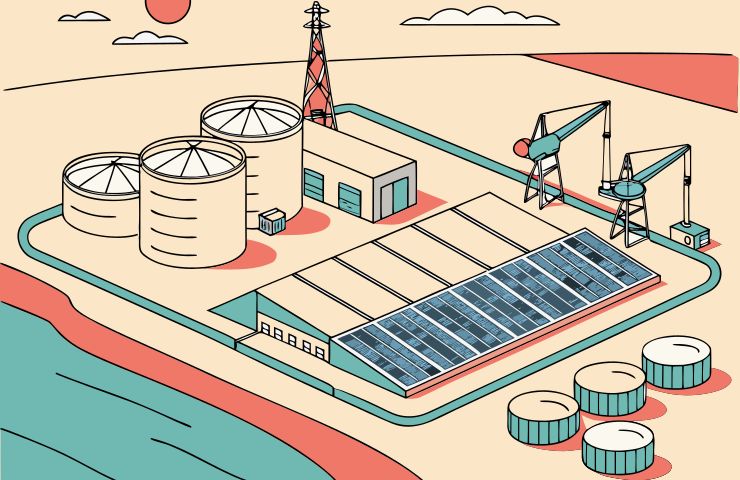
Rows of solar panels at Obelisk and Energy Valley soak up the desert rays and feed modular electrolyzers—using electrolysis at mid-70% efficiency—to split water into hydrogen and oxygen. Those units, chosen for rapid scaling, pair with multi-hour battery storage to smooth out production dips, ensuring steady power for hydrogen fuel cells and synthesis. Thanks to SCZONE’s 220 kV substation and real-time monitoring, the plant can tweak electrolysis rates on the fly, maximizing renewable consumption and slashing curtailment, all part of smart sustainable energy management.
Once hydrogen production ramps up, H2 zips through insulated piping to ammonia reactors where it bonds with nitrogen. Fertiglobe brings decades of fertilizer know-how to churn out clean ammonia—an easier ship-and-store energy vector than pure hydrogen—while Orascom Construction handled the civil works: laying foundations, hooking up pipe networks and knitting the site into SCZONE’s logistics backbone.
Money matters: structuring the deal
This isn’t just electrons—it’s a financial blueprint. Scatec has rounded up nearly $2 billion in Egyptian solar investment over the past year, locking in equipment deals and project debt wrapped in export-credit guarantees. Meanwhile, the Sovereign Fund of Egypt chips in equity, sweetens the pot with tax breaks and fast-tracks grid access through power purchase agreements that even dodge penalties for outages. Layering public equity, concessional loans and vendor credits trims upfront risks, making the whole package more bankable.
As Scatec CEO Terje Pilskog puts it, “Egypt’s unwavering support unlocked attractive tariffs and port fees,” and now European financiers are circling, eager to back decarbonization projects that hit EU green hydrogen targets.
Pivoting to a new export star
For decades, Egypt’s export lineup was natural gas and petrochemicals. Now green hydrogen is stepping into the limelight as a high-value product that ticks climate goals and industrial decarbonization boxes. The development has generated thousands of construction jobs and is set to employ hundreds more in operations—fueling local supply chains from panel assembly to shipping logistics. Authorities are also eyeing hydrogen blending in existing pipelines to green up domestic gas supplies alongside export ambitions.
Regionally, this model could be mirrored in Upper Egypt or along the Red Sea, with planned corridors linking to Jordan and Libya. Under the National Low-Carbon Hydrogen Strategy, Cairo hopes to attract up to $60 billion in clean energy investment by 2050—grabbing a slice of a market BloombergNEF estimates could hit $2 trillion by mid-century.
What’s on the horizon?
The first cargoes are already en route, but the real test will be ramping up to full-scale operations. Obelisk’s second phase and additional Energy Valley capacity must keep those electrolyzers humming, with battery systems key to weathering cloudy days and shaving peak loads. Talks are in motion for a hydrogen fuel cell demo at SCZONE, showcasing power-to-power round-trip and industrial decarbonization at the port.
If the consortium nails the full 100 MW output, Egypt could soon open follow-on tenders—SCZONE is already eyeing more hydrogen parks. Buyers from fertilizer producers to shipping lines exploring clean ammonia bunkering will want solid numbers on volumes and pricing. Political stability, clear policy signals and grid upgrades will be non-negotiable if Egypt wants to cement its place on the global hydrogen production map.
Hard facts in brief:
- Location: Ain Sokhna Industrial Zone, SCZONE, Egypt.
- Capacity: 100 MW green hydrogen (partial operations live).
- Solar supply: Obelisk phase one active; phase two by month’s end; Energy Valley tied in.
- Partners: Scatec, Sovereign Fund of Egypt, Orascom Construction, Fertiglobe.
- Exports: Clean ammonia shipments to Europe and the US.
- Targets: 42% renewables by 2030; 5–8% of global green hydrogen trade by 2040.
Stay tuned for shipping manifests, full-capacity handovers and the next wave of green hydrogen projects out of Egypt. Ain Sokhna proves that turning sunlight into ammonia isn’t just a neat idea—it’s a thriving commercial reality. If this hub succeeds, it could spawn a chain of hydrogen parks lining Egypt’s coast, linking solar farms with the world.

 With over 15 years of reporting hydrogen news, we are your premier source for the latest updates and insights in hydrogen and renewable energy.