Hitachi Energy’s RESIBLOC Rectifier Transformers for KK Wind Solutions
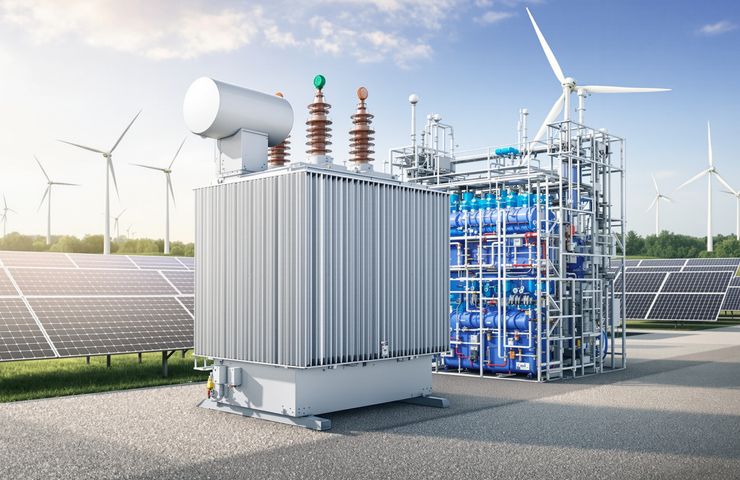
January 19, 2026You might be wondering what it really takes to power the next wave of green hydrogen plants spreading across Europe. Well, here’s the skinny: Hitachi Energy and KK Wind Solutions just shook hands on a project to deliver ten 13.3 MVA RESIBLOC dry-type rectifier transformers that are tailor-made for advanced electrolyzers. But this isn’t just about moving electrons from point A to B. It’s a step toward scalable hydrogen production, serious industrial decarbonization, and a more bulletproof sustainable energy ecosystem.
On the business side, this partnership throws Hitachi Energy and KK Wind Solutions right into the heart of Europe’s plan to curb emissions. By outfitting modern green hydrogen facilities with robust power conversion gear, KK Wind Solutions lands compact, fire-safe modules that slot straight into their power supply units, while Hitachi Energy—based in Zurich with more than 20,000 MVA of rectifier transformers installed—cements its reputation as the trusted partner for heavy-duty electrolysis projects that underpin large-scale hydrogen production. And since these transformers roll off the line in Germany, operators know they’re getting top-tier quality no matter the local climate or rulebook.
Transforming Power Supply for Electrolyzers
At the core of this upgrade, you’ll find the RESIBLOC® rectifier transformers—a dry-type, cast-resin marvel that swaps out oil for fiberglass-reinforced epoxy resin windings. In everyday terms, that means no flammable fluids, virtually zero maintenance, and rugged durability even when temperatures swing wildly or corrosive atmospheres set in. These units can be configured from double star (DSS) to double bridge (DB) setups, offering anywhere from 6- to 60-pulse rectification and DC voltage regulation up to 2,000 VDC, all while keeping harmonics down to a whisper. So whether you’re pushing a few hundred kilowatts or dialing up to multi-megawatt electrolyzer stacks, these transformers deliver a smooth, reliable power flow that’s tailor-made for electrolysis at scale.
Technical Edge of Dry-Type Transformers
One big reason operators are gravitating toward dry-type, cast-resin designs is simple: you ditch the oil and the headaches that come with it. No more routine oil sampling, leak patrols, or fire suppression systems tied to hydrocarbon fluids. Instead, you get fiberglass-reinforced epoxy resin windings that shrug off mechanical stress and stay crack-free under heavy loads. Plus, with high-voltage coils wound right around the low-voltage sections, you cut down on insulating materials and shave inches off the footprint. The payoff? Faster installs, streamlined permitting, lower ambient noise, and less wasted heat—all translating into quicker up-and-running times and leaner whole-life costs for anyone serious about efficient hydrogen production.
Roots of RESIBLOC and the Path to Green Hydrogen
The lineage of these rectifier transformers goes back decades, with ABB pioneering dry-type, cast-resin designs to keep aluminum smelters and steel mills safe and efficient. Fast forward to 2020, and ABB Power Grids spun off its transformer business, which then joined forces with Hitachi Ltd. in 2021 under the Hitachi Energy banner. By blending ABB’s deep transformer know-how with Hitachi’s global reach, the team has fine-tuned these units for low-carbon applications. Now, when you pair renewables—whether wind, solar or hydro—with these dry-type transformers and feed the power into electrolyzers, the result is a more energy-efficient, land-sparing approach to splitting water. It’s a critical piece of the puzzle for ramping up hydrogen production across Europe without gobbling up valuable real estate.
Beyond the Transformer: Strategic and Environmental Gains
This tale is about more than just hardware. By swapping in compact, oil-free rectifiers, plant designers can dramatically shrink the footprint of hydrogen facilities—an ace when land value is sky-high. On top of that, the fire-safety credentials of cast-resin technology align with strict IEC 60076-11 standards for climate class C4, environment class E4, and fire rating F1. In practice, these transformers can shrug off –60 °C subzero blasts or thrive in salty, industrial atmospheres. The upside? Lower total cost of ownership, fewer environmental hazards, and a rock-solid, reliable system—a perfect match for the drive toward industrial decarbonization and broader sustainable energy goals.
And here’s another win: since there’s no oil to catch fire, operators in ATEX-rated explosion zones get a built-in safety margin—no combustible fluids means a reduced fire load and smoother compliance. Plus, eliminating oil filtration, handling, and disposal slashes the risk of soil or groundwater contamination, checking the box for near-zero spill potential and true zero-emission technology from wellhead to hydrogen dispenser.
Driving Industrial Decarbonization at Scale
As demo sites graduate to gigawatt-scale plants, every kilowatt and every square meter counts. Transformer losses, cramped layouts, and long maintenance windows can quickly eat into project economics. By installing high-efficiency, space-lean transformers that squeeze the most out of each amp, developers free up room for extra electrolyzers or more renewable capacity—wind turbines, solar farms, even biogas generators. The result? Upping per-site hydrogen production without blowing the CapEx budget, creating a virtuous cycle where more green hydrogen equals more revenue and fewer carbon emissions.
It also plays nicely with policy incentives. The European Union is rolling out grant programs and regulatory frameworks to fuel the net-zero transition, and stakeholders are hungry for technologies with a proven track record. Having these transformers in place signals that both grid-connected and off-grid hydrogen plants can handle the variability of solar, wind and hydro inputs without missing a beat—offering the reliability operators need to qualify for subsidies and long-term offtake contracts.
Collaboration That Scales
Pairing KK Wind Solutions’ power supply chops with Hitachi Energy’s transformer pedigree feels like a match made in energy transition heaven. KK Wind’s PSUs are already dialed in for electrolyzer feed, and dropping in RESIBLOC units lets OEMs bundle turnkey solutions that slice installation timelines from months to weeks. But it doesn’t stop at hardware handoff. Both companies double down on post-sale support—think remote monitoring and diagnostics, spare-part kits pre-positioned across Europe, on-site commissioning squads, and hands-on training for local electrical teams. It’s not just talk; it’s the lifeline that keeps systems humming. After all, a single transformer hiccup can stall an entire electrolyzer train and rack up thousands in lost hydrogen production and operational costs.
Looking Ahead
Okay, ten transformers might look like a small drop in Europe’s oceans of hydrogen ambition, but they’re more than just a proof of concept—they’re a statement that dry-type rectifier technology is ready for the big leagues of green hydrogen. As electrolyzer capacity across the continent ramps from pilot projects to commercial scale, demand for high-performance, reliable power electronics is only going to spike. Sure, each site comes with its own quirks—grid bottlenecks, local permit hurdles, unique offtake agreements—but a scalable, fire-safe, footprint-friendly transformer ticks an impressive number of boxes, making life a lot easier for developers.
Meanwhile, with Brussels tightening the screws on greenhouse gas targets and carving out multi-billion-euro funding pots for clean hydrogen, we’ll see more competitive tenders and public-private partnerships. Companies that can deliver end-to-end solutions—think high-voltage rectifiers married to smooth electrolysis integration and digital services—will emerge as front-runners. And with the EU’s grand vision for a hydrogen backbone—cross-border pipelines linking ports, interconnectors, and industrial hubs—transformers that can handle volatile renewable inputs will be mission-critical. With its deep experience and global support network, Hitachi Energy is primed to grab significant market share, especially as project owners lean toward established, off-the-shelf tech over bespoke prototypes.
At the end of the day, this partnership is another cornerstone in Europe’s drive toward a sustainable energy future. By merging proven transformer know-how with electrolyzer expertise, Hitachi Energy and KK Wind Solutions are helping to pave a path where oil and gas become relics of the past. And let’s be honest—who wouldn’t want to hop on that ride?

 With over 15 years of reporting hydrogen news, we are your premier source for the latest updates and insights in hydrogen and renewable energy.